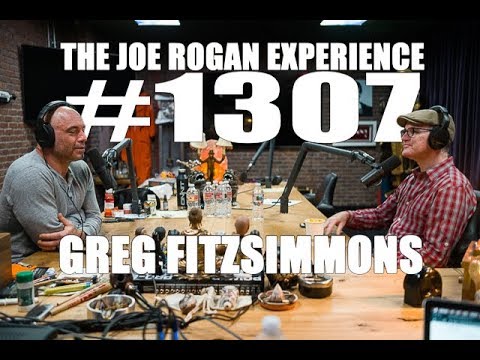
Joe Rogan Experience #1307 - Greg Fitzsimmons
Joe Rogan (host), Greg Fitzsimmons (guest), Narrator, Narrator
In this episode of The Joe Rogan Experience, featuring Joe Rogan and Greg Fitzsimmons, Joe Rogan Experience #1307 - Greg Fitzsimmons explores joe Rogan and Greg Fitzsimmons Deconstruct Sex, Poverty, Comedy, and Culture Joe Rogan and Greg Fitzsimmons range widely from America’s racial history and systemic poverty to sex work, masculinity, and changing cultural norms around symbols like the Confederate flag. They debate prostitution, incels, and the psychological need for touch, arguing that legalization and regulation could reduce harm and resentment. The conversation also dives into automation, universal basic income, education costs, and environmental issues, questioning how society will handle despair when traditional work erodes. Interwoven throughout are stories from stand-up’s Boston heyday, personal career arcs, and reflections on friendship, sobriety, and what actually makes people happy.
Joe Rogan and Greg Fitzsimmons Deconstruct Sex, Poverty, Comedy, and Culture
Joe Rogan and Greg Fitzsimmons range widely from America’s racial history and systemic poverty to sex work, masculinity, and changing cultural norms around symbols like the Confederate flag. They debate prostitution, incels, and the psychological need for touch, arguing that legalization and regulation could reduce harm and resentment. The conversation also dives into automation, universal basic income, education costs, and environmental issues, questioning how society will handle despair when traditional work erodes. Interwoven throughout are stories from stand-up’s Boston heyday, personal career arcs, and reflections on friendship, sobriety, and what actually makes people happy.
Key Takeaways
Slavery’s legacy persisted long after 1865 through criminalization and forced labor.
They discuss “Slavery By Another Name,” detailing how loitering and minor offenses were used to re-enslave Black Americans via brutal convict leasing, arguing that this history undercuts simplistic claims that slavery “ended” cleanly and requires more serious conversations about reparations and structural repair.
Get the full analysis with uListen AI
Sex work is framed as labor that should be legalized and regulated, not moralized away.
Rogan and Fitzsimmons contend that if people can pay for massages or dangerous manual labor, they should be able to consensually pay for sexual services; legalization would better protect workers, serve lonely or disadvantaged men, and separate consensual sex work from trafficking.
Get the full analysis with uListen AI
Incels, deformities, and loneliness point to a deeper need for humane outlets and policy.
They connect incel resentment to repeated rejection, genetic “unluckiness,” and social awkwardness, noting emerging extreme cosmetic surgeries for men seeking attractiveness; this, they argue, strengthens the case for legalized prostitution and broader compassion rather than pure moral condemnation.
Get the full analysis with uListen AI
Automation and UBI might keep people fed but won’t automatically solve despair.
Discussing Andrew Yang’s ideas, they see universal basic income as plausible in a robot-driven economy but emphasize that money alone won’t address the human need for purpose, structure, and self-respect that meaningful work or contribution traditionally provide.
Get the full analysis with uListen AI
The U.S. systematically underinvests in education and overprices college, crippling families.
Fitzsimmons describes the math of two kids in private college (hundreds of thousands of dollars before taxes), plus healthcare and living costs, arguing that free or affordable higher education and socialized medicine would yield a smarter, more productive society with fewer “losers.”
Get the full analysis with uListen AI
Environmentally, we focus on individuals while massive industrial polluters largely skate.
They highlight cruise ships and factories as outsized emitters—one cruise ship can pollute like millions of cars in a day—while governments relabel fossil fuels as “freedom gas” and bury alarming climate reports, illustrating how storytelling and branding often override facts in policy.
Get the full analysis with uListen AI
In comedy and life, honest feedback, persistence, and emotional resets drive growth.
Rogan recounts quitting other jobs to fully commit to stand-up after being told he’d “fallen off,” and both stress analyzing bad sets rather than blaming crowds; they also joke about “jerk off first, then decide,” underscoring how managing impulses can clarify what you really care about.
Get the full analysis with uListen AI
Notable Quotes
“There are people that were born on third base and swear to God they hit a triple.”
— Joe Rogan
“If you can pay someone to rub your feet, why can’t you pay someone to touch your genitals?”
— Joe Rogan
“That’s like a place in your garage that’s fucked up and filled with trash that you think is gonna figure itself out on its own.”
— Joe Rogan
“Stories trump facts. People want to believe the myth even when the facts are right there.”
— Greg Fitzsimmons
“Don’t think this world’s supposed to be fair. This thing is not… no one knows what the fuck is going on.”
— Joe Rogan
Questions Answered in This Episode
If we accept that slavery morphed into other exploitative systems, what would truly meaningful reparations or structural fixes look like in practice?
Joe Rogan and Greg Fitzsimmons range widely from America’s racial history and systemic poverty to sex work, masculinity, and changing cultural norms around symbols like the Confederate flag. ...
Get the full analysis with uListen AI
How could prostitution be legalized and regulated in a way that maximizes safety and agency for sex workers while minimizing trafficking and coercion?
Get the full analysis with uListen AI
As automation expands, what realistic models exist to provide both financial security (like UBI) and a sense of purpose and dignity for people who may no longer be needed in traditional jobs?
Get the full analysis with uListen AI
To what extent should individual lifestyle changes matter when industries like cruise lines and factories pollute at a scale orders of magnitude larger?
Get the full analysis with uListen AI
In comedy and other creative fields, how can performers better balance brutal self-assessment with mental health, and what role should mentors or community play in that process?
Get the full analysis with uListen AI
Transcript Preview
... told me that.
Haunting, yeah.
Yeah. Boom, and we're live. What are you doing, Greg?
I'm looking up the title of a book I wanna talk about.
Which book?
It's an audiobook and it was about Reconstruction.
Oh, we... what we were just talking about-
Yeah.
... with slaves.
Yeah.
Yeah.
And it was about how, you know, once the, uh, um, once the slaves were freed, they still perpetuated slavery by, um, it was... it's called, uh... hang on, I gotta find it. By... Slavery By Another Name by Douglas, Douglas Blackmon and it's about how they would... they had... they put loitering laws in all around the country, and they would find Black people, and if they were standing around, they would arrest them. Or if there was, like, a petty larceny or a domestic violence thing, they'd arrest them for fucking two years with a trial with one judge and no jury. And the, the judge was very often a, uh, a magistrate of the coal mining company.
Ugh.
They'd send the, the, the, the prisoner to a coal mine for two years where he'd work seven days a week with shackles on, and they would fucking whip them. And if they tried to escape, they tracked them down with dogs and they beat them, sometimes to death. And this went on for fucking decades.
Jesus-
Yeah.
... Christ.
So people talk about, "Well, slavery ended back..." No-
Not really.
... forms of slavery went on for a long time.
Not only that. Slavery ended and what effort was done to sort of rectify the situation? What effort was done to, like, try to give even opportunities for people who grew up in African American cities that were predominantly slaves-
Hmm.
... before 1865?
Yeah.
Like what, what's ever been done?
40 acres and a mule? Did they ever get that?
Is that real?
I don't know. I think, I think it was a-
But even, even if you're dealing with that, even if some people got 40 acres and a mule, like what... is that enough?
No.
Like the whole thing is crazy. Like if you have an entire country that the ancestors that did most of the work did it against their will-
Hmm.
And then you're just like, "Yeah, yeah, yeah, well you don't have to do that anymore." And then people are like, "We want reparations." And white people are like, " (blows raspberry) That was 100 years ago."
Mm-hmm.
(sighs)
Do you know in... at Georgetown, did you read about this? Georgetown University is, um, giving reparations to the slaves that built the university.
So do the families of the slaves, the ancestors, the families-
They tracked them down with like 23andMe or one of those-
Install uListen to search the full transcript and get AI-powered insights
Get Full TranscriptGet more from every podcast
AI summaries, searchable transcripts, and fact-checking. Free forever.
Add to Chrome