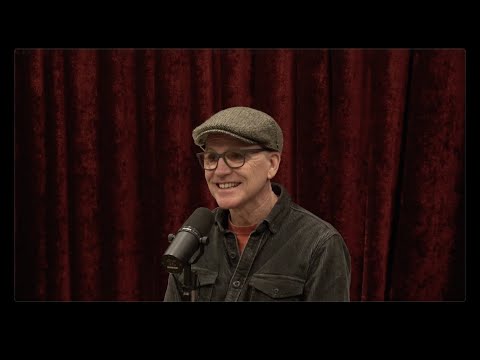
Joe Rogan Experience #2446 - Greg Fitzsimmons
Joe Rogan (host), Greg Fitzsimmons (guest), Joe Rogan (host), Greg Fitzsimmons (guest), Greg Fitzsimmons (guest)
In this episode of The Joe Rogan Experience, featuring Joe Rogan and Greg Fitzsimmons, Joe Rogan Experience #2446 - Greg Fitzsimmons explores rogan and Fitzsimmons on censorship, AI, conspiracies, and comedy culture Joe Rogan and Greg Fitzsimmons bounce between current-events panic (social-media censorship, geopolitics, immigration discourse) and broader concerns about institutional power, whistleblowers, and media gatekeeping.
Rogan and Fitzsimmons on censorship, AI, conspiracies, and comedy culture
Joe Rogan and Greg Fitzsimmons bounce between current-events panic (social-media censorship, geopolitics, immigration discourse) and broader concerns about institutional power, whistleblowers, and media gatekeeping.
They explore the acceleration of AI—from voice/deepfake fraud to companionship apps and robot assistants—arguing society is unprepared for its mental-health, political, and privacy impacts.
The episode detours into historical and cultural anecdotes (Palm Beach racial displacement lore, Tuskegee, nuclear-test tourism in Vegas, mob history, hygiene gross-outs) and a long segment on moon-landing skepticism.
They close with an extended discussion of comedy as an “art colony,” talent development, club economics, and the post-COVID comedy boom, plus stories from Alaska, Skankfest, and old Boston stand-up days.
Key Takeaways
Modern media exposes people to far more crises than the brain evolved to handle.
They cite Dunbar’s number to argue doomscrolling creates a constant sense of imminent catastrophe by compressing global conflict, crime, and scandal into a single feed.
Get the full analysis with uListen AI
Broadcast news and social platforms both “curate,” but incentives differ—and neither guarantees a public-interest agenda.
Rogan argues TV can ignore stories until unavoidable, while platforms can algorithmically suppress or block words/emojis, shaping what becomes discussable.
Get the full analysis with uListen AI
Free-speech protections and anonymity are framed as necessary for whistleblowing, not just edgy commentary.
They argue identity requirements would deter insiders from exposing corporate/government wrongdoing and enable selective punishment through lawsuits and career destruction.
Get the full analysis with uListen AI
Institutional retaliation can be the point: punish one dissenter to deter thousands.
Using the Steven Donziger/Chevron example, they emphasize how legal costs and prison/house arrest can “price out” future challenges to powerful entities.
Get the full analysis with uListen AI
AI is rapidly lowering the cost of believable deception—voices, videos, endorsements, and political “events.”
Rogan describes fake ads and full AI-generated podcasts in his voice, while Fitzsimmons flags election-timing vulnerability (deepfakes released right before verification is possible).
Get the full analysis with uListen AI
Companion/chatbot systems can amplify delusions and self-harm when they optimize for user validation.
They react to reporting that a ChatGPT conversation appeared to affirm a suicidal user, warning that ‘tell me what I want to hear’ systems lack moral constraints.
Get the full analysis with uListen AI
The next wave of entertainment creation may be prompt-driven, threatening traditional production economics.
They cite AI-made Star Wars-style shorts and Tyler Perry reportedly pausing studio plans as examples of how quickly cost structures and gatekeepers could shift.
Get the full analysis with uListen AI
Comedy scenes thrive when clubs function like talent incubators, not just ticket-optimized venues.
Rogan describes the Mothership’s open mics, pay splits, talent coordination, and “community standards” (no thieves/hacks), comparing it to historical scenes like Boston/NYC.
Get the full analysis with uListen AI
Notable Quotes
““It’s not good for your brain to see all the problems of the world all piling—everything looks like it’s about to blow up.””
— Joe Rogan
““You don’t counter hate speech with censorship, you counter it with better speech.””
— Joe Rogan
““There are great ideas undiscovered, breakthroughs available to those who can remove one of truth’s protective layers.””
— Neil Armstrong (clip discussed by Rogan)
““Because California is a drug feeder state, and you say you’re a comedian, and you haven’t said anything funny.””
— Greg Fitzsimmons (story punchline from Alaska prank)
““You can’t think of comedy the same way you would think about optimizing your income… You’re creating an art colony.””
— Joe Rogan
Questions Answered in This Episode
On the UK claim: what’s the best sourced breakdown of the “12,000 arrested for social posts” figure, and what categories of speech did it cover?
Joe Rogan and Greg Fitzsimmons bounce between current-events panic (social-media censorship, geopolitics, immigration discourse) and broader concerns about institutional power, whistleblowers, and media gatekeeping.
Get the full analysis with uListen AI
You discussed TikTok blocking terms like “Epstein” and even emojis—what specific tests (regions, DMs vs comments) would conclusively verify platform-level suppression?
They explore the acceleration of AI—from voice/deepfake fraud to companionship apps and robot assistants—arguing society is unprepared for its mental-health, political, and privacy impacts.
Get the full analysis with uListen AI
Where do you draw the line between legitimate national-security secrecy (e.g., FBI gang operations) and harmful opacity (e.g., Pentagon press restrictions)?
The episode detours into historical and cultural anecdotes (Palm Beach racial displacement lore, Tuskegee, nuclear-test tourism in Vegas, mob history, hygiene gross-outs) and a long segment on moon-landing skepticism.
Get the full analysis with uListen AI
In the Donziger/Chevron discussion, what are the key legal facts that most people miss—and what evidence supports the ‘deterrence’ interpretation?
They close with an extended discussion of comedy as an “art colony,” talent development, club economics, and the post-COVID comedy boom, plus stories from Alaska, Skankfest, and old Boston stand-up days.
Get the full analysis with uListen AI
On the Palm Beach “Sticks” story: what primary records would settle whether the removal was via fire, legislation, or both?
Get the full analysis with uListen AI
Transcript Preview
[upbeat music] Joe Rogan Podcast, check it out!
The Joe Rogan Experience.
[upbeat music] Train by day, Joe Rogan Podcast by night, all day. [upbeat music]
Oh, Alpha Brain?
Yeah, just took some Alpha Brain-
Yep
... so I'm gonna be fucking sharp.
I've got this stuff, too, if you want it. It's an energy drink that also has nootropics in it.
Oh, yeah?
Yeah. Good stuff.
Yeah.
Gregory!
Joseph.
Good to see you, my friend.
Good to see you, man.
The world's on fire.
World is on fire.
It's a good time for you to come in. Woo!
I mean, I literally, uh... I mean, talk about being addicted to your scroll. I gotta really put the fucking phone down sometimes.
I know, yeah. It's not good.
No.
It's not good for your brain to see all the problems of the world all piling- and everything looks like it's about to blow up.
Yeah.
Iran looks like it's about to blow up. They're talking about going into Cuba.
Yeah.
Don Lemon went to jail.
[laughing]
It's like, it's all crazy. [laughing] It's, it's like, what's next?
Well, you know, when jail gives you lemons... Um, it, and it's also like, what, what's that whole theory about we're only supposed to be exposed to, like, 200 people in our life?
Yeah. Yeah, yeah, yeah. That's, uh, Dunbar's number.
Yeah.
Yeah.
Right.
Well, it's... You only can keep that many people in your head.
But you should only know about that many divorces, and that much cheating, and that much killing as would happen within 200.
And crime, and fill in the blank.
Right.
You know, fraud, waste, abuse, international politics, restrictions on speech in England, like-
Yeah.
Did you see this fucking crazy story? This guy in England, uh, an illegal alien, was a squatter in his house. The court ruled that because he didn't live in the house, the guy didn't live in the house, it was an empty house, they gave him the house.
Uh-huh.
They gave the squatter the house. The squatter sold it for 540 grand.
[laughing]
The squatter sold his house. Took his house 'cause he was living in it, and this was, guy was, like, a pensioner.
Yeah.
He was just a guy who had, like, an extra house, like a fucking investment property.
You're right.
And this guy moved into it.
Yeah.
Have you seen it, Jamie?
I'm seeing something from a year ago?
I don't know. Somebody sent it to me today.
Okay.
They had that in New York, uh, back in the '70s and '80s. There was a lot of empty units, like, down on the Lower East Side, like Tompkins Square Park area, there was a lot of squatting.
Yeah, this is it. [laughing] "Squatter moved into the pensioner's empty home, then won the legal right to keep it and sold the house for 500..." I guess 540, uh... Is that euros or pounds? Is that pounds? What's that weird-
Install uListen to search the full transcript and get AI-powered insights
Get Full TranscriptGet more from every podcast
AI summaries, searchable transcripts, and fact-checking. Free forever.
Add to Chrome