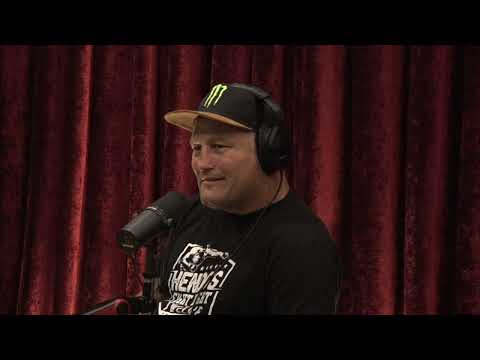
JRE MMA Show #149 with Dan Henderson
Dan Henderson (guest), Joe Rogan (host), Narrator
In this episode of The Joe Rogan Experience, featuring Dan Henderson and Joe Rogan, JRE MMA Show #149 with Dan Henderson explores dan Henderson Reflects on MMA Evolution, Fighting Legends, Life After War Joe Rogan and Dan Henderson revisit Henderson’s pioneering MMA career, from early UFC and PRIDE days to championship runs and brutal tournament nights. Henderson discusses transitioning from Olympic wrestling to MMA with almost no striking sparring, fighting on short notice with serious injuries, and dealing with TRT and evolving training methods. They compare past and present fight styles, promotion structures, and rule sets, and touch on current issues like drug testing, media, and politics. Henderson also talks about retirement life, coaching, hunting, his new book, and potential biopic plans.
Dan Henderson Reflects on MMA Evolution, Fighting Legends, Life After War
Joe Rogan and Dan Henderson revisit Henderson’s pioneering MMA career, from early UFC and PRIDE days to championship runs and brutal tournament nights. Henderson discusses transitioning from Olympic wrestling to MMA with almost no striking sparring, fighting on short notice with serious injuries, and dealing with TRT and evolving training methods. They compare past and present fight styles, promotion structures, and rule sets, and touch on current issues like drug testing, media, and politics. Henderson also talks about retirement life, coaching, hunting, his new book, and potential biopic plans.
Key Takeaways
Early MMA was built on experimentation and toughness, not refined systems.
Henderson describes entering tournaments with virtually no sparring, minimal coaching structure, and learning striking and game-planning on the fly, highlighting how far the sport has evolved into a science-driven discipline.
Get the full analysis with uListen AI
Controlled sparring and smart training extend careers and reduce damage.
He emphasizes one truly hard sparring day a week, technical sparring with big gloves, and learning to punch fast without full power—contrasting this with fighters who burn out by brawling daily in the gym.
Get the full analysis with uListen AI
Cardio pacing in MMA is fundamentally different from wrestling.
Henderson had to transition from explosive, short-duration wrestling output to managing energy over 10- to 25-minute fights, illustrating why many elite wrestlers initially struggle with MMA’s energy demands.
Get the full analysis with uListen AI
Tournament formats and long first rounds dramatically change strategy.
He explains how PRIDE’s 10-minute first round and same-night tournaments “separate the men from the boys,” rewarding grapplers and mentally tough fighters in ways modern three- and five-round formats don’t.
Get the full analysis with uListen AI
Natural power is rare, but mechanics can significantly amplify it.
Henderson links his knockout power partly to a baseball pitching background—using legs, hips, and full-body rotation—reinforcing that while “nuclear power” is innate, efficient mechanics can boost anyone’s striking effect.
Get the full analysis with uListen AI
Drug policy inconsistency shaped careers and competitive balance.
They discuss Pride’s lax testing, the TRT era, tainted supplements, and USADA’s strictness about healing peptides, showing how shifting rules and enforcement have affected performance, longevity, and public perception.
Get the full analysis with uListen AI
Post-fight identity and lifestyle need deliberate rebuilding.
Henderson notes he retired without an urge to return, but admits to training far less, gaining weight, and focusing on coaching and business; his hunting and new book offer structured, meaningful pursuits after competition.
Get the full analysis with uListen AI
Notable Quotes
“I never sparred before I fought in the UFC.”
— Dan Henderson
“You either have power or you don’t have power… you either have nuclear power or you don’t.”
— Joe Rogan
“I started wrestling when I was five… two Olympic teams and then I fought for 20 years, so I feel like I did enough.”
— Dan Henderson
“I felt like I was in a lot better spot then than now, for sure.”
— Dan Henderson
“There’s not a sport you could point to that has evolved more than MMA from 1993 to now.”
— Joe Rogan
Questions Answered in This Episode
How would a prime Dan Henderson, with today’s training science and recovery tech, perform against current champions at middleweight and light heavyweight?
Joe Rogan and Dan Henderson revisit Henderson’s pioneering MMA career, from early UFC and PRIDE days to championship runs and brutal tournament nights. ...
Get the full analysis with uListen AI
What specific training structure would Henderson design today for an elite wrestler transitioning into MMA to avoid the mistakes of his early no-sparring era?
Get the full analysis with uListen AI
Should MMA revisit same-night tournaments or 10-minute first rounds, and how could commissions and rules be adapted to make that safe and fair?
Get the full analysis with uListen AI
How much did Pride’s permissive attitude toward PEDs and rule differences (soccer kicks, ring, long rounds) actually shape the legacies of its biggest stars?
Get the full analysis with uListen AI
What aspects of Henderson’s story does he most fear a Hollywood biopic would distort, and what would he insist be portrayed exactly as it happened?
Get the full analysis with uListen AI
Transcript Preview
(drumming music) Joe Rogan podcast, check it out. The Joe Rogan Experience.
Train by day, Joe Rogan podcast by night, all day. (rock music) Hello, Dan Henderson. What the fuck's happening?
(laughs) How's it going, Joe?
Good to see you, bro.
Good to see you too.
Man, um, what have you been up to? Other than coaching? You're coaching a lot, I know that.
Uh...
I watch a lot of your, uh, videos.
Yeah, I mean, I'm coaching a little bit. Got, got some decent up-and-comers, but other than that, I've been, I've been working on (laughs) a project where my gy- I own the building my gym's in, and I'm putting a brewery distillery restaurant in.
Oh, nice.
Part of it'll overlook there. So we're in mid-construction right now, so it's been, it's been... We started construction, it got put on hold when COVID happened-
Hmm.
... so it's been a, almost the biggest fight of my life trying to get this thing done. But yeah, it's finally, finally gonna be done, hopefully end of the year.
You're down in, uh, you still down, like, Temecula area?
Yeah.
Yeah.
In Temecula, yeah.
That's a good area.
No, I love it there, man.
Last time I saw you was at that casino. That's a fun little casino down there.
Oh, at Pechanga?
Yeah.
Yeah. Yeah, no, I love it out there. If, I, I was born and raised in California, so it, you know, it'd be hard to leave. I got so many roots there, but, you know-
Yeah.
... living in Temecula, I feel like I'm in one of the best spots in California. (laughs)
Yeah, it's one of the be- it's most sane.
Yeah, no, I agree.
It's pretty sane.
Yeah, pretty-
Lot of ranches, and it's like normal people.
Not a lot of craziness going on.
Yeah. You're getting closer to Los Angeles, it just gets polluted.
Yeah.
Just toxic fucking thinking and-
Where did you live up there?
I lived in Bell Canyon, which was like, uh, a half hour outside of LA, which was nice. Like I had land, and a lot of coyotes, and-
Right.
... a lot of owls and hawks and shit, and mountain lions. It's good. It's good.
Yeah.
It's, it was good, like, juxtaposition. It was a nice relief from Hollywood. I get there and it's quiet.
And how is the little community, though? The area?
It's fine.
Yeah?
Yeah, it's fine. It's just...
Like it here better, though?
Oh, yeah.
(laughs)
Way better. I'm never leaving.
Yeah?
No, this place is, this place is the best.
Yeah, I don't know if I could-
It's just the freedom that you get in Texas. It's just so much... You just get so accustomed to it.
Install uListen to search the full transcript and get AI-powered insights
Get Full TranscriptGet more from every podcast
AI summaries, searchable transcripts, and fact-checking. Free forever.
Add to Chrome