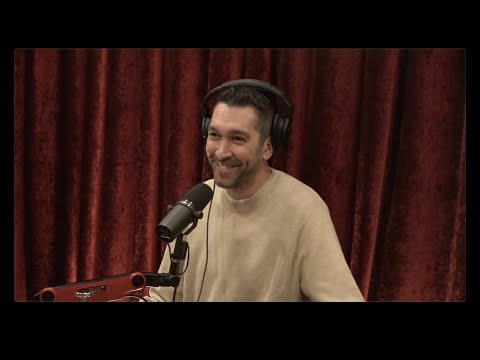
Joe Rogan Experience #2153 - Dave Smith
Narrator, Narrator, Joe Rogan (host), Dave Smith (guest), Narrator, Narrator, Narrator
In this episode of The Joe Rogan Experience, featuring Narrator and Narrator, Joe Rogan Experience #2153 - Dave Smith explores joe Rogan and Dave Smith Torch Media, War, and Weak Politics Joe Rogan and Dave Smith spend a long-form conversation tearing into modern liberalism, corporate media, COVID narratives, and U.S. foreign policy, especially in Ukraine and Gaza. They argue that a culture of weakness and performative niceness in liberal cities has enabled homelessness, disorder, and bad governance, while elites and media actively distort reality. A major portion of the discussion dissects Israel–Palestine history, Hamas, Netanyahu’s strategy, U.S. aid and lobbying, and why they see Gaza as a catastrophic, unnecessary war of choice. Throughout, they criticize legacy media’s role in COVID misinformation, censorship, and war propaganda, contrasting it with the freer, deeper discourse made possible by podcasts and alternative platforms.
Joe Rogan and Dave Smith Torch Media, War, and Weak Politics
Joe Rogan and Dave Smith spend a long-form conversation tearing into modern liberalism, corporate media, COVID narratives, and U.S. foreign policy, especially in Ukraine and Gaza. They argue that a culture of weakness and performative niceness in liberal cities has enabled homelessness, disorder, and bad governance, while elites and media actively distort reality. A major portion of the discussion dissects Israel–Palestine history, Hamas, Netanyahu’s strategy, U.S. aid and lobbying, and why they see Gaza as a catastrophic, unnecessary war of choice. Throughout, they criticize legacy media’s role in COVID misinformation, censorship, and war propaganda, contrasting it with the freer, deeper discourse made possible by podcasts and alternative platforms.
Key Takeaways
Weak leadership and performative niceness are enabling urban decay.
Rogan and Smith argue that in cities like San Diego and San Francisco, a refusal to draw boundaries—under the guise of compassion—has allowed homeless encampments, open drug use, and disorder to overrun otherwise thriving areas, harming both residents and the homeless themselves.
Get the full analysis with uListen AI
Discipline and luck both matter, but ignoring either leads to bad thinking.
They stress that fortune (health, birthplace, genetics) is real, yet so are discipline, hard work, and conquering self‑pity; political tribes err when they pretend only one side of that equation exists.
Get the full analysis with uListen AI
Corporate media acted as propagandists during COVID and paid no price.
The hosts contend that outlets like CNN smeared dissent on vaccines and ivermectin, ignored basic questions about natural immunity, and would be calling for prosecutions if podcasters had been as wrong as legacy media ultimately was.
Get the full analysis with uListen AI
The Israel–Hamas war is framed to avoid grappling with Israeli policy choices.
Smith lays out how Netanyahu’s governments allegedly propped up Hamas to block a two‑state solution, how Gaza’s bombardment inflicts massive civilian suffering, and how defenders hide behind abstractions like 'self‑defense' instead of asking if this level of destruction is truly necessary or strategically wise.
Get the full analysis with uListen AI
U.S. foreign policy repeatedly provokes disasters, then rewrites the story.
They connect NATO expansion to Russia’s invasion of Ukraine, the Iraq and Afghanistan wars to neocon strategy and profit, and Afghanistan’s opium boom to U. ...
Get the full analysis with uListen AI
The structure and incentives of cable news make honest conversation nearly impossible.
Short panels, commercial breaks, network agendas, and advertiser pressure push TV hosts into soundbites and propaganda; figures like Don Lemon and Joy Reid are portrayed as trapped in formats where they must toe a narrative line rather than think like normal humans.
Get the full analysis with uListen AI
U.S. politics is awash in legal corruption and theatrical stupidity.
From insider trading and post‑office speaking fees to Super PAC‑funded influencers and clownish congressional bickering (e. ...
Get the full analysis with uListen AI
Notable Quotes
“Weak people are dangerous. Weak people that don't like strength are dangerous. They're dangerous 'cause they wanna suppress everything.”
— Joe Rogan
“Every person who's successful has conquered self‑pity. It's human nature, but it's also poison.”
— Dave Smith
“You don't have to be confined by these five‑minute segments… It is literal propaganda, whether you think it is or not.”
— Joe Rogan
“When you're inflicting this level of human suffering on people, the question for any decent civilized person is: is this absolutely necessary?”
— Dave Smith (on Gaza)
“If you have this much power in Washington, that power’s going to be corrupted. The only answer is to reduce the power.”
— Dave Smith
Questions Answered in This Episode
How fair or accurate is Dave Smith’s portrayal of Netanyahu’s long‑term strategy regarding Hamas and the two‑state solution?
Joe Rogan and Dave Smith spend a long-form conversation tearing into modern liberalism, corporate media, COVID narratives, and U. ...
Get the full analysis with uListen AI
To what extent did corporate media’s COVID coverage genuinely follow the best available evidence versus protecting institutional and advertiser interests?
Get the full analysis with uListen AI
Is it possible to design homelessness and addiction policies that are both compassionate and strict about public order, or are those goals inherently in tension?
Get the full analysis with uListen AI
Does the concept of 'self‑defense' meaningfully apply to state actions like the Gaza campaign when the power imbalance and civilian toll are so extreme?
Get the full analysis with uListen AI
If most politicians and media figures are structurally unable to be honest, what realistic mechanisms—legal, technological, or cultural—could change the incentive system?
Get the full analysis with uListen AI
Transcript Preview
(drumming) Joe Rogan podcast, check it out.
The Joe Rogan Experience.
Train by day, Joe Rogan podcast by night. All day. (heavy guitar music) Did you see, uh, Hochul, what she said, that, uh, young Black kids don't know what a computer is?
(laughs)
Did you see her say that?
No, I didn't see that.
Oh my God, it's ... And all these dudes did these hilarious videos-
(laughs)
... where, uh, these young Black guys, like, got around a computer, and they stared at it-
(laughs)
... and bit it and took it. (laughs)
(laughs) There's like a ... It's like an age thing too 'cause that, that used to kind of be the line that, like, uh, liberals would say. "You know, the problem with Black kids is they just don't have any role models. They've never been exposed to this." But that's just totally not true anymore. And sometimes now, 'cause they're from a different generation, they'll still say that. And you're like, "Are you ... Have you been around Black people lately?"
But saying young, poor, Black kids don't know what a computer is is so crazy. (laughs)
They've got one in their pocket.
It's such a dumb thing to say. It's amazing that you could something like that and be the governor of a major state. Don't even know what the word computer is.
Oh, they don't ... They're not even familiar with the term?
They don't know these things. Like, is she doing a survey? Ma'am, where did you get this data?
(laughs) Well, this is why Malcolm X said that, uh, there's nothing more racist than a white liberal.
Yes.
'Cause of shit like this.
Well, they're weak. Weak people are dangerous. Weak people that don't like strength are dangerous. They're dangerous 'cause they wanna suppress everything. That's what's spooky about it. Weak people scare the shit out of me, more than even, like, totalitarians do sometimes, 'cause they eventually become totalitarian. You know, it's like the bullied become the bullies, you know. They want payback. But it's just that weak liberal men are, to me, they, they're so detestable, the weak ones. I mean, there's some intelligent, brilliant liberal men that just, that's their philosophy. And I think if you're not exposed to the, the pitfalls of liberalism, if you don't see what happens to your state when those policies get enacted, specifically when things go south. If everything was going great, like, if ... No one gave a shit who the mayor of Los Angeles was in 2015.
Yeah.
'Cause everything was great.
Right.
You know? It was like there was no problems. Obama was president. The economy was doing good. We weren't at war really. Kinda we were, but-
Yeah, yeah.
... it wasn't affecting us.
Right. Well, there's something, um, on, on that topic of, like, weak, the weakness of modern liberals. 'Cause I, I was in, um ... Like late last year, I was in San Diego, and I haven't been to ... I mean, I've been to LA a couple times but much less than I used to go, like when you were out there. Um, and I, I haven't been to San Francisco in years. But I was in San Diego, and it's like, you know, um ... You've been there. It's like a beautiful city downtown, and where, where we were, uh, is a great comedy club, the American Comedy Company down there.
Install uListen to search the full transcript and get AI-powered insights
Get Full TranscriptGet more from every podcast
AI summaries, searchable transcripts, and fact-checking. Free forever.
Add to Chrome