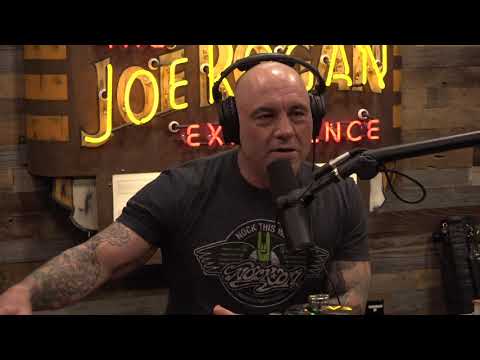
Joe Rogan Experience #1674 - Clay Newcomb
Joe Rogan (host), Clay Newcomb (guest), Narrator, Narrator
In this episode of The Joe Rogan Experience, featuring Joe Rogan and Clay Newcomb, Joe Rogan Experience #1674 - Clay Newcomb explores clay Newcomb, Joe Rogan Reclaim Bear Hunting’s Forgotten American Legacy Joe Rogan and Clay Newcomb dig into the history, culture, and ethics of bear hunting in North America, using Newcomb’s Bear Grease podcast as a springboard. They explore how bear fat once functioned as frontier currency, how much of a bear can be used, and why bears remain both spiritually symbolic and biologically crucial. The conversation also covers the North American conservation model, the misunderstood role of “trophy hunting,” and how modern media has distorted public perception of hunters. Along the way they veer into mule lore, Native taboos, mysterious wildlife sightings, and how storytelling connects modern people to a quickly vanishing frontier past.
Clay Newcomb, Joe Rogan Reclaim Bear Hunting’s Forgotten American Legacy
Joe Rogan and Clay Newcomb dig into the history, culture, and ethics of bear hunting in North America, using Newcomb’s Bear Grease podcast as a springboard. They explore how bear fat once functioned as frontier currency, how much of a bear can be used, and why bears remain both spiritually symbolic and biologically crucial. The conversation also covers the North American conservation model, the misunderstood role of “trophy hunting,” and how modern media has distorted public perception of hunters. Along the way they veer into mule lore, Native taboos, mysterious wildlife sightings, and how storytelling connects modern people to a quickly vanishing frontier past.
Key Takeaways
Bear fat was once frontier currency and remains highly useful.
Rendered bear grease kept longer than pork lard without refrigeration, was traded by the ‘elle’ as a unit of value, and can still be used for cooking, pastries, leather care, soap, salves, and even traditional medicines.
Get the full analysis with uListen AI
Properly handled bear meat is excellent food, not a novelty.
Newcomb and Rogan stress that bear is rich ‘red pork’-like meat; risks like trichinosis are easily controlled by correct cooking temperatures, opening the door to diverse preparations from roasts to sweet ‘bear candy’ dishes.
Get the full analysis with uListen AI
Black bears are thriving and must be actively managed.
Black bear numbers are booming across North America, with double-digit annual growth possible; without hunting, they can heavily depredate moose, caribou, deer fawns, and livestock, forcing some form of lethal control regardless.
Get the full analysis with uListen AI
Indigenous cultures treated bears with complex rules and reverence.
Newcomb cites Koyukon ‘taboos’ like speaking cryptically about hunts, never pointing at bears, slitting their eyes post-mortem, and holding funerals nearly equal to human burials, reflecting deep respect and a codified way of engaging powerful animals.
Get the full analysis with uListen AI
‘Trophy hunting’ originally incentivized conservation, not ego.
The Boone and Crockett Club, led by Theodore Roosevelt, popularized scoring big antlers and skulls to encourage hunters to target old males and spare females and juveniles, helping pull North American wildlife back from market-hunting collapse.
Get the full analysis with uListen AI
Hunters fund and anchor much of modern wildlife conservation.
Through tags, licenses, and excise taxes (e. ...
Get the full analysis with uListen AI
Public views of hunting are shaped by shallow media stereotypes.
Rogan and Newcomb argue that movies and TV typically depict hunters as cruel drunks or one-dimensional villains, while ignoring serious, food-focused hunters whose lifestyles, ethics, and deep preparation look more like MeatEater than Bambi’s hunter.
Get the full analysis with uListen AI
Notable Quotes
““This country was founded on… it really was bear hunting. The American frontier was fueled by bear meat and bear fat.””
— Clay Newcomb
““Where an animal has cultural value, it will be protected and preserved. Where that animal has no cultural value… he will not be protected.””
— Clay Newcomb
““Trophy hunting is what saved North American wildlife… They changed the entire hunting culture of North America.””
— Clay Newcomb
““If you’re a person who eats meat and you don’t know where your meat comes from and you are casting aspersions at hunters, you’re doing it wrong.””
— Joe Rogan
““We are not the bad guys. We are the good guys. Why can’t we tell that story?””
— Clay Newcomb
Questions Answered in This Episode
How would public attitudes toward hunting change if more people directly experienced field dressing, cooking, and eating an animal they helped harvest?
Joe Rogan and Clay Newcomb dig into the history, culture, and ethics of bear hunting in North America, using Newcomb’s Bear Grease podcast as a springboard. ...
Get the full analysis with uListen AI
Can the conservation benefits of regulated hunting be replicated by any non-lethal funding model at the same scale, and if so, what would it look like?
Get the full analysis with uListen AI
Where is the ethical line between necessary predator management and what many people perceive as unjustifiable ‘trophy’ killing?
Get the full analysis with uListen AI
How should Indigenous spiritual traditions and taboos around animals like bears influence modern wildlife policy, if at all?
Get the full analysis with uListen AI
In an age of factory farming and ecological damage from monocrop agriculture, is it more ethical for a meat-eater to hunt than to buy anonymous supermarket meat?
Get the full analysis with uListen AI
Transcript Preview
(drumming music) Joe Rogan podcast, check it out.
The Joe Rogan Experience.
Train by day, Joe Rogan podcast by night, all day. (rock music) What's happening, brother? How are you?
I'm doing very well.
I, uh ... It's always interesting to meet someone in person when you've heard them on a podcast. I've heard you, uh, I don't know-
Yeah.
... a hundred times on the Meat Eater podcast.
Okay.
So to, to see you in person, and then to, uh, start listening to your podcast, which is, uh, Bear Grease, which is a hilarious name for a podcast. And if people don't know, um, bear grease, rendered bear fat, is actually a, a very valuable thing.
Yeah.
And it's great to cook with, and it's, uh ... Like I, I, I'll, I'll never forget when I found out about bear hunting, about bears being good to eat, was actually from Steve Rinella.
Right.
When he was explaining to me about blueberry bears.
Yeah.
And then I watched that video that he put out of him hunting this bear in Alaska that had been eating nothing but blueberries.
Right.
And so when he's, uh, breaking down the bear and taking the fat off, the fat is actually purple-
Yeah.
... because this bear's been eating so many blueberries that it's in its flesh.
Yeah.
And he said it is the most delicious meat you'll ever eat.
Yeah. Well, I mean, bear grease, bear fat is essentially whatever that bear's been eating, you know? And it's flavored, whether it be by acorns or berries or whatever, so.
Or fish.
I have ... I've got some bear grease for you, Joe.
Oh, exciting.
I, I have ... I come bearing many gifts if you would like-
I would love it.
If you would like to see what I've got here.
Tell me what you got there.
Uh, uh, and you know, talking about bear grease and trying to connect it to a podcast, I mean, at some point, I'll have to explain the metaphor of bear grease.
Let's explain it now.
Well, so bear grease at one time was this highly valued commodity, I mean used as a, a unit of currency on the American frontier. And, and, and bear, bear grease, bear oil would be the rendered fat of a bear that would ... turned into liquid, like this right here.
This is, this is-
So this is for you.
Thank you.
Have you ever, have you ever had ... I mean, I know you've bear hunted, but have you had-
Yes.
... bear grease before?
No, I've only ... I've eaten bear. I've never rendered bear fat or cooked anything in bear fat.
Yeah.
I've only just taken the meat and, and cooked it.
Install uListen to search the full transcript and get AI-powered insights
Get Full TranscriptGet more from every podcast
AI summaries, searchable transcripts, and fact-checking. Free forever.
Add to Chrome