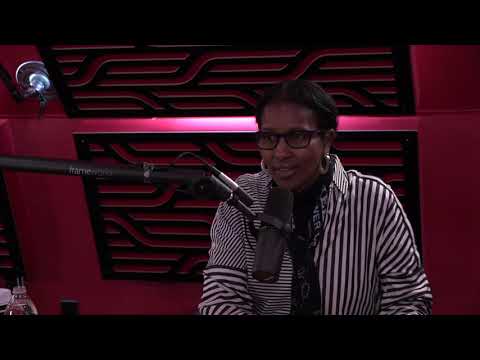
Joe Rogan Experience #1613 - Ayaan Hirsi Ali
Joe Rogan (host), Ayaan Hirsi Ali (guest), Narrator
In this episode of The Joe Rogan Experience, featuring Joe Rogan and Ayaan Hirsi Ali, Joe Rogan Experience #1613 - Ayaan Hirsi Ali explores ayaan Hirsi Ali Warns Woke Politics Threaten Women, Science, Liberty Ayaan Hirsi Ali recounts her journey from an oppressive upbringing in Somalia and Kenya, through a forced‑marriage escape and asylum in the Netherlands, to becoming a politician under threat from Islamists and eventually moving to the U.S. under protection.
Ayaan Hirsi Ali Warns Woke Politics Threaten Women, Science, Liberty
Ayaan Hirsi Ali recounts her journey from an oppressive upbringing in Somalia and Kenya, through a forced‑marriage escape and asylum in the Netherlands, to becoming a politician under threat from Islamists and eventually moving to the U.S. under protection.
She and Joe Rogan discuss ideological conformity in the West—on gender identity, Islam, immigration, COVID policy, and censorship—and how these trends erode objective truth, free speech, and women’s hard‑won rights.
Hirsi Ali argues that Western elites increasingly silence uncomfortable facts (about Islamism, migrant crime, or transgender policy impacts on women) out of fear of being labeled bigots, fueling public distrust of media and institutions.
She calls for open, evidence‑based debate, insisting we can defend trans and Muslim rights without sacrificing scientific reality, women’s safety, or liberal democratic principles.
Key Takeaways
Escaping oppression often depends on both personal resolve and functioning institutions.
Hirsi Ali’s refusal to accept a forced marriage only succeeded because Dutch asylum staff and police backed her autonomy—a reminder that courageous individuals still need rule‑of‑law systems that side with their rights over clan or religious customs.
Get the full analysis with uListen AI
You can defend trans dignity without erasing biological sex or women’s protections.
She supports trans people’s rights but rejects redefining women as “people who menstruate,” allowing biological males into women’s sports and prisons, or medicating children early—all examples where compassion is being weaponized against women’s interests and scientific reality.
Get the full analysis with uListen AI
Objective truth and scientific standards must not be selectively applied.
From COVID testing to paternity tests, we rely on shared, falsifiable facts; Hirsi Ali warns that bending biology to fit gender ideology—or dismissing inconvenient crime and integration data as ‘racist’—breeds chaos and distrust.
Get the full analysis with uListen AI
Euphemism and taboo language are tools of ideological control.
Fights over pronouns, ‘Islamophobia,’ and redefined terms like ‘equity’ function less as clarity and more as loyalty tests; she argues that accepting these uncritically cedes ground to activists who seek power, not understanding.
Get the full analysis with uListen AI
Silencing difficult data on migrant crime harms both victims and integration efforts.
Her book *Prey* documents public‑space sexual assaults in Europe disproportionately by recent male migrants; she argues that refusing to collect or publish clear statistics for fear of stigma prevents targeted interventions and ultimately hurts women and well‑intentioned migrants alike.
Get the full analysis with uListen AI
Lockdowns and emergency powers can outlive their justification if unchallenged.
They discuss how some COVID restrictions persisted despite new evidence, illustrating how governments rarely relinquish powers voluntarily and why open debate and sunset clauses are vital for liberal societies.
Get the full analysis with uListen AI
Tribalized, activist media and tech censorship deepen polarization and fuel populist backlashes.
When mainstream outlets prioritize partisan narratives over reporting (e. ...
Get the full analysis with uListen AI
Notable Quotes
““Our name as woman, plural, women, is not going to be taken away.””
— Ayaan Hirsi Ali
““I am compassionate… but not at the cost of science.””
— Ayaan Hirsi Ali
““You can’t fight an ideology by pretending it doesn’t exist or it’s a good thing.””
— Ayaan Hirsi Ali
““When you deny people the information… you’re no longer a journalist. You’re an activist.””
— Joe Rogan
““Most people are not woke. But they’re scared.””
— Ayaan Hirsi Ali
Questions Answered in This Episode
How can liberal democracies simultaneously protect women’s rights, trans rights, and scientific integrity without framing the issue as zero‑sum?
Ayaan Hirsi Ali recounts her journey from an oppressive upbringing in Somalia and Kenya, through a forced‑marriage escape and asylum in the Netherlands, to becoming a politician under threat from Islamists and eventually moving to the U. ...
Get the full analysis with uListen AI
What practical reforms in asylum and integration policy could reduce the kind of migrant‑perpetrated violence Hirsi Ali describes without fueling xenophobia?
She and Joe Rogan discuss ideological conformity in the West—on gender identity, Islam, immigration, COVID policy, and censorship—and how these trends erode objective truth, free speech, and women’s hard‑won rights.
Get the full analysis with uListen AI
Where should societies draw the line between protecting vulnerable minorities from hate and protecting free speech from ideological policing?
Hirsi Ali argues that Western elites increasingly silence uncomfortable facts (about Islamism, migrant crime, or transgender policy impacts on women) out of fear of being labeled bigots, fueling public distrust of media and institutions.
Get the full analysis with uListen AI
Given the loss of trust in mainstream media and Big Tech, what new models of journalism or platforms might realistically restore credibility and pluralistic debate?
She calls for open, evidence‑based debate, insisting we can defend trans and Muslim rights without sacrificing scientific reality, women’s safety, or liberal democratic principles.
Get the full analysis with uListen AI
How should parents and educators respond to the rise of ‘woke’ ideology in schools while still teaching genuine anti‑racism and respect for individuals?
Get the full analysis with uListen AI
Transcript Preview
(drumbeats) Joe Rogan podcast, check it out. The Joe Rogan Experience. Train by day, Joe Rogan podcast by night, all day. (instrumental music plays) Uh, so first of all, thanks for doing this. I really appreciate it.
Thank you.
Thanks for being here.
Yeah. Thank you so much.
So, you were saying, um, that you're having a hard time getting people to talk to you.
Uh, not exactly. I'm saying that, uh, when I had m- other books published, uh, my publisher would say, "Here's a list of, uh, places you are going to to promote the book." And it was quite striking that this year, it wasn't. Um, uh, I, I published my last book in 2015, it's called Heretic, e- and I was sent to, uh, you know, MSNBC, all of the mainstream media agencies, CNN, it was, it, it was all over the place. Th- they said, "We want you to go there." Uh, and, and I went there. And this year, uh, uh, I just have to do podcasts, it looks like.
So, what has been the response from these, uh, mainstream sources? Whether it's M- MSNBC or CNN or any of these places, they just aren't interested?
I don't know exactly what the communication is between them and HarperCollins, and HarperCollins is my publisher, uh, but we, I had one invitation from a magazine called Bust, B-U-S-T, it's for girls and women-
Is that about breasts?
Uh-
Bust as in breasts? Is that what it means?
Sorry, what does it mean? I, I don't know. Uh-
Okay.
... I've been told it's a magazine for very young people and it's widely distributed so i- it's something that's popular and if you come out with a book about women, well, Bust would be a, a, a, a good place to go to. A- and then I was told, uh, so they had a journalist, uh, lined up and a photographer, it was going to be a big deal. And then we got, um, a story saying, "Sorry, it's not going to happen after all." Because Ayaan supported J.K. Rowling, the author of Harry Potter, um, when, in my view, J.K. Rowling came out in support of women. Um, but, uh, I'm told that I make the people who read that particular magazine unsafe, or there's a potential that I could make them unsafe.
Yeah, that's the phrase that gets used, "make them unsafe" or "make them feel unsafe" or "put them in danger." And I, first of all J.K. Rowling's statements, um, they were not nearly as controversial as people made them out to be, for whatever reason. Do you remember exactly what she said?
She said a number of things. I think she challenged, um, people like she and myself being called people who menstruate.
Yes.
A- a- and sh- and she did do it, you know, with that British sense of humor, "So what are we called these days?" A- a- and she had w- woman spelled in different ways.
Install uListen to search the full transcript and get AI-powered insights
Get Full TranscriptGet more from every podcast
AI summaries, searchable transcripts, and fact-checking. Free forever.
Add to Chrome