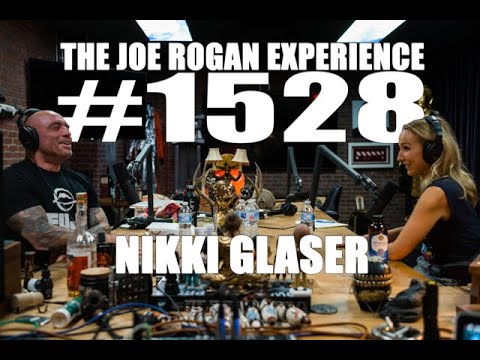
Joe Rogan Experience #1528 - Nikki Glaser
Joe Rogan (host), Nikki Glaser (guest), Narrator, Narrator
In this episode of The Joe Rogan Experience, featuring Joe Rogan and Nikki Glaser, Joe Rogan Experience #1528 - Nikki Glaser explores nikki Glaser, Comedy, COVID, Kink, and Coping With Depression Joe Rogan and Nikki Glaser have a long, meandering conversation that jumps from the impact of COVID-19 on stand-up comedy and city life to mental health, addiction, sex, and porn. They discuss how the pandemic has devastated comedy clubs, altered cities like New York, and left comics without their usual emotional outlet. Nikki opens up about depression, anxiety, childhood trauma, and her struggles with intimacy, relationships, and compulsive behaviors. The episode is also striking for her extremely candid discussion of sexual fantasies and porn use, and for Rogan’s framing of exercise, supplements, and open emotional expression as tools for resilience.
Nikki Glaser, Comedy, COVID, Kink, and Coping With Depression
Joe Rogan and Nikki Glaser have a long, meandering conversation that jumps from the impact of COVID-19 on stand-up comedy and city life to mental health, addiction, sex, and porn. They discuss how the pandemic has devastated comedy clubs, altered cities like New York, and left comics without their usual emotional outlet. Nikki opens up about depression, anxiety, childhood trauma, and her struggles with intimacy, relationships, and compulsive behaviors. The episode is also striking for her extremely candid discussion of sexual fantasies and porn use, and for Rogan’s framing of exercise, supplements, and open emotional expression as tools for resilience.
Throughout, they contrast traditional media constraints with the freedom of podcasting, arguing that unfiltered honesty—even about taboo topics—is ultimately healthier and more compelling.
Key Takeaways
The loss of stand-up during COVID left many comics without their main emotional coping mechanism.
Rogan and Glaser describe comedians as 'laugh junkies' and explain that without nightly shows, many are spiraling, both financially and mentally, as clubs struggle or close permanently.
Get the full analysis with uListen AI
COVID has exposed the fragility of urban economies and entertainment infrastructure.
They discuss large numbers of permanent business closures in New York, fears about whether comedy clubs and bars will survive, and how reopening rules (capacity limits, spacing) fundamentally change the feel of live comedy.
Get the full analysis with uListen AI
Basic health habits and supplementation may meaningfully impact COVID outcomes.
Rogan repeatedly emphasizes vitamin D, C, and zinc, plus exercise, as important for immune function, citing studies linking low vitamin D to worse COVID severity, and describes his own supplement and fitness routine.
Get the full analysis with uListen AI
Addiction isn’t just about substances; behaviors like gaming, porn, and phone use can be equally consuming.
Drawing on the book 'Irresistible,' they talk about video game addiction (including Rogan’s own past problem), dopamine-driven loops, and how dating apps and porn escalate to more extreme content over time.
Get the full analysis with uListen AI
Nikki’s depression appears largely chemical and not strictly situational, requiring both lifestyle and therapeutic responses.
She describes intense, recurring depressive episodes, intrusive suicidal thoughts, and feeling disabled as a comic when depressed, even when her life is objectively going well, and is exploring antidepressants and emotionally focused therapy.
Get the full analysis with uListen AI
Sexuality is highly individualized, and shame around fantasies can conflict with broader values.
Glaser is extremely open about liking bondage, consensual non-consent scenarios, and violent porn aesthetics while still considering herself a feminist, wrestling with the disconnect between her arousal patterns and her ethics.
Get the full analysis with uListen AI
Authenticity in media is increasingly valued over sanitized, 'brand-safe' personas.
They contrast unfiltered podcast conversations with heavily censored late-night or daytime TV, arguing that trying to live as a Disney-clean persona (e. ...
Get the full analysis with uListen AI
Notable Quotes
“We're laugh junkies, we really are.”
— Joe Rogan
“Sometimes I feel like a bad person for the things I talk about.”
— Nikki Glaser
“There’s nothing wrong with feeling sad. There is something wrong with feeling sorry for yourself forever.”
— Joe Rogan
“I don’t want to be used, but sometimes I’m fucking right that people are using me.”
— Nikki Glaser
“You’re not a bad person. You’re just honest about the way your brain works, and everybody’s brain works differently.”
— Joe Rogan
Questions Answered in This Episode
How much responsibility do comedians have to monitor their own mental health when their 'medicine'—stage time—is taken away?
Joe Rogan and Nikki Glaser have a long, meandering conversation that jumps from the impact of COVID-19 on stand-up comedy and city life to mental health, addiction, sex, and porn. ...
Get the full analysis with uListen AI
Where is the ethical line between enjoying violent or degrading porn and supporting real-world harm or exploitation of performers?
Throughout, they contrast traditional media constraints with the freedom of podcasting, arguing that unfiltered honesty—even about taboo topics—is ultimately healthier and more compelling.
Get the full analysis with uListen AI
Are we underemphasizing simple health interventions like vitamin D, exercise, and sleep compared to dramatic policies like lockdowns?
Get the full analysis with uListen AI
How can someone distinguish between normal sadness and the kind of chemical depression Nikki describes that warrants medical intervention?
Get the full analysis with uListen AI
As audiences migrate to podcasts and uncensored formats, what happens to traditional shows that still demand sanitized, advertiser-friendly personas?
Get the full analysis with uListen AI
Transcript Preview
Three, two, one. Hello, Nikki.
(laughs) Hello, Joe Rogan.
So, I saw your tweet. This is how this all came about.
(laughs)
And you said, uh, y- you were gonna shave your head in solidarity for a friend who has cancer.
Yeah.
And then you were like, "Actually, there was no friend."
Yeah. (laughs)
And I was like, "Oh, no."
Yeah.
Nikki's going crazy.
(laughs) Yeah, I'm going off the fucking deep end-
Well-
... is what I was, said, yes.
... the pro- I think we all are, and I try, I've been trying to, like, check in on everybody because all of us comedians have not had our medicine. You know?
That's a good point.
This is, like, we're junkies.
Yeah.
We're laugh junkies, we really are.
Mm-hmm.
You know? And I didn't realize how much, I mean, I knew I missed it, but I did one weekend in Houston, like a month or s- month or so ago.
Mm-hmm.
And then right, right away I was like, "Oh my God, I got my fix." Like, I'm-
I know.
... and then, uh, you know, talking to all these people that are doing, like, Mark Norm's doing shows in a park.
Yep.
You know, Bert Kreischer's doing drive-ins, like-
I'm doing them too.
Are you?
Yeah, I'm going out next weekend.
What is it, have you done them yet?
No, I'm terrified.
So you haven't done any standup since March?
Well, no, I've done standup, I've, I've been sneaking around just, I mean, I did, uh, Salt Lake City, I went out there in July and did Wise Guys-
How was that?
... 'cause they were doing it really responsibly. It was fine, it was good. It was fine, I mean, it felt good to be on stage, but it felt weird, like, I need to be going out every night to feel really good.
Yeah, sharp.
You know, it'd been so many months that I just, I need to get, get some momentum, I need to work out a little bit.
Yeah.
So it felt like I was getting my sea legs back. But I had good shows, and, um, and the room is just so, it's just, you can't, they're not seating the room like the way comedy's supposed to be seated which is everyone bunched together as close to the stage as possible. It's like, it's the worst seated... The, the seating for comedy shows now is like a terrible club. You know how you go to a club and they don't them how to seat and they just let people sit wherever they want?
Yeah.
It's like a shitty open mic, when you first started?
Yeah.
That's the way it feels like now.
Install uListen to search the full transcript and get AI-powered insights
Get Full TranscriptGet more from every podcast
AI summaries, searchable transcripts, and fact-checking. Free forever.
Add to Chrome