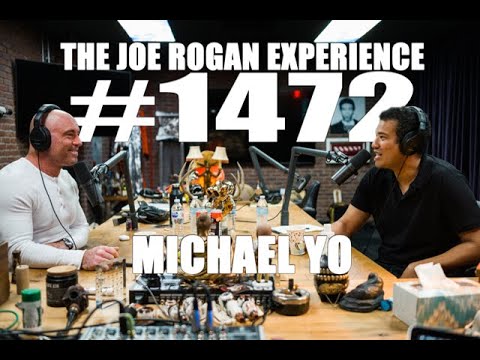
Joe Rogan Experience #1472 - Michael Yo
Joe Rogan (host), Michael Yo (guest), Guest (guest), Guest (guest), Narrator, Guest (guest), Guest (guest), Guest (guest), Guest (guest)
In this episode of The Joe Rogan Experience, featuring Joe Rogan and Michael Yo, Joe Rogan Experience #1472 - Michael Yo explores comedian Michael Yo Survives Brutal COVID Battle, Rogan Deconstructs Health, Fear, and Society Michael Yo recounts in detail how a severe case of COVID-19 nearly killed him, from overwork and initial symptoms to ICU isolation, experimental treatments, and a slow, frightening recovery. Joe Rogan and Yo then pivot into a wide-ranging conversation on immune health, travel, vitamin protocols, sauna use, and how lifestyle and being run down may influence disease severity.
Comedian Michael Yo Survives Brutal COVID Battle, Rogan Deconstructs Health, Fear, and Society
Michael Yo recounts in detail how a severe case of COVID-19 nearly killed him, from overwork and initial symptoms to ICU isolation, experimental treatments, and a slow, frightening recovery. Joe Rogan and Yo then pivot into a wide-ranging conversation on immune health, travel, vitamin protocols, sauna use, and how lifestyle and being run down may influence disease severity.
They also dissect systemic issues exposed by the pandemic: confusing medical guidance, hospital discharge policies, the treatment of pre‑existing conditions in statistics, economic inequality, racism, and media/political spin. Rogan shares his experience calling UFC fights in an empty arena, and they discuss fighter adjustments, testing protocols, and what reopening entertainment might look like.
The latter half of the discussion moves into social topics: racial violence (the Ahmaud Arbery shooting), prison labor replacing striking workers, religious hypocrisy, cult psychology, obesity and “fat acceptance,” laziness versus discipline, and the role of struggle in building character. Throughout, Yo reflects on how coming close to death has permanently changed his outlook on family, work, and gratitude.
Key Takeaways
Being run down may dramatically worsen how hard illness hits you.
Yo stacked flights, driving, shows, and auditions, felt merely ‘tired,’ then crashed hard into COVID, suggesting cumulative fatigue and stress can leave even otherwise healthy people far more vulnerable.
Get the full analysis with uListen AI
Hospital interventions and uncertainty around treatments are still evolving and inconsistent.
Yo was given hydroxychloroquine, an HIV drug, morphine, and oxygen while doctors openly admitted they were ‘trying things’; his doctor refused a ventilator believing it would likely kill him, highlighting how much is still guesswork at the bedside.
Get the full analysis with uListen AI
Recovery from severe COVID can be long, incomplete, and mentally disruptive.
Eight weeks after discharge, Yo was still weak, short of breath, with fluid in his lungs and drastically reduced strength, framing COVID not as a two‑week illness but a long rebuild for severe cases.
Get the full analysis with uListen AI
Day‑to‑day health habits and immune support matter more than most public messaging acknowledges.
Rogan emphasizes vitamin D, C, zinc, glutathione, sauna use, sleep, and reduced travel; he and his doctor argue education on immune resilience should accompany advice on masks and distancing.
Get the full analysis with uListen AI
Travel and overwork can silently crush your immune system.
Both men describe feeling like different, weaker people after heavy travel weekends, reinforcing that constant flights, little sleep, and stress are not just ‘part of the grind’—they can be a serious health risk.
Get the full analysis with uListen AI
The pandemic is exposing deep systemic inequities and ethical gaps.
They discuss hospitals not retesting discharges because of capacity and insurance costs, pre‑existing condition stats that may obscure risk, racial disparities in who gets sick, Asian‑targeted assaults, and even prison labor replacing striking garbage workers.
Get the full analysis with uListen AI
Struggle, discipline, and honest feedback are crucial antidotes to complacency.
Referencing David Goggins, Jocko Willink, and Cameron Hanes, Rogan argues that confronting discomfort—hard workouts, criticism, self-honesty—builds resilience, whereas laziness, excuse-making, and denial (about weight, effort, or capability) trap people in mediocrity.
Get the full analysis with uListen AI
Notable Quotes
“If they had an eject button on life, I may have hit it. I was in that much pain.”
— Michael Yo
“If we put him on a ventilator, he's gonna die, because his body is gonna say, ‘Okay, this machine is breathing for us, we don't need to work anymore.’”
— Michael Yo, quoting his ICU doctor
“This is something that you're not hearing. Everything is social distancing… but we need education on how to keep your immune system strong.”
— Joe Rogan
“You almost have to at least almost have everything taken away to really appreciate it.”
— Joe Rogan
“Some people have real problems mentally… but some people are just lazy fucks and use it as an excuse.”
— Joe Rogan
Questions Answered in This Episode
How should individuals realistically balance ‘pushing themselves’ in work and travel with protecting their immune systems from burnout?
Michael Yo recounts in detail how a severe case of COVID-19 nearly killed him, from overwork and initial symptoms to ICU isolation, experimental treatments, and a slow, frightening recovery. ...
Get the full analysis with uListen AI
What safeguards or standards should hospitals and regulators adopt to reduce the use of unproven treatments on desperate COVID patients?
They also dissect systemic issues exposed by the pandemic: confusing medical guidance, hospital discharge policies, the treatment of pre‑existing conditions in statistics, economic inequality, racism, and media/political spin. ...
Get the full analysis with uListen AI
How can public health messaging better integrate concrete immune-support strategies without encouraging pseudoscience?
The latter half of the discussion moves into social topics: racial violence (the Ahmaud Arbery shooting), prison labor replacing striking workers, religious hypocrisy, cult psychology, obesity and “fat acceptance,” laziness versus discipline, and the role of struggle in building character. ...
Get the full analysis with uListen AI
In cases like Ahmaud Arbery’s killing and prison labor for striking workers, what reforms are needed to address both racism and economic exploitation?
Get the full analysis with uListen AI
To what extent is celebrating dramatic weight loss encouraging health versus reinforcing harmful beauty standards, and how should public figures talk about it?
Get the full analysis with uListen AI
Transcript Preview
Michael Yeoh.
Yes.
Back from the brink.
(sighs) It- it's crazy.
You are the first guy that I've ... Well, my friend Sturgill got it, and I talked to him, but he didn't get it real bad.
Like how bad is not real bad?
He didn't get it bad. He-
Okay.
He was like a little fatigued.
Yeah.
Yeah. So tell-
It-
So give me the full rundown. For people who don't know what we're talking about, you got coronavirus. You were one of the first to get it, uh, that I know. You got it right after you were on this podcast. You were on this podcast.
I-
You flew to New York.
Did Gotham for four shows.
Little rundown.
Yeah. Little rundown. As soon as I landed, I did Wendy Williams on Monday, and then I flew back and went to Vegas for a day, soon as I got back, and then had three auditions. So I was run down. And that weekend-
Were you feeling sick already?
No. No.
Just tired?
Just tired. Tired. But, I mean, we're always tired, really.
Right.
You know?
The road. The road gets you.
Yeah. And- and I was- I was moving all the time, and very stressful. You know, you're- you're trying to perform. You're trying to learn lines for an audition.
Mm-hmm.
So I was- I was very stressed out. I was traveling a lot. And that was like my third weekend in a row. So it was-
You get sleep? Much sleep or no?
Yeah. I- I get great sleep, but you know, with two kids, like they're both at the age where, you know-
Right.
... you have to have both eyes on them.
Do you ever, um, wear a sleep monitoring device or anything that-
I have, but I- it- it-
Like a Whoop strap?
No. I- I've never worn that. But I get eight to nine hours of sleep every night.
Mm-hmm.
Like I'm a great sleeper.
Okay.
Like I sleep through anything.
All right.
So it wasn't the sleep thing. I was just- I was just tired, overworked maybe. But Saturday, that Saturday, I didn't feel right. My temperature went up to like 101.
This is- you flew to New York what day?
Uh, it was- I performed- I was there Wednesday, which would've been, I'm guessing, that date's May 4th. I mean, yeah, March 4th. March 4th. I performed the 6th and 7th, stayed the 8th, did Wendy Williams on the 9th, flew back on that Monday, went to Vegas Tuesday morning, came back that same day, then-
What'd you do in Vegas? Besides heroin. (laughs)
(laughs) I wa- we were- you know, we- I was visiting her parents-
Install uListen to search the full transcript and get AI-powered insights
Get Full TranscriptGet more from every podcast
AI summaries, searchable transcripts, and fact-checking. Free forever.
Add to Chrome