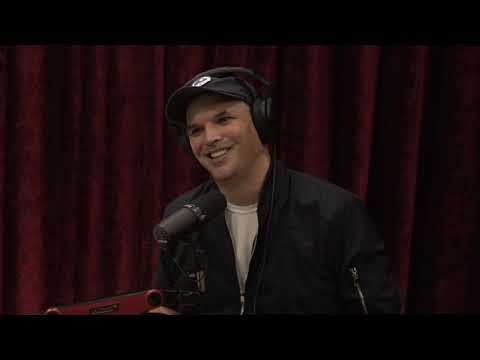
Joe Rogan Experience #1745 - Matt Taibbi
Narrator, Narrator, Matt Taibbi (guest), Joe Rogan (host), Narrator, Narrator, Narrator, Narrator, Narrator, Narrator, Narrator
In this episode of The Joe Rogan Experience, featuring Narrator and Narrator, Joe Rogan Experience #1745 - Matt Taibbi explores matt Taibbi and Joe Rogan Dissect Media Corruption, Fear, Control, Power Joe Rogan and journalist Matt Taibbi explore how fear, COVID, and Trump-era politics have reshaped media, government power, and public trust. They argue that legacy outlets have become "anxiety machines," incentivized to inflame outrage while lowering factual and ethical standards. Taibbi describes the rapid rise of independent media like Substack and podcasts as a market response to this manipulation, but notes there are few truly skilled investigative reporters left. Throughout, they connect issues like lab-leak coverage, Ivermectin disinformation, bailouts, policing, censorship, and culture-war taboos as symptoms of a deeper structural crisis in journalism, politics, and corporate influence.
Matt Taibbi and Joe Rogan Dissect Media Corruption, Fear, Control, Power
Joe Rogan and journalist Matt Taibbi explore how fear, COVID, and Trump-era politics have reshaped media, government power, and public trust. They argue that legacy outlets have become "anxiety machines," incentivized to inflame outrage while lowering factual and ethical standards. Taibbi describes the rapid rise of independent media like Substack and podcasts as a market response to this manipulation, but notes there are few truly skilled investigative reporters left. Throughout, they connect issues like lab-leak coverage, Ivermectin disinformation, bailouts, policing, censorship, and culture-war taboos as symptoms of a deeper structural crisis in journalism, politics, and corporate influence.
Key Takeaways
Outrage-driven media erodes trust and factual rigor.
Taibbi argues that large news organizations now optimize for keeping audiences angry and addicted, rewarding ideologically convenient errors instead of accuracy, which drives people to seek information elsewhere.
Get the full analysis with uListen AI
Independent media is booming because audiences feel manipulated.
Substack, podcasts, and creator-funded outlets grow as viewers and readers seek voices that don’t appear to be coordinated with corporate or party narratives—though funding deep investigative work remains a challenge.
Get the full analysis with uListen AI
Fear and chaos are repeatedly leveraged to expand government and corporate power.
From the Patriot Act after 9/11 to domestic terrorism framing and COVID emergency powers, Rogan and Taibbi see a pattern where crises justify surveillance, censorship, and corporate bailouts that rarely roll back.
Get the full analysis with uListen AI
Media framing of COVID treatments and origins has been heavily politicized.
They highlight how lab-leak questions and drugs like ivermectin or hydroxychloroquine were often dismissed not on data but on whether Trump or political opponents supported them, with dissenting discussion suppressed on major platforms.
Get the full analysis with uListen AI
Corporate and philanthropic money quietly shape coverage and policy narratives.
Taibbi cites Bill Gates’ extensive media funding and pharmaceutical ad dependence as forces that can subtly steer what gets investigated, how stories are framed, and which questions are never seriously pursued.
Get the full analysis with uListen AI
Criminal justice debates are distorted by elite distance from real-world consequences.
They argue many defund-the-police and ultra-lenient bail policies are driven by affluent activists far from high-crime neighborhoods, producing policies that often harm the very communities they claim to help.
Get the full analysis with uListen AI
Free speech and taboo topics are critical to a healthy society.
Whether discussing trans issues, race, or extremist groups, they insist that suppressing uncomfortable debate via deplatforming or social intimidation backfires, fueling distrust and driving ideas underground instead of refuting them.
Get the full analysis with uListen AI
Notable Quotes
“Now it's just one gigantic anxiety machine. If you turn on MSNBC or CNN or even Fox, basically their job is to get you worked up about stuff.”
— Matt Taibbi
“There’s a massive audience out there that is very frustrated with traditional media, the manipulative aspects of it, the predictability of it.”
— Matt Taibbi
“This is the biggest scam that’s ever existed, this job. The fact that people think this is hard… compared to a real job, it would be a travesty to call this a hard job.”
— Joe Rogan
“We used to have this terror as reporters that if you got something really badly wrong, it could end your career. Now, if you make a really bad mistake, your audience is probably going to be fine with it—as long as it’s in the right direction.”
— Matt Taibbi
“If you believe in free speech, you believe in all speech. Even if it’s wrong, even if it’s inaccurate, you have to defend free speech.”
— Joe Rogan
Questions Answered in This Episode
How can independent media practically fund large-scale investigative projects and foreign reporting without recreating the same corporate pressures they’re escaping?
Joe Rogan and journalist Matt Taibbi explore how fear, COVID, and Trump-era politics have reshaped media, government power, and public trust. ...
Get the full analysis with uListen AI
To what extent are news organizations consciously shaping narratives for ideological goals versus unconsciously following financial and social incentives?
Get the full analysis with uListen AI
What specific structural reforms—legal, economic, or cultural—could realistically reduce pharmaceutical and corporate capture of public health policy and media?
Get the full analysis with uListen AI
How should societies balance the real dangers of misinformation and extremism with the equally real dangers of censorship and expanded surveillance powers?
Get the full analysis with uListen AI
Given the erosion of trust in institutions, what would a credible, transparent standard for admitting and correcting major media errors need to look like?
Get the full analysis with uListen AI
Transcript Preview
(drumming) Joe Rogan podcast, check it out. The Joe Rogan Experience.
Train by day, Joe Rogan podcast by night, all day. (rock music)
So you like it down here better?
I love it.
Yeah?
I love it. Yeah. People are so nice. There's less of them, so they're not a burden. Oh, yeah.
(laughs)
Yeah, you know, I think big cities, you just... People just become in your, they get in your way.
Right.
And no one's in your way here. Everyone's friendly.
Yeah.
It's like normal.
That's great.
They're normal people. Plus, it's not tainted by show business. As much as people try to pretend that Hollywood, uh, you know, doesn't have an effect on their lives, "I'm in real estate." Get the fuck out of here. Like everyone is tainted by that, the weirdness of that city.
Yeah.
'Cause it's a city that's predicated on being full of shit. Like you have to-
I was gonna say.
... pretend or something.
Yeah, like everybody, as soon as they're talking, they're, they're, they start lying basically.
(laughs)
Right?
Well, they, they-
It's like an angle they play.
For sure, like, p- it's they're selling themselves.
Right.
And promoting an angle. And out here, no one's doing that.
Right.
It's so refreshing.
(laughs)
It's like, "This is Mike. He does, he makes barbecue." "Oh, oh, hi Mike."
(laughs)
Like Mike's a normal guy, you know?
Must take some time to sort of de- decompensate and decompress, get back to talking about-
It took a few weeks. That's it.
Mm-hmm.
And then I was like, "Yeah." Like I embraced it right away because, you know, we, when we moved here, um, we'd s-... I started looking in May of 2020. I was like, "I'm getting the fuck out of here. I, I see the writing on the wall."
Mm-hmm.
Because there was two weeks to stop the spread and flatten the curve. Like, okay, makes sense. That makes sense. I was all on board. And then as time went on, I'm like, this is not two weeks. And then they were talking about more restrictions, and then they were shutting down outdoor dining and this and that. And I was like, "What, what are they doing?" Oh, they're, they're enjoying this. They're enjoying telling people what to do.
(laughs)
Which is just basic human nature to pretend that they would, that government agencies, that people who wanted to be mayor, people that wanted to be governor, would somehow or another avoid all the pitfalls that are just naturally a part of being a person when a person has power, especially power over a bunch of people that are scared.
Mm-hmm.
And you're offering solutions and you're standing there and, "We have to keep the safety of our communities in mind."
Install uListen to search the full transcript and get AI-powered insights
Get Full TranscriptGet more from every podcast
AI summaries, searchable transcripts, and fact-checking. Free forever.
Add to Chrome