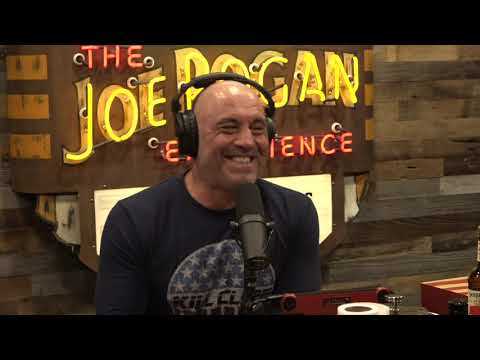
Joe Rogan Experience #1703 - Tom Segura
Narrator, Joe Rogan (host), Tom Segura (guest), Narrator, Narrator, Narrator, Narrator, Narrator, Narrator
In this episode of The Joe Rogan Experience, featuring Narrator and Joe Rogan, Joe Rogan Experience #1703 - Tom Segura explores joe Rogan and Tom Segura Deconstruct COVID, Media, Crime, and Insanity Joe Rogan and Tom Segura open with Rogan’s COVID case, detailing his controversial treatment regimen (including ivermectin and monoclonal antibodies) and the media backlash, especially from CNN. They discuss how hard it is to get trustworthy information on COVID, vaccines, and treatments, and how politicization has warped public health debates.
Joe Rogan and Tom Segura Deconstruct COVID, Media, Crime, and Insanity
Joe Rogan and Tom Segura open with Rogan’s COVID case, detailing his controversial treatment regimen (including ivermectin and monoclonal antibodies) and the media backlash, especially from CNN. They discuss how hard it is to get trustworthy information on COVID, vaccines, and treatments, and how politicization has warped public health debates.
The conversation sprawls into parenting, dark family humor, war trauma, Afghanistan, abortion laws in Texas, the war on drugs, crime and policing, and the collapse of trust in news media. They repeatedly return to themes of personal health, government overreach, and the dangers of ideological extremes on both left and right.
They also talk about stand-up comedy post-pandemic, touring health routines, sobriety, Sober October, gun culture, LA vs. Texas, and wild crime stories from arsonists to serial killers. Throughout, they blend serious social criticism with graphic, often absurd humor and personal anecdotes.
The episode functions as a long-form snapshot of how two high-profile comics are processing COVID-era culture: skeptical of institutions, wary of censorship, strongly pro-autonomy, and trying to adapt their own lives and careers to an unstable environment.
Key Takeaways
Early, aggressive COVID treatment and baseline health may significantly influence outcomes.
Rogan attributes his rapid recovery to being generally healthy and “throwing the kitchen sink” at COVID immediately (monoclonal antibodies, high-dose vitamin C and D, NAD drips, ivermectin), arguing timing and pre-existing health status are crucial—even though the evidence on some treatments is debated.
Get the full analysis with uListen AI
Media framing can override core facts, eroding public trust.
Rogan is less upset that people mocked ivermectin than that major outlets repeatedly called it “horse dewormer” despite its human use history, while ignoring that he recovered quickly; he and Segura see this as emblematic of agenda-driven coverage on both COVID and politics.
Get the full analysis with uListen AI
COVID and vaccines have become tribal identity markers instead of medical choices.
They note how positions on vaccines, treatments, and mandates now signal political team membership (right = anti-vax, left = pro-Fauci), making nuanced, case-by-case thinking socially costly and obscuring questions like natural immunity vs. ...
Get the full analysis with uListen AI
Overreach in public health policy risks morphing into long-term authoritarian norms.
They criticize vaccine-passport regimes (e. ...
Get the full analysis with uListen AI
Local criminal justice experiments can quickly destabilize public safety.
Through examples like LA’s progressive DA policies, California arson cases, and a Malibu machete attack, they argue that under-enforcement and ideological prosecution standards are already creating real-world danger and citizen backlash (e. ...
Get the full analysis with uListen AI
Personal discipline—sleep, sobriety, and structured health routines—becomes non‑negotiable under heavy workloads.
Both describe learning the hard way that late nights, heavy drinking, and nonstop travel lead to illness and underperformance; they now build in IV drips, exercise, sleep prioritization, and even month-long sobriety (Sober October) to sustain touring at scale.
Get the full analysis with uListen AI
Long-form, unscripted conversations fill a vacuum left by politicized, compressed media formats.
They argue the seven-minute, ad-driven TV segment model incentivizes sensationalism and clear villains/heroes, while podcasts allow people to show uncertainty, change their minds, and process complex issues—something they believe mainstream news no longer provides.
Get the full analysis with uListen AI
Notable Quotes
“They keep saying I'm taking horse dewormer. I literally got it from a doctor.”
— Joe Rogan
“It’s mostly not doctors that have the strongest opinions about all of this.”
— Tom Segura
“Imagine spending any time whatsoever wishing that a person felt bad. It’s the dumbest fucking thing you could ever spend your energy on.”
— Joe Rogan
“I still struggle with the idea of why so many guys think… you’re not carrying it, man.”
— Tom Segura, on abortion restrictions
“I don’t know how that state turns around… it’s like this demise that seems like the slide has begun and there’s no mechanism in place that’s gonna turn it around.”
— Joe Rogan, on California
Questions Answered in This Episode
How should we balance the need to combat misinformation with the risk of suppressing legitimate medical debate and off-label treatments?
Joe Rogan and Tom Segura open with Rogan’s COVID case, detailing his controversial treatment regimen (including ivermectin and monoclonal antibodies) and the media backlash, especially from CNN. ...
Get the full analysis with uListen AI
What concrete reforms—if any—could restore public trust in major news organizations across the political spectrum?
The conversation sprawls into parenting, dark family humor, war trauma, Afghanistan, abortion laws in Texas, the war on drugs, crime and policing, and the collapse of trust in news media. ...
Get the full analysis with uListen AI
How far should governments be allowed to go with vaccine mandates, health passports, and digital surveillance tools in the name of public safety?
They also talk about stand-up comedy post-pandemic, touring health routines, sobriety, Sober October, gun culture, LA vs. ...
Get the full analysis with uListen AI
Are progressive criminal justice experiments in large cities improving long-term equity, or are they creating new forms of harm that will provoke a hard swing back?
The episode functions as a long-form snapshot of how two high-profile comics are processing COVID-era culture: skeptical of institutions, wary of censorship, strongly pro-autonomy, and trying to adapt their own lives and careers to an unstable environment.
Get the full analysis with uListen AI
Given the realities of modern touring and high-stress careers, what sustainable health and sobriety strategies actually work for performers—and how replicable are they for ordinary people?
Get the full analysis with uListen AI
Transcript Preview
(drumming) Joe Rogan podcast, check it out. The Joe Rogan Experience.
Train by day, Joe Rogan podcast by night, all day. (rock music) My man. What's up?
Hey, man. How are-
What's up, brother?
Well, well, well.
Well, well, well.
If it isn't old horse worm Rogan.
(laughs)
(laughs) I'm glad you're, I'm glad you're well, man.
Bro, do I have to sue CNN?
I don't know.
I don't know. Do you?
They're making shit up. They keep saying I'm taking horse dewormer. I literally got it from a doctor. It's an, uh, American company.
Mm-hmm.
It's, uh, it, they won the Nobel Prize in 2015 for use in human beings.
Yeah.
And CNN is saying I'm taking horse dewormer.
Yeah, what, so-
Well, that's-
They must know that that's a lie.
There's a lot of people saying it. (laughs)
Right, but a lot of people can say it.
Okay.
Like, the internet says it. Who cares?
Sure. But it's-
But CNN is saying it.
Well, anyway.
Like, Jim Acosta.
I, I meant, like, uh, like, USA Today, a few other, like-
Yeah.
... places, not just people.
And they're talking ab- of- about ivermectin, right?
Yeah.
So what ... 'Cause I don't know. I just saw (blows raspberry) so much news-
Yeah.
... about you. I mean, I would talk to you and check on you and see if you're all right, and you're like-
(laughs)
You, you, you threw the kitchen sink at it, you said.
Yeah.
Which was stuff that, you know, you took IV drips and what was it? Mono what? Mono-
Monoclonal antibodies.
And that ... What is monoclonal antibodies?
The shit they gave Trump.
Okay.
Yeah.
And then what ... So who said or did you already want ivermectin? Like-
Well, I had this guy on, Dr. Pierre Kory, and he is, uh, what is the organization he's from? Frontline cr- COVID critical care workers?
Yeah, there's a lot of Cs.
He's a well-established doctor, has treated thousands of people with COVID, and they've, uh, the, early on in the pandemic, they found some good, uh, efficacy with, uh, with g- with, um, ivermectin. Frontline 19 Critical Care Alliance.
Okay.
Yeah. Um, so I had him on, and, you know, he had talked to me about it. He's not, he's not the only doctor that told me to take it. Multiple doctors told me to take it.
Mm-hmm.
It's, uh, it's supposed to have, uh, what is the exact thing it's supposed to do? There's, there's something that I highlighted. Um, th- and this is ... Obviously, I'm not a doctor. It says, "I- ivermectin was found to be a blocker of viral, uh, replica- e- replicase, R-E-P-L-I-C-A-S-E protease," and I don't know what this word is, "human TMPRSS2." I don't know. But what they didn't highlight-
Install uListen to search the full transcript and get AI-powered insights
Get Full TranscriptGet more from every podcast
AI summaries, searchable transcripts, and fact-checking. Free forever.
Add to Chrome