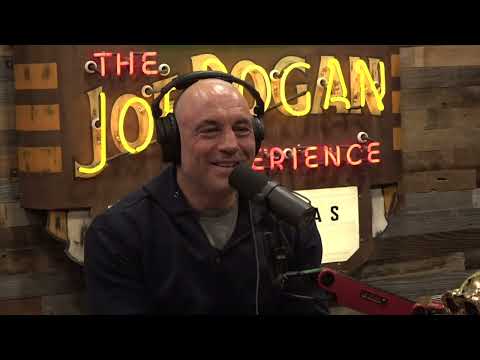
Joe Rogan Experience #1884 - Anthony Kiedis
Joe Rogan (host), Anthony Kiedis (guest), Narrator, Narrator, Narrator
In this episode of The Joe Rogan Experience, featuring Joe Rogan and Anthony Kiedis, Joe Rogan Experience #1884 - Anthony Kiedis explores anthony Kiedis on aging, sobriety, art, nature, and discipline Joe Rogan and Anthony Kiedis range across aging, injury, and physical maintenance, with Kiedis describing osteopathy, movement, surfing, and performing as his core health practices as he approaches 60.
Anthony Kiedis on aging, sobriety, art, nature, and discipline
Joe Rogan and Anthony Kiedis range across aging, injury, and physical maintenance, with Kiedis describing osteopathy, movement, surfing, and performing as his core health practices as he approaches 60.
They dig into fame and anonymity, cultural appropriation, and the unique cultural stew of the United States, using food, music, and Native American experiences to illustrate how borrowing across cultures creates new art.
A large portion of the conversation covers addiction and long‑term sobriety: Kiedis recounts his heroin/cocaine years, two major attempts at recovery, the role of rehab, service, humility, and how he now navigates painkillers and lifestyle.
They also explore creativity and craft—how Red Hot Chili Peppers songs are written, Rick Rubin’s role, why emotional honesty matters in lyrics—and their shared obsessions with combat sports, nature, and altered states like float tanks and psychedelics.
Key Takeaways
Consistent movement and joint care are critical for aging performers.
Kiedis ties his performance quality directly to how his body feels—especially knees and shoulders—and uses modalities like osteopathy, hanging for shoulder health, surfing, biking, and nightly stage work to keep moving instead of trying to rebuild later.
Get the full analysis with uListen AI
Reframing daily discomforts with perspective reduces bitterness and self‑pity.
After a vibrant young acquaintance died suddenly, Kiedis adopted the blunt mantra “Don’t be a bitch” to check his own complaints, reminding himself that relative to global suffering, his problems are tiny and gratitude is more appropriate than whining.
Get the full analysis with uListen AI
Sobriety requires ongoing maintenance, not just a one‑time detox.
Kiedis describes getting clean at 27, relapsing after neglecting the practices that kept him sober (service, humility, self‑examination), and learning that recovery is like fitness or craft—you lose it if you stop doing the work, especially around triggers like prescribed painkillers.
Get the full analysis with uListen AI
Emotional honesty in art connects more deeply than cleverness alone.
He notes that the songs that resonate longest, like “Under the Bridge,” come from vulnerable, truthful places, and credits Rick Rubin for insisting he share a personal “poem” he was embarrassed by—proof that raw honesty often becomes the most enduring work.
Get the full analysis with uListen AI
Cultural “appropriation” is often love, not theft, and fuels innovation.
Using examples like Texas barbecue’s German roots, Jewish brisket, Native American regalia gifted to the band, and Elvis drawing from Black music, they argue that borrowing and blending across cultures is how new food, music, and architecture emerge.
Get the full analysis with uListen AI
Being in wild nature regularly is psychologically stabilizing and humbling.
Both men describe oceans and mountains as essential antidotes to city anxiety and ego—surfing with whales, hiking remote Yosemite as teens, stargazing atop Hawaiian observatories—experiences that re‑center them more powerfully than technology or city life.
Get the full analysis with uListen AI
Mastery is pattern recognition that transfers across disciplines.
Rogan cites Musashi’s line, “Once you understand the way broadly, you can see it in all things,” connecting samurai philosophy to jiu‑jitsu, comedy, music, and farming, while Kiedis echoes that the Chili Peppers’ openness to any style comes from deeply understanding rhythm and feeling first.
Get the full analysis with uListen AI
Notable Quotes
“I woke up today and complained about room service and traffic; what do I have to complain about, really? Don’t be a bitch.”
— Anthony Kiedis
“We were never in it for the money. The money was a bonus. I just want people to hear it.”
— Anthony Kiedis
“The hardest of the hard, the gangsters of L.A., I’ll hear ‘Under the Bridge’ coming out of a low rider and they just melt. That was a day well spent writing that song.”
— Anthony Kiedis
“Once you understand the way broadly, you can see it in all things.”
— Joe Rogan (quoting Miyamoto Musashi)
“Violence in real life crushes my heart. But dedicate your life to the art and it becomes a chess match.”
— Anthony Kiedis
Questions Answered in This Episode
How did Anthony Kiedis’s second, more mature attempt at sobriety differ in mindset and daily practice from his first time getting clean?
Joe Rogan and Anthony Kiedis range across aging, injury, and physical maintenance, with Kiedis describing osteopathy, movement, surfing, and performing as his core health practices as he approaches 60.
Get the full analysis with uListen AI
In what ways has Rick Rubin’s philosophy about chasing “magic” rather than formulas altered the trajectory of the Red Hot Chili Peppers’ music?
They dig into fame and anonymity, cultural appropriation, and the unique cultural stew of the United States, using food, music, and Native American experiences to illustrate how borrowing across cultures creates new art.
Get the full analysis with uListen AI
Can cultural appropriation be harmful and beneficial at the same time, and where does Kiedis personally draw that line as an artist?
A large portion of the conversation covers addiction and long‑term sobriety: Kiedis recounts his heroin/cocaine years, two major attempts at recovery, the role of rehab, service, humility, and how he now navigates painkillers and lifestyle.
Get the full analysis with uListen AI
How might Kiedis’s experience with osteopathy and tailored wild‑game nutrition inform how other aging athletes and performers manage chronic injuries?
They also explore creativity and craft—how Red Hot Chili Peppers songs are written, Rick Rubin’s role, why emotional honesty matters in lyrics—and their shared obsessions with combat sports, nature, and altered states like float tanks and psychedelics.
Get the full analysis with uListen AI
What specific writing or meditative rituals does Kiedis use to access the emotionally honest state that produced songs like “Under the Bridge”?
Get the full analysis with uListen AI
Transcript Preview
(drumming) Joe Rogan podcast, check it out. The Joe Rogan Experience.
Train by day, Joe Rogan podcast by night. All day. (rock music) Good to see you, man. What's happening?
How do you feel? What is really happening?
Your show was fucking great.
I- thank you.
I really enjoyed it.
I'm so happy to hear that. What that means to me is, even on a off night, we're still pretty damn good.
That was an off night?
Way off.
Really?
Bad sound. But-
Sound was bad?
For me.
Sounded good.
We have high standards.
(laughs) I guess. I mean, it was, it was excellent.
Thank you.
W- so what else was wrong? High s- the sound?
Well, I like to dance, and I like to get the, the mojo flowing-
Right.
... at maximum f- photon speed.
Right.
And my knee was locked up, so I couldn't fully flow, which is disconcerting, and it actually throws my singing off as well.
Mm.
But-
Well, we talked afterwards about your knee injury, but while you were on stage, I didn't notice anything. You moved great.
Mm. I can move better, but thanks. The good news for me is-
(laughs)
... I'm surrounded by Jon, Chad, and Flea, which is just, like, a, a huge uplifting energy circle, so. They carry me.
Yeah.
Yeah.
How did you injure your knee? Is it just from all the years of dancing on stage?
Pounding.
Yeah.
Pounding onstage for 100 years, yeah.
You know Maynard from Tool? He's got a, uh, artificial hip.
Mm-hmm.
Just from stomping.
(laughs) From stomping?
From stomping onstage, he blew his fucking hip out.
I'm not surprised. What I am surprised is that Mick Jagger hasn't blown both of his hips out.
Oh, man. We saw him when he was at COTA, the Circuit of the Americas here in Austin. It was insane. For a- first of all, it was like a psychedelic experience just seeing him.
Mm-hmm.
'Cause you can't believe, "That's really Mick Jagger up there."
Mm-hmm.
Like, "That's the fucking Rolling Stones." They were incredible. And he's still dancing around. He's as old as Biden.
He's as old as- (laughs)
Need to understand-
Wh- which is a official expression, by the way.
Yeah, I mean, that's- he's, like, commensurate. It's like, I think he's basically the same age, right? Like, what is Biden? Biden's like 78? And I think Mick Jagger is, like, 78 as well. I think he's in the neighborhood. Right? How old is he? You can ask your friend. I, I, I think- He's 79. ... it's because he's-
79.
He's 79.
79.
Geez.
He's so light.
Yeah.
Install uListen to search the full transcript and get AI-powered insights
Get Full TranscriptGet more from every podcast
AI summaries, searchable transcripts, and fact-checking. Free forever.
Add to Chrome