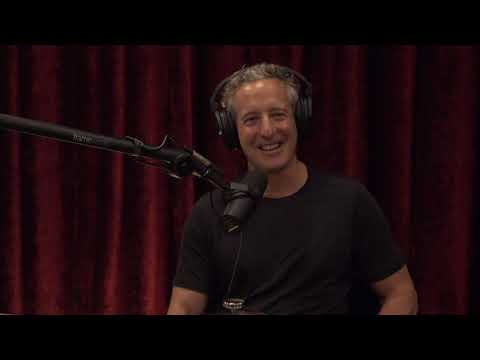
Joe Rogan Experience #1663 - Edward Slingerland
Joe Rogan (host), Narrator, Narrator, Edward Slingerland (guest), Narrator, Narrator
In this episode of The Joe Rogan Experience, featuring Joe Rogan and Narrator, Joe Rogan Experience #1663 - Edward Slingerland explores why Humans Drink: Alcohol, Evolution, Creativity, and Controlled Chaos Joe Rogan and philosopher Edward Slingerland explore why humans have evolved to love alcohol despite its obvious health and social costs, arguing that it functions as a cultural technology to dial down the prefrontal cortex and enable spontaneity, creativity, and social bonding.
Why Humans Drink: Alcohol, Evolution, Creativity, and Controlled Chaos
Joe Rogan and philosopher Edward Slingerland explore why humans have evolved to love alcohol despite its obvious health and social costs, arguing that it functions as a cultural technology to dial down the prefrontal cortex and enable spontaneity, creativity, and social bonding.
Slingerland connects his work on the Chinese concept of wu wei (effortless action) to intoxication, suggesting alcohol is one reliable, historically central way societies have solved the paradox of “trying not to try.”
They trace the deep history of alcohol and other intoxicants—from early fermented beers and Göbekli Tepe rituals to hallucinogen-laced brews and modern psychedelics—framing intoxication as a driver of culture, cooperation, and even civilization itself.
The conversation also ranges into creativity, exercise, sleep, simulation theory, COVID, and personality differences, repeatedly returning to the idea that tools like alcohol and drugs can be hugely beneficial or disastrous depending on dose, context, and individual biology.
Key Takeaways
Alcohol’s core function is turning down the prefrontal cortex to enable spontaneity.
By mildly suppressing executive control, alcohol helps people relax, feel more childlike, become more creative, and enter social ‘flow’ states where conversation, humor, and problem-solving come easier.
Get the full analysis with uListen AI
Humanity’s long relationship with booze is likely adaptive, not a pure mistake.
Given alcohol’s massive costs—addiction, health damage, violence—evolution should have eliminated our taste for it if it were only harmful; instead, its persistence suggests benefits for creativity, social trust, and cooperation.
Get the full analysis with uListen AI
Dose, context, and company largely determine whether alcohol is medicine or poison.
Historically, low-alcohol drinks, ritual rules, and communal settings acted as safety systems; modern access to strong liquor at home—especially alone, as seen during COVID—removes those brakes and magnifies harms.
Get the full analysis with uListen AI
Intoxicants can catalyze cultural innovation by scrambling habitual thought patterns.
From ancient shamans on hallucinogens to coders sipping whiskey at Google, altered states often help people escape cognitive ruts and generate novel solutions, though most “trip insights” are noise with a few high-value ideas.
Get the full analysis with uListen AI
Different brains respond very differently to the same drug, so one-size advice fails.
Genetic predispositions shape alcoholism risk and reactions to substances like cannabis; what serves as a creativity tool for one person can trigger psychosis, addiction, or total dysfunction in another.
Get the full analysis with uListen AI
Many non-chemical practices tap into similar states as drinking or psychedelics.
Exercise, sleep deprivation, meditation, intense music, dance, and ritual can all shut down or bypass the prefrontal cortex temporarily, producing ecstasy, bonding, and creativity without the same pharmacological risks.
Get the full analysis with uListen AI
We should design smarter norms around alcohol instead of blanket celebration or prohibition.
Acknowledging alcohol’s real social and creative benefits, while building in structural safeguards—limited servings, strong non-alcoholic options, protecting non-drinkers from career penalties—can preserve upsides while reducing damage.
Get the full analysis with uListen AI
Notable Quotes
“Alcohol is basically a cultural technology for temporarily turning down your prefrontal cortex, so you can be like a four-year-old for a little bit.”
— Edward Slingerland
“Civilization comes from intoxication. Hunter-gatherers were motivated to settle down because they wanted to produce the stuff that was gonna mess them up.”
— Edward Slingerland
“It’s like a high-tech way of getting around the paradox of wu wei: you want to be spontaneous, but you can’t try to be spontaneous. Alcohol just reaches into your brain and turns the dial down.”
— Edward Slingerland
“You can build a house with a bandsaw, or you can cut your fingers off. Alcohol is like that—an incredibly useful tool that’s also inherently dangerous.”
— Joe Rogan (paraphrasing Slingerland’s point)
“If you’re a defector who can fake sincerity, you might do well in the short term. But you miss all the real success, which is camaraderie and genuine friendship.”
— Joe Rogan
Questions Answered in This Episode
If alcohol truly enhances creativity and trust, how should workplaces and universities design safe, equitable ways to use it without enabling abuse or exclusion?
Joe Rogan and philosopher Edward Slingerland explore why humans have evolved to love alcohol despite its obvious health and social costs, arguing that it functions as a cultural technology to dial down the prefrontal cortex and enable spontaneity, creativity, and social bonding.
Get the full analysis with uListen AI
Do the potential benefits of psychedelics and other stronger intoxicants justify integrating them more formally into modern culture, or should they remain rare and tightly ritualized?
Slingerland connects his work on the Chinese concept of wu wei (effortless action) to intoxication, suggesting alcohol is one reliable, historically central way societies have solved the paradox of “trying not to try.”
Get the full analysis with uListen AI
How can individuals realistically distinguish between using alcohol as a tool (for creativity or social bonding) and slipping into self-medication or dependency—especially when drinking alone?
They trace the deep history of alcohol and other intoxicants—from early fermented beers and Göbekli Tepe rituals to hallucinogen-laced brews and modern psychedelics—framing intoxication as a driver of culture, cooperation, and even civilization itself.
Get the full analysis with uListen AI
Given the massive individual differences in responses to substances, what kinds of genetic or psychological screening, if any, should guide personal decisions about drinking or drug use?
The conversation also ranges into creativity, exercise, sleep, simulation theory, COVID, and personality differences, repeatedly returning to the idea that tools like alcohol and drugs can be hugely beneficial or disastrous depending on dose, context, and individual biology.
Get the full analysis with uListen AI
If technologies like VR and brain-computer interfaces can create powerful altered states without chemicals, will they eventually replace traditional intoxicants or just add another layer of risk and opportunity?
Get the full analysis with uListen AI
Transcript Preview
(drumbeats) Joe Rogan podcast, check it out.
The Joe Rogan Experience.
Train by day, Joe Rogan podcast by night, all day. (instrumental music plays) So what possessed you to write a book about getting hammered? (laughs) .
(laughs) Yeah, that's a really good question. Like, my colleagues are, are flabbergasted when they see the topic. Uh, so my day job's early Chinese philosophy and I do comparative religion, and then I'm writing this book on alcohol. It actually, i- it grows organically out of work I've done before. So my, my specialty is early Chinese philosophy. My early work focused on this idea in early China of what I translated as effortless action. The word is wu wei. It literally means no doing or not trying, but it's this, it's this spontaneous, it's kinda like being in the zone in sports. So it's a state where you lose a sense of yourself as an agent, you feel like everything's just happening, you're not making any effort, and yet everything works perfectly. You solve problems, people like you, everything works out. And the early Chinese thinkers wanna get you into this state of wu wei, but they have this problem that I call the paradox of wu wei, which is how do you try not to try?
Mm-hmm.
Y- you, you wanna be spontaneous. You're not being spontaneous. How do you get from A to B? And all of what I argue in my dissertation is that all of early Chinese philosophy is this, uh, series of attempts to solve the paradox, and no one does it because it's a genuine paradox. And so I revisit... My first general audience book is called Trying Not to Try, and it's about this tension, and I walk people through the various strategies that the early Chinese came up with. But none of 'em really can be 100% effective because what's hap- when you're trying not to try, cognitively, you're activating the part of your brain that you wanna shut down.
Mm-hmm.
It's c- Dan Wegner, the social psychologist, talked about the, what he called the white bear problem. So if I say, "Don't think of a white bear," you think of a white bear because I've just activated that concept in your brain. If you are, if you're a standup comedian and you're choking, like, your everything's falling flat, the audience is turning ugly, you're getting nervous, and part of your brain's like, "Just relax. Just do your stuff. Be funny," how do you, how do you be funny if you're (laughs) not feeling funny? How do you force yourself to do that? And so this is a real tension, and I... That, that's what my previous work focused on. But there is a story in one of these texts, this Taoist text, where Zhuangzi, this early Taoist thinker, compares the person who's in wu wei to someone who's drunk. They kind of lose a sense of themself.
Install uListen to search the full transcript and get AI-powered insights
Get Full TranscriptGet more from every podcast
AI summaries, searchable transcripts, and fact-checking. Free forever.
Add to Chrome