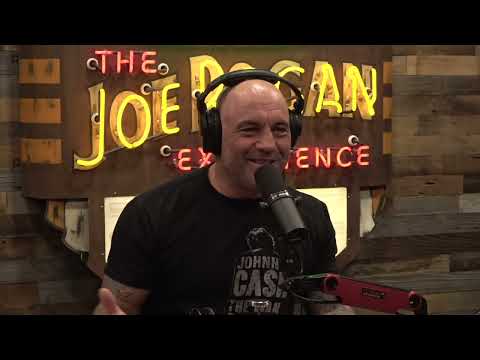
Joe Rogan Experience #1843 - Paul VIrzi
Narrator, Joe Rogan (host), Paul Virzi (guest), Narrator, Narrator, Narrator, Narrator
In this episode of The Joe Rogan Experience, featuring Narrator and Joe Rogan, Joe Rogan Experience #1843 - Paul VIrzi explores uFOs, comedy grind, mental health, parenting, and cancel culture collide Joe Rogan and comedian Paul Verzi range widely from Verzi’s father’s detailed 1973 UFO sighting to modern UFO theories and Bob Lazar’s claims about antigravity propulsion. They dive deep into stand-up comedy as a craft and business: bombing, bad gigs, the end of gatekeepers, special releases, and how podcasting and social media reshaped the ‘industry.’ The conversation also tackles parenting philosophies, drugs and performance enhancement in sports, cancel culture and free speech in comedy, plus Verzi’s own severe bout with anxiety and depression and how he rebuilt. Throughout, they weave in stories about fame, aging comics, culture-war politics, and the importance of personal growth, exercise, and perspective.
UFOs, comedy grind, mental health, parenting, and cancel culture collide
Joe Rogan and comedian Paul Verzi range widely from Verzi’s father’s detailed 1973 UFO sighting to modern UFO theories and Bob Lazar’s claims about antigravity propulsion. They dive deep into stand-up comedy as a craft and business: bombing, bad gigs, the end of gatekeepers, special releases, and how podcasting and social media reshaped the ‘industry.’ The conversation also tackles parenting philosophies, drugs and performance enhancement in sports, cancel culture and free speech in comedy, plus Verzi’s own severe bout with anxiety and depression and how he rebuilt. Throughout, they weave in stories about fame, aging comics, culture-war politics, and the importance of personal growth, exercise, and perspective.
Key Takeaways
Firsthand UFO accounts often share strikingly consistent details.
Verzi’s father describes a silent, close-range ‘flying saucer’ in 1973 with distorted time perception—details that line up with modern pilot sightings and Bob Lazar’s descriptions of gravity-manipulating craft.
Get the full analysis with uListen AI
The comedy ‘industry’ is now largely owned by comedians themselves.
Rogan argues gatekeepers are essentially gone: comics can self-produce specials (often on YouTube), build audiences via podcasts and social media, and rely on other comics’ word-of-mouth rather than networks or executives.
Get the full analysis with uListen AI
Bombing and hell gigs are painful but foundational for growth.
Both recount brutal shows—from strip-club emceeing to outdoor rich-guy roasts—and emphasize that analyzing those failures is how you toughen up, refine material, and learn to handle any room.
Get the full analysis with uListen AI
Honest, vulnerable communication is central to both parenting and mentorship.
Rogan and Verzi stress telling kids about your own failures and insecurities, listening rather than over-controlling, and balancing love with freedom so children don’t rebel or perform just to be ‘cool.’
Get the full analysis with uListen AI
Mental health struggles can coexist with external success—and be survivable.
Verzi describes a 90-day period of severe depression, panic, and OCD where he was convinced he was dying; therapy, low-dose medication, exercise, and support helped him climb out, and talking about it publicly has helped others.
Get the full analysis with uListen AI
Cancel culture pressure is real, but corporate responses now vary.
They contrast companies that cave to outrage mobs with Netflix and Spotify, which publicly defended controversial content (like Chappelle and Rogan) and essentially told employees who object to leave.
Get the full analysis with uListen AI
Physical exertion is a powerful tool for emotional regulation and clarity.
Rogan credits martial arts and rigorous exercise with transforming his anger and anxiety into calm and kindness, while citing research that cardio can be as effective as antidepressants for many people.
Get the full analysis with uListen AI
Notable Quotes
““What I don’t like about seeing it was I knew that I was seeing something that was just unexplained and not from here.””
— Paul Verzi, relaying his father’s UFO experience
““There’s no more gatekeepers. That shit’s gone. The gatekeepers are each other.””
— Joe Rogan
““Being a loser is good for you, because it teaches you that that sucks… and that feeling becomes your fuel.””
— Joe Rogan
““Everybody said no to me for 15 years in this business… I was killing in obscurity.””
— Paul Verzi
““Comedy is what I do, it’s not who I am. Who I am is my family and my life.””
— Paul Verzi
Questions Answered in This Episode
How do Verzi’s father’s UFO details compare to other well-documented sightings and contemporary military reports?
Joe Rogan and comedian Paul Verzi range widely from Verzi’s father’s detailed 1973 UFO sighting to modern UFO theories and Bob Lazar’s claims about antigravity propulsion. ...
Get the full analysis with uListen AI
In a world without traditional gatekeepers, what specific strategies now separate breakout comedians from those who stay ‘killing in obscurity’?
Get the full analysis with uListen AI
Where should comics personally draw the line between creative freedom and sensitivity when tackling topics like race, gender, or trauma?
Get the full analysis with uListen AI
How can performers distinguish between everyday anxiety and a more serious mental health crisis like the one Verzi describes—and what early interventions actually help?
Get the full analysis with uListen AI
If rigorous exercise and lifestyle changes can rival antidepressants for many people, how should that reshape the way we think about and treat depression and anxiety?
Get the full analysis with uListen AI
Transcript Preview
(drumming) Joe Rogan podcast, check it out. The Joe Rogan Experience. Train by day, Joe Rogan podcast by night. All day. (rock music) Tell me when you're ready.
I'm ready.
Okay. Oh, we'll have that rolling, Paul Verzin. What the fuck?
(laughs)
So, tell me the UFO story.
(laughs) All right. Um, well, first, I'm going to tell you about my dad real quick.
Okay.
My dad is Sicilian to the fuck... He... Born and raised Bronx, okay? Grew up in the 1960s in the Bronx. Always has to dress nice, you know. Very materialistic. A man needs a watch.
(laughs)
A man needs shoes. Okay? Me and my brother were in the car one time. My father would do this shit. We were young. He shouldn't have, but he would be like, he'd be like, "Look at that. You see that? That's a fucking disgrace." He'd be like, "That's a man in a Honda." You know?
(laughs)
And he'd be like, "Th- th- there's kids in that fucking car." Like, like that.
Wow.
1982 Jaguar XJ6, black, white leather. Dressed to the nines. You know, everybody's crazy but him.
(laughs)
"Fucking, they're crazy. Fucking..." Right? So, tells me and my brother a story. To this day, the story's not changed, and he told me he wished he never saw what he saw. 1973, my mother is pregnant with my older brother, Christian. Uh, he's five years older than me. Okay? So, uh, she's pregnant with him. They're outside in Yonkers. There's a little grass lot. And my aunt, grandmother, and mother are out there, and they're screaming, "Tommy, you got to come out here! You got to come out here." So, the way my father tells this story, he goes, "I'm watching TV. What the fuck?" You know? "I- I don't want to be bothered." He goes, "I go outside," and he said, "Paul," he said, "sitting where I could throw a rock or shoot my gun at it, there is a fucking..." And the way he s- he said flying saucer, which is fucking hilarious, but he goes, "There's a fucking flying saucer," and he said, "it's got a blue tint around it, little port holes, but you could barely see. Quiet. Quiet as can be." And he said they were all... And he said the time was weird. The time of night was weird. It was like that weird time where the sun's going down, you don't know. He said the timing of it was weird, and he said his time perception during it was, was very, something was off with the time. And he said he thought, he said, "Holy shit, I could fucking shoot my gun at this thing." But then he goes, he goes, "Then I freaked out because I don't know if this thing's reading my fucking mind, so I went inside."
(laughs)
'Cause he thought that it might've been... So, he went inside, he looked again. He went outside, they looked at it, they were stunned, and he said, "And like that, it turned into a dot in the sky." Uh, he said, "Like that, it turned into a star like that." And he says, to this day, exactly the same thing. He goes, "Paul, I always used to think those people were fucking nuts." He goes, "All those people, I thought they were fucking hillbillies somewhere in the Midwest just trying to get attention." He goes, "I know what the fuck I saw." And he goes, "And I wish I didn't see it because I still dream about it and I know what the fuck I saw and I know it wasn't from here. That's 100% true."
Install uListen to search the full transcript and get AI-powered insights
Get Full TranscriptGet more from every podcast
AI summaries, searchable transcripts, and fact-checking. Free forever.
Add to Chrome