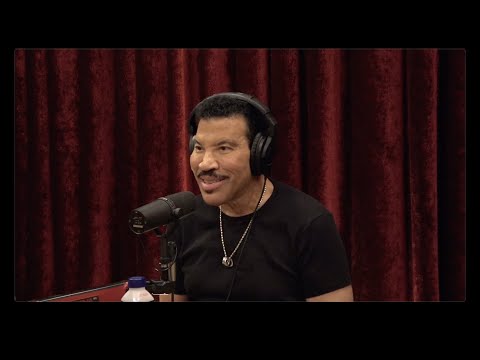
Joe Rogan Experience #2388 - Lionel Richie
Lionel Richie (guest), Narrator, Joe Rogan (host), Narrator, Joe Rogan (host)
In this episode of The Joe Rogan Experience, featuring Lionel Richie and Narrator, Joe Rogan Experience #2388 - Lionel Richie explores lionel Richie on survival, creativity, fame, and finding his voice Lionel Richie sits down with Joe Rogan to reflect on his life, from his early days with the Commodores to global superstardom and the process of writing his memoir. He describes himself as an unlikely, shy kid who survived a brutal music business through resilience, humor, and an ability to “receive” songs and ideas from silence rather than formal training.
Lionel Richie on survival, creativity, fame, and finding his voice
Lionel Richie sits down with Joe Rogan to reflect on his life, from his early days with the Commodores to global superstardom and the process of writing his memoir. He describes himself as an unlikely, shy kid who survived a brutal music business through resilience, humor, and an ability to “receive” songs and ideas from silence rather than formal training.
Richie explains how setbacks, rejection, and fear shaped his career more than success, emphasizing that his journey is about surviving valleys, not standing on peaks. He goes deep on creativity—how simplicity, uniqueness of sound, and emotional connection matter more than technical perfection—and contrasts authentic artistry with label-driven formulas and algorithms.
The conversation also explores the darker sides of fame, from navigating gangsters and exploitative contracts to dealing with parents dying during his height of success and the psychological strain of becoming hyper-recognizable overnight. Throughout, Richie uses stories about Motown, Michael Jackson, Muhammad Ali, and others to convey lessons on identity, risk, and staying human in an inhuman system.
Key Takeaways
Survival matters more than early success in creative careers.
Richie stresses that the real test is how many punches you can take—bad reviews, rejections, losing friends—and still come back. ...
Get the full analysis with uListen AI
Creativity is about receiving, not overthinking or overcomplicating.
He describes songwriting as “receiving” ideas from silence, emphasizing that there are only 12 notes and a few chords; what matters is the melody and feeling. ...
Get the full analysis with uListen AI
A unique sound is more valuable than a perfect voice.
From Hendrix to Stevie Wonder, Richie points out that what creates a career is instantly recognizable style, not flawless technique. ...
Get the full analysis with uListen AI
Fear never fully disappears; you move forward anyway.
He admits to decades of panic attacks and terror before big steps—hosting the American Music Awards, dueting with Diana Ross, going solo from the Commodores—yet he kept “stepping forward,” framing courage as one step forward instead of one step back.
Get the full analysis with uListen AI
Formal education is not a prerequisite for greatness in creative fields.
Richie, who can’t read music, learned from Motown greats who also lacked formal conservatory training but had a “PhD in hustle. ...
Get the full analysis with uListen AI
Extreme fame radically distorts everyday life and relationships.
He recounts how post-Olympics visibility made normal activities—weddings, school trips, dinners—nearly impossible, and how it strained marriages and parenting. ...
Get the full analysis with uListen AI
Business control can suffocate authentic art if creatives don’t hold the line.
Richie criticizes the shift from streetwise, music-loving label heads to corporate executives who treat hits like hamburgers. ...
Get the full analysis with uListen AI
Notable Quotes
“A great fighter is not determined by how many punches he can throw, it’s how many punches he can take.”
— Lionel Richie (quoting his father)
“I discovered Lionel Richie, because up to this point I’d never really gone into the depths of how I got here.”
— Lionel Richie
“If you can hear me tapping on the table and all you hear is me tapping, you’re not a songwriter. But if you hear a song, you’re a songwriter.”
— Lionel Richie
“The blessing was not in having a hit record. The blessing was in having a unique sound.”
— Lionel Richie
“Before you become a genius, you have to take the responsibility of being an absolute idiot to everybody around you.”
— Lionel Richie
Questions Answered in This Episode
How can aspiring artists practically learn to ‘receive’ ideas from silence instead of forcing creativity?
Lionel Richie sits down with Joe Rogan to reflect on his life, from his early days with the Commodores to global superstardom and the process of writing his memoir. ...
Get the full analysis with uListen AI
What concrete steps can young creatives take to build resilience against rejection and industry exploitation?
Richie explains how setbacks, rejection, and fear shaped his career more than success, emphasizing that his journey is about surviving valleys, not standing on peaks. ...
Get the full analysis with uListen AI
How should parents and schools adjust their approach to better support highly creative, non-academic children?
The conversation also explores the darker sides of fame, from navigating gangsters and exploitative contracts to dealing with parents dying during his height of success and the psychological strain of becoming hyper-recognizable overnight. ...
Get the full analysis with uListen AI
In a world increasingly driven by algorithms and AI, how can artists protect and develop a truly unique sound or style?
Get the full analysis with uListen AI
What boundaries should famous people set to protect their mental health and family life without becoming completely inaccessible?
Get the full analysis with uListen AI
Transcript Preview
(drumbeats) Joe Rogan podcast. Check it out. The Joe Rogan Experience.
Train by day, Joe Rogan podcast by night. All day. (instrumental music plays)
We up?
How we doing? Good.
We're rolling.
Love it.
Pleasure to meet you, sir.
It's about time.
Yes.
(laughs)
Thank you very much for being here. This is an honor.
It is... Same here, man. Same here.
How does a person like you fit your life into a book?
(laughs)
Because you w- w- your career is so wide and so long, you've had so many experiences from the Commodores in the '70s.
70s. 70s.
The '70s.
70s.
Still rocking.
70s.
70s.
So, Joe, let me tell you something. Uh, it e- it really accounts for... And I'll tell you the joke of the book first.
Okay.
All right? (clears throat) I'm probably the only guy in the world that had a book, had a book with probably a thousand pages in it. I turned a thousand pages (laughs) and they said-
(laughs)
... "What the hell is this?" (laughs) And I said-
War and Peace?
(laughs) War and Peace.
(laughs)
And I said, "And I've got some more stories. I've got some more stories." And so for the first time in the history of Harper's probably, they said, (clears throat) "Mr. Richie, no more stories. We don't need any more stories. In fact, can we take some of the stories out?"
Oh, no. (laughs)
So to answer your question, we can't fit all of my life story (laughs) in a book. But we just had to find the ones that were actually, you know, humorous in certain cases, uh, educational in certain cases, 'cause it's wide, it's, it's big and that, and... But I enjoyed the process of kind of looking back, because if you understand me, I, I have the Italian race car driver's theory: What's behind me doesn't count.
Hmm.
It's what's in front of me.
That's a very good way of looking at life.
So, so what this book made me do was actually turn around and look behind me and I tell you what I discovered. I, I discovered Lionel Richie, because up to this point, I'd never really gone into the depths of how I got here. I just remember, because you wanna, you wanna forget.
You just kept going.
Just kept going. Look, keep going straight. You tripped over that. I don't remember. You tripped over that. I don't remember. What's next?
Yeah.
And you try to kind of (clears throat) you know, it's like playing football. You got hit really badly on that last play, but you go back to the huddle.
Right.
You know what I'm saying?
Right.
Are you hurt? You won't know until tonight after you get off the field and they'll tell you you broke your arm (laughs) you know what I'm saying? But it's, it's, it's really don't stop moving forward, and that's really what this whole thing was. This exercise in this book was really for me to actually go, "Hmm, I, I can't believe I did that." (laughs)
Install uListen to search the full transcript and get AI-powered insights
Get Full TranscriptGet more from every podcast
AI summaries, searchable transcripts, and fact-checking. Free forever.
Add to Chrome