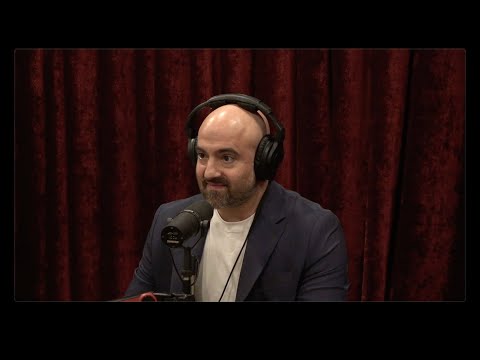
Joe Rogan Experience #2447 - Mike Benz
Joe Rogan (host), Mike Benz (guest), Joe Rogan (host), Joe Rogan (host), Joe Rogan (host), Joe Rogan (host), Joe Rogan (host), Joe Rogan (host), Joe Rogan (host)
In this episode of The Joe Rogan Experience, featuring Joe Rogan and Mike Benz, Joe Rogan Experience #2447 - Mike Benz explores epstein file release sparks deep dive into intelligence-finance power networks Benz frames the latest DOJ/FBI document release as a rare transparency event, arguing it reveals how government investigations, private-sector actors, and international power networks intersect—while noting it does not compel disclosure of CIA-originated material.
Epstein file release sparks deep dive into intelligence-finance power networks
Benz frames the latest DOJ/FBI document release as a rare transparency event, arguing it reveals how government investigations, private-sector actors, and international power networks intersect—while noting it does not compel disclosure of CIA-originated material.
They discuss why file releases stall (criminal-investigative protections, political mutual-assured-destruction, and institutional incentives), and Benz repeatedly urges Congress to pass a JFK-style records act to force CIA Epstein files into an independent declassification process.
Benz uses examples from JFK-file disclosures, Iran-Contra, BCCI, offshore banking, and Fast and Furious to argue that covert operations require money laundering and cutouts—creating a recurring “fixer” class that Epstein allegedly belonged to.
Rogan presses on sensational claims (Pizzagate, blackmail, Epstein’s death), while Benz emphasizes distinguishing allegations from evidence, warning that FBI files contain unverified informant reporting and out-of-context material alongside provable documentation.
Key Takeaways
The release is significant, but incomplete without CIA-originated files.
Benz argues Congress compelled only Justice Department/FBI-originated material; he claims meaningful gaps remain because CIA records are outside the statute’s reach, and Epstein’s decades-long global ties make CIA documentation “physically impossible” not to exist.
Get the full analysis with uListen AI
FBI files mix evidence with raw allegations—context is everything.
Benz warns that informant tips and memos can go viral as “proof” even when sourced from unreliable individuals, comparing the risk to Russiagate/Steele-dossier dynamics; he urges validating screenshots against official file numbers and surrounding pages.
Get the full analysis with uListen AI
JFK-file disclosures matter less for ‘who did it’ than for revealing operational mechanics.
Benz says the biggest value of declassification is showing how covert action works in detail (cutouts, media ops, blackmail-style tactics, mob intermediaries), offering examples like CIA-mob plots and staged sex-blackmail concepts described in released JFK-era materials.
Get the full analysis with uListen AI
Covert operations depend on laundered money, producing recurring ‘fixer’ roles.
Benz frames Epstein as one instance of a broader archetype—intermediaries who sit between state power and private capital, enabling plausibly deniable financing and influence, similar (in his view) to figures like Marc Rich or Bruce Rappaport.
Get the full analysis with uListen AI
‘Blackmail’ may be overstated compared to social leverage and access economics.
Benz argues Epstein’s parties, elite access, and provision of vice could ‘juice’ deals by creating dependency and incentives without overt threats; he concedes indirect blackmail via third parties is possible but claims overt blackmail would quickly destroy Epstein’s network value.
Get the full analysis with uListen AI
Historical precedents suggest prosecutions get shaped to protect intelligence ‘equities.’
Benz cites a JFK-file memo about avoiding “massive damage” to CIA Miami from prosecutions (Rolando Masferr) as an example of DOJ cases being constrained to prevent discovery exposure—then analogizes that dynamic to Epstein’s plea deal and non-prosecution of adjacent crimes.
Get the full analysis with uListen AI
A concrete next step is a JFK-style ‘Epstein Records Act’ for CIA declassification.
Benz highlights Epstein’s own FOIA/Privacy Act requests to CIA and the CIA’s partial Glomar response as a trigger for congressional action: create an independent review board and legally compel systematic CIA disclosure, rather than relying on voluntary releases.
Get the full analysis with uListen AI
Notable Quotes
“We hacked the government's files, evidently. I mean, this is-- we have three and a half million files that it feels like we should not have.”
— Mike Benz
“This is a bad week to be a total Pizzagate denialist.”
— Mike Benz
“Just because it's said in an FBI file does not make it true. We learned that lesson in Russiagate. We learned that lesson with the Steele dossier.”
— Mike Benz
“If there was a Jeffrey Epstein right now that we don't know about?”
— Joe Rogan
“There's a million of them.”
— Mike Benz
Questions Answered in This Episode
What specific statute or mechanism produced this DOJ/FBI release, and what exactly does it compel (and not compel) regarding CIA records?
Benz frames the latest DOJ/FBI document release as a rare transparency event, arguing it reveals how government investigations, private-sector actors, and international power networks intersect—while noting it does not compel disclosure of CIA-originated material.
Get the full analysis with uListen AI
You argue CIA-originated Epstein files are ‘physically impossible’ not to exist—what would be the strongest falsifiable indicator either way?
They discuss why file releases stall (criminal-investigative protections, political mutual-assured-destruction, and institutional incentives), and Benz repeatedly urges Congress to pass a JFK-style records act to force CIA Epstein files into an independent declassification process.
Get the full analysis with uListen AI
In the new drop, which documents are the highest-confidence ‘hard evidence’ versus low-confidence CHS allegations, and how should viewers triage them?
Benz uses examples from JFK-file disclosures, Iran-Contra, BCCI, offshore banking, and Fast and Furious to argue that covert operations require money laundering and cutouts—creating a recurring “fixer” class that Epstein allegedly belonged to.
Get the full analysis with uListen AI
You cite Epstein’s 1999/2011 FOIA and the CIA’s partial Glomar—what was the precise language, and what alternative explanations exist besides a classified affiliation?
Rogan presses on sensational claims (Pizzagate, blackmail, Epstein’s death), while Benz emphasizes distinguishing allegations from evidence, warning that FBI files contain unverified informant reporting and out-of-context material alongside provable documentation.
Get the full analysis with uListen AI
If Congress passed an ‘Epstein Records Collection Act,’ what categories should it mandate (operational files, liaison reporting, financial intel, counterintelligence assessments)?
Get the full analysis with uListen AI
Transcript Preview
[upbeat music] Joe Rogan Podcast, check it out! The Joe Rogan Experience. Train by day, Joe Rogan Podcast by night, all day. [upbeat music]
... All right, Mike Benz. What a day to have you in here, buddy. [laughing]
[laughing] Kid in a candy shop. We hacked the government. We hacked the government's files, evidently. I mean, this is-- we have three and a half million files that it feels like we should not have. It would've been great to have had seven years ago, in 2019, when this was being litigated, but it's an incredible moment of transparency for how the world works, how governments interact with the private sector and funds, and it's just really cool to be a part of it.
What was the hold-up? What was the-- because it seemed like there was a lot of people that did not want these files released.
Yeah. I've thought about this a lot. What we have access to now are internal documents from the Justice Department and the FBI that are normally, even though they're not classified, they are part of a criminal investigation, and so they're not normally disclosable to the public. Um, it could be the case that it kind of required a congressional bill to force this out. Like, when you-- if, if there's a internal investigation, and it's not a part of a court document that's entered into evidence, you can't just FOIA the Justice Department to get dirt on your political enemies because you think that they might be involved in something. Now, I don't know if it could've been done through an executive order around Epstein transparency, around the time of the first binders. Certainly, it looked like there was friction between the president and Thomas Massey over this issue. Um, but I don't, I don't know the details of what went down there, but the fact is, the bill passed four hundred and twenty-seven to one in the House.
Who's the one?
[sighs] My recollection is that it was Randy Fine, but I might be wrong on that, so I don't want to smear-
There was one person-
Or imply anything unduly
... didn't want it released because they thought it would compromise the victims, right?
[clears throat] Uh-
At one point in time, at least.
Yeah, I, I don't know what the, what the rationale, you know, is, and because I don't recall offhand who the one is, uh, I don't want to lean on that too much. But, uh, the fact is, is nobody wanted to be on the other side of this. I can't think of anything that both Republicans and Democrats voted on four hundred and twenty-seven to one and... Oh, I'm sorry, Clay Higgins. Sorry. Apologies to Randy Fine. Uh, yeah, so, um, there was the... I mean, there was obviously friction because this implicates everybody, Republicans and Democrats, uh, Americans and a dozen different foreign countries, uh, heads of major hedge funds and multinational corporations, donors to all political parties, major university and science institutions. Uh, I mean, almost every major player in world affairs was, in some way, either, either involved in or adjacent to this network, or the network tried to reach out to them because they were influential. And so, you know, there was kind of a mutually assured destruction around the Epstein hot potato for a decade now, which is that, [chuckles] out of power, the Republicans said, "Oh, the Democrats are-- don't want to disclose this because of the Clintons." And then the Trump administration gets into power, and there's a very slow, you know, reaction to the kind of disclosures that culminated in what happened this week. And so you had the Democrats saying: "Oh, they're not disclosing it because of, you know, Trump world and his associates." Meanwhile, they controlled the Justice Department and the FBI for four years and didn't release any. Uh, so, you know, it, it took an, a moment like this, and what's, what's really interesting about it is, this bill only compelled the disclosure, this law that passed in Congress, only compelled the disclosure of Justice Department r- originated files. Justice Department, by extension, FBI is the investigative arm of the Justice Department. It does not compel CIA-originated files. And, uh, one of the coolest moments of transparency we had last year in 2025, was when Tulsi Gabbard, as the, you know, ODNI, as the head of-- Director of Cen-- of National Intelligence, in charge of the whole intelligence community, spearheaded the, uh, JFK Files release, and we got basically fully unredacted documents. Now, I know there's a contest over how complete they are, but the fact is, is it was hundreds of thousands of files that had never been seen before, or unredacted versions of documents that had been fully or partially redacted for decades. The only reason that we have JFK, JFK files at all, is because in 1992, Congress passed a bill to force the CIA to start turning over documents. The law, I believe, was called the JFK Records Collection Act, and it forced, by law, the, uh, the CIA to establish this independent presidential assassination review board, that would review documents for declassification and compel, uh, you know, on the basis of that independent body. Given all of the intelligence intrigue around Epstein-... and the fact that it is, in my view, physically impossible over Epstein's 40-year career in intelligence adjacent work, that there was, that there's not Epstein files that are CIA originated. And we actually , you know, I, I saw this in the files that were just released. Jeffrey Epstein himself, twice FOIA'd, that's the Freedom of Information Act, uh, which, which is a law that I think came around in 1966, which allows any US citizen to ask a- any government agency for all public records that it has about anything. There are certain things that get blocked in that. This is-- There were a lot of FOIA fights about COVID. Uh, you know, Fauci famously, there's this exchange where, um, you know, one of the folks in Fauci world says that, uh, they learned cool tricks from the FOIA lady about how to get around requests. But the fact is, you can FOIA the CIA for records, uh, because it, that FOIA forces the CIA to give you decl- declassified or unclassified records, and if it's classified, it'll issue a Glomar. A "We cannot confirm or deny-
Install uListen to search the full transcript and get AI-powered insights
Get Full TranscriptGet more from every podcast
AI summaries, searchable transcripts, and fact-checking. Free forever.
Add to Chrome