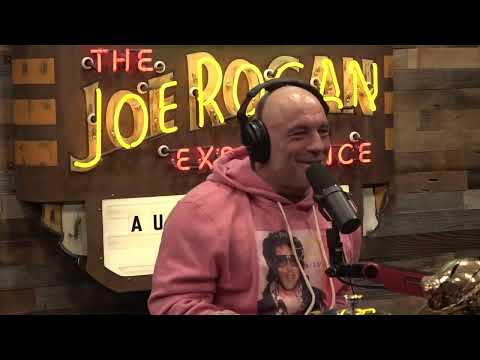
Joe Rogan Experience #1983 - Kim Congdon & Sara Weinshenk
Joe Rogan (host), Narrator, Narrator, Sara Weinshenk (guest), Kim Congdon (guest), Guest (guest), Guest (guest), Guest (guest), Guest (guest), Guest (guest), Guest (guest), Guest (guest), Guest (guest), Guest (guest), Guest (guest), Guest (guest), Guest (guest), Guest (guest), Guest (guest), Guest (guest), Guest (guest)
In this episode of The Joe Rogan Experience, featuring Joe Rogan and Narrator, Joe Rogan Experience #1983 - Kim Congdon & Sara Weinshenk explores comedians, Conspiracies, and Chaos: Joe Rogan’s Wild Hang With Besties Joe Rogan sits down with comedians Kim Congdon and Sara Weinshenk for a long, free‑wheeling conversation that jumps from their Kill Tony origins and podcasting careers to food detours, psychedelics, combat sports, and pandemic memories.
Comedians, Conspiracies, and Chaos: Joe Rogan’s Wild Hang With Besties
Joe Rogan sits down with comedians Kim Congdon and Sara Weinshenk for a long, free‑wheeling conversation that jumps from their Kill Tony origins and podcasting careers to food detours, psychedelics, combat sports, and pandemic memories.
They riff on everything from Mark Zuckerberg winning a jiu‑jitsu tournament and Mike Tyson knockouts to alien abduction stories, CIA “Gateway Process” documents, and the oddities of human behavior, from timeshares to plane‑fight videos.
Throughout, they keep returning to themes of creativity, stand‑up grind, mental health, and how comedians evolved through COVID, Zoom shows, solo podcasting, and the new media landscape.
The episode blends serious observations on trauma, psychedelics, and technology with constant jokes, personal horror stories, and unverified conspiratorial tangents, creating an intentionally chaotic, comedic hangout vibe.
Key Takeaways
Podcasting lets comedians publicly “learn on air” and build a career path TV would never allow.
Rogan and the guests point out that unlike network shows that cancel quickly if ratings dip, podcasts allow performers to experiment, make mistakes (like bad show names), and slowly find their voice and audience.
Get the full analysis with uListen AI
Moderation and enjoyment, not extreme dieting, sustain a healthy lifestyle long‑term.
Rogan explains he generally avoids strict regimens, having tried a month of strict carnivore and finding it effective but boring—emphasizing that loving food, culture, and occasional indulgent detours is key to sustainability.
Get the full analysis with uListen AI
Psychedelics like psilocybin and MDMA show strong potential for treating PTSD and trauma.
They reference MAPS research and personal anecdotes of MDMA‑assisted therapy dramatically helping childhood trauma survivors and soldiers, arguing these substances are real, promising tools that remain inexplicably illegal.
Get the full analysis with uListen AI
Weed culture permeates stand‑up, but potency and contamination can radically change the experience.
Kim describes accidentally smoking weed from a bag contaminated with cocaine and spiraling on a podcast, underscoring how modern high‑potency products or adulterants can easily overwhelm users and derail performances.
Get the full analysis with uListen AI
Combat sports can be empowering but carry very real long‑term risks like concussions.
Sara talks about post‑concussive syndrome from Muay Thai pad work, and Rogan stresses that repeated head trauma isn’t worth it unless you’re all‑in, suggesting jiu‑jitsu as a safer alternative for most people.
Get the full analysis with uListen AI
The pandemic accelerated creative adaptation but also exposed how unnatural some formats are.
They recall window sets, Zoom shows, and late‑night monologues with no audience, agreeing that some comics needed the stage “fix,” yet many formats felt like watching people practice in public.
Get the full analysis with uListen AI
Humans are drawn to conspiratorial and metaphysical frameworks to make sense of uncertainty.
From CIA “Gateway” brain‑sync tapes and remote viewing to DMT entities, shared dreamscapes, and intuition about cheating partners, they continuously toy with the idea that reality is more interconnected and weird than mainstream explanations allow.
Get the full analysis with uListen AI
Notable Quotes
“Podcasting is beautiful because you can learn on the air. If this was CBS, they’d cut you the second ratings dipped.”
— Joe Rogan
“Psychedelics like MDMA literally changed my roommate’s life. She came back from that trauma camp a different person.”
— Kim Congdon
“We’re in soft‑boy times making hard times. The problem is there are still hard men in other parts of the world watching us.”
— Joe Rogan
“Sometimes I feel like I’m controlling the plane with my mind. I tap it twice and I’m like, ‘You’re all welcome.’”
— Sara Weinshenk
“When you first start smoking weed, you’re like, ‘How is everybody not doing this?’”
— Joe Rogan
Questions Answered in This Episode
How much weight should we give to anecdotal experiences with psychedelics and CIA documents like the Gateway Process compared to rigorous scientific evidence?
Joe Rogan sits down with comedians Kim Congdon and Sara Weinshenk for a long, free‑wheeling conversation that jumps from their Kill Tony origins and podcasting careers to food detours, psychedelics, combat sports, and pandemic memories.
Get the full analysis with uListen AI
If MDMA and psilocybin became widely legal and regulated, how might that change mental health treatment, especially for veterans and trauma survivors?
They riff on everything from Mark Zuckerberg winning a jiu‑jitsu tournament and Mike Tyson knockouts to alien abduction stories, CIA “Gateway Process” documents, and the oddities of human behavior, from timeshares to plane‑fight videos.
Get the full analysis with uListen AI
Does the explosion of podcasting and self‑produced content ultimately raise the quality of comedy, or just flood the space and make discovery harder?
Throughout, they keep returning to themes of creativity, stand‑up grind, mental health, and how comedians evolved through COVID, Zoom shows, solo podcasting, and the new media landscape.
Get the full analysis with uListen AI
To what extent are we underestimating the long‑term impact of concussions and head trauma in amateur combat sports and “for fun” training?
The episode blends serious observations on trauma, psychedelics, and technology with constant jokes, personal horror stories, and unverified conspiratorial tangents, creating an intentionally chaotic, comedic hangout vibe.
Get the full analysis with uListen AI
How do emerging technologies like VR, brain‑computer interfaces, and hyper‑realistic AI companions threaten—or enhance—our ability to maintain meaningful real‑world relationships and goals?
Get the full analysis with uListen AI
Transcript Preview
(drumming music) Joe Rogan podcast, check it out.
The Joe Rogan Experience.
Train by day, Joe Rogan podcast by night, all day. (rock music) Hey, we're rolling. Hi, ladies.
Hi.
Hi.
What's happening?
What's up?
Good to see you. Class of, uh, zero ... What, what number were you guys of, of Tony, Kill Tony? You guys are class of one-
We were-
Class of zero to one.
OGs, yeah. OGs.
Yeah, the real OGs.
Yep.
Isn't it wild to see what it's become now?
(laughs)
I mean, it's literally like the number one live comedy show ever.
It's insane.
It's insane. We started so long ago. That's where we met, her and I.
Yeah, we've met-
And we've been working together ever since.
Besties.
Yeah, so, uh-
I've said it before but I'll say it again, Tony's the greatest host of any comedy show ever.
I know.
He's the best.
Yeah, he does really good. Yeah.
Nobody's better off the cuff.
I know. Yeah.
Off the cuff?
Amazing. He's so fast, he's so quick. And you know, we l- owe a lot to him, I feel like, because he really helped us get our start. We learned a lot from being on that show.
Well, yeah. Being, being on Kill Tony when we started, we were like babies.
Babies.
That was ... That's where we met you, that's where we met ... I opened for Ralphie May because of that, I think Bobby Lee.
Well, yeah, you opened up for me too in Florida.
Yeah, you.
When, when that started, I wa- I remember thinking, "What a fun thing he's doing. You know, it's kinda fun."
Yeah.
You just go do a minute of standup. And it's a nice way for comics to get a chance to like sort of think about comedy too.
Yeah.
Yeah.
Because you're like, "Why is this guy funny?" Like what is this? Uh, like sometimes people are just funny and it's like weird.
Talented.
Like weird manner ... Like Theo Von, right? Try putting that down-
So funny.
Put that down on paper.
You can't.
Imagine. Imagine-
You could never.
"My cousin got bit by a gay guy."
(laughs)
(laughs)
"So, we'll see."
(laughs)
(laughs)
(laughs) Like, like write that down.
It's true.
Like if somebody wrote jokes for you, you hired them like, "I'm a really good performer, but I suck at writing jokes."
Yeah.
"Will you write some jokes for me?" You're like, "Bro, I got you."
Theo Von is like how Trader Joe's makes snacks. (laughs)
(laughs)
(laughs) How does Trader Joe's ... I don't know.
What do you mean?
Install uListen to search the full transcript and get AI-powered insights
Get Full TranscriptGet more from every podcast
AI summaries, searchable transcripts, and fact-checking. Free forever.
Add to Chrome