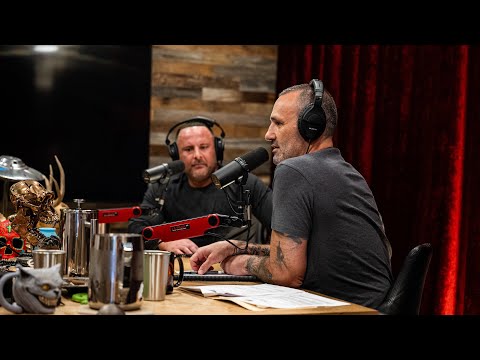
Joe Rogan Experience #2287 - Josh Dubin & J.D. Tomlinson
J.D. Tomlinson (guest), Josh Dubin (guest), Joe Rogan (host), Josh Dubin (guest), Narrator, Narrator, Narrator
In this episode of The Joe Rogan Experience, featuring J.D. Tomlinson and Josh Dubin, Joe Rogan Experience #2287 - Josh Dubin & J.D. Tomlinson explores wrongful Convictions, Political Lawfare, and One Prosecutor’s Change of Heart Joe Rogan speaks with civil-rights attorney Josh Dubin and former Lorain County, Ohio prosecutor J.D. Tomlinson about the “Ohio Four” – four Black men they argue were wrongfully convicted of a 1990s double murder based almost entirely on a paid informant’s false testimony.
Wrongful Convictions, Political Lawfare, and One Prosecutor’s Change of Heart
Joe Rogan speaks with civil-rights attorney Josh Dubin and former Lorain County, Ohio prosecutor J.D. Tomlinson about the “Ohio Four” – four Black men they argue were wrongfully convicted of a 1990s double murder based almost entirely on a paid informant’s false testimony.
Dubin details decades of ignored recantations, exculpatory evidence, and federal court findings of likely innocence, while Tomlinson explains how, after deeply re‑reviewing the case, he agreed the men deserved new trials and moved to vacate their convictions.
Tomlinson then describes how his earlier exoneration of two other defendants and his willingness to admit error made him political enemies, culminating in what he calls a bogus felony case and coordinated effort to derail both his career and the Ohio Four’s relief.
The conversation broadens into systemic problems: prosecutorial immunity, political pressure, the grand jury system, bias against defendants (especially people of color and the poor), and ideas for structural reforms and independent case review.
Key Takeaways
Single‑witness cases with no physical evidence are high‑risk for wrongful convictions.
The Ohio Four convictions hinged almost entirely on testimony from informant William Avery Jr. ...
Get the full analysis with uListen AI
Prosecutorial immunity and culture make it extremely hard to correct miscarriages of justice.
Even after the FBI documented Avery Jr. ...
Get the full analysis with uListen AI
Political power struggles can distort criminal justice decisions.
Tomlinson describes being charged with three felonies just before an election by a sheriff’s office that had hired his political rivals, while key exculpatory texts were withheld until after the vote – illustrating how prosecutions can be weaponized as “lawfare.”
Get the full analysis with uListen AI
Reform‑minded prosecutors need defense experience and the courage to admit error.
Tomlinson argues that having defended many clients, including innocent ones, made him more open to seeing wrongful convictions and publicly apologizing—something Innocence Project leaders say almost never happens from sitting prosecutors.
Get the full analysis with uListen AI
Racial and socioeconomic context heavily shape who gets targeted and believed.
Dubin emphasizes that four Black, out‑of‑town drug dealers in a mostly white area became convenient suspects in a brutal murder, and that America’s caste‑like racial history and segregated poverty create predictable patterns in whom the system fails.
Get the full analysis with uListen AI
Independent, adversarial pre‑trial review could deter fraudulent or weak prosecutions.
Rogan suggests replacing or supplementing grand juries with neutral panels of outside attorneys who examine evidence from both sides before charges proceed, adding a layer of accountability and paper trail that could expose misconduct and bias.
Get the full analysis with uListen AI
Human humility—being able to say “I was wrong”—is central to real justice.
Both guests argue that ego, competitiveness, and careerism often prevent prosecutors and judges from admitting mistakes, and that genuine justice requires prioritizing truth and freedom for the wrongfully convicted over protecting institutional pride.
Get the full analysis with uListen AI
Notable Quotes
““If you just give me a date, I wanna come down and I wanna just show you—you now know what this is like. Imagine going through this for 30 years.””
— Josh Dubin
““When I reviewed two cases from this assistant prosecutor, I found that six people were wrongly convicted and did about 162 years in prison. That’s two cases, Joe.””
— J.D. Tomlinson
““If you allow the system to unjustly accuse and prosecute people for crimes that are demonstrably false, that’s very un‑American… you’re kind of ruining everyone’s faith in what this thing is supposed to be.””
— Joe Rogan
““We’re getting in this dangerous territory where we’re having to prove their innocence. And that’s significant, because that is not the standard.””
— J.D. Tomlinson
““How many moments are there when you have the ability to impact other human beings in a way to set them literally free, and to end the most unfathomable of nightmares?””
— Josh Dubin
Questions Answered in This Episode
What concrete mechanisms could be implemented to hold prosecutors personally accountable when they hide exculpatory evidence or resist clear wrongful‑conviction evidence?
Joe Rogan speaks with civil-rights attorney Josh Dubin and former Lorain County, Ohio prosecutor J. ...
Get the full analysis with uListen AI
How would an independent pre‑trial review panel, like the one Rogan proposes, practically interact with existing grand jury systems and constitutional protections?
Dubin details decades of ignored recantations, exculpatory evidence, and federal court findings of likely innocence, while Tomlinson explains how, after deeply re‑reviewing the case, he agreed the men deserved new trials and moved to vacate their convictions.
Get the full analysis with uListen AI
To what extent did race and the defendants’ status as out‑of‑town drug dealers shape the investigation, charging decisions, and jury perceptions in the Ohio Four case?
Tomlinson then describes how his earlier exoneration of two other defendants and his willingness to admit error made him political enemies, culminating in what he calls a bogus felony case and coordinated effort to derail both his career and the Ohio Four’s relief.
Get the full analysis with uListen AI
How can voters realistically evaluate and influence local prosecutors and sheriffs to reduce politically motivated prosecutions and encourage wrongful‑conviction review?
The conversation broadens into systemic problems: prosecutorial immunity, political pressure, the grand jury system, bias against defendants (especially people of color and the poor), and ideas for structural reforms and independent case review.
Get the full analysis with uListen AI
What psychological and cultural changes inside DA’s offices and police departments are necessary so that admitting error—and exonerating the innocent—is rewarded rather than punished?
Get the full analysis with uListen AI
Transcript Preview
(drumming) Joe Rogan podcast, check it out.
The Joe Rogan Experience.
Train by day, Joe Rogan podcast by night, all day. (instrumental music plays) Josh Dubin, my man. Introduce your friend. (laughs)
(laughs) This is gonna be wild. Uh, this is JD Tomlinson, the former prosecuting attorney for Lorain County, Ohio. And for the listeners, prosecuting attorney is, um, similar to a DA in most jurisdictions. They just call it the prosecuting attorney. He was the- the head attorney in, um, (smacks lips) Lorain County, Ohio-
That's correct.
... up until January.
So, the reason why that's significant is that- (laughs) last time we were here, we were talking about that case, the case of the Ohio Four. So, let's- why don't you recap that for everybody just for- for people that didn't listen to the previous podcast when we talked about this.
So, the Ohio Four are four gentlemen that were wrongfully convicted of a murder they didn't commit. And the last time I- I came on, uh, we talked extensively about the case. You can read about it at freetheohiofour.com. We have on that site my submission that I made to JD when he was the prosecuting attorney, and all the exhibits supporting it. But what happened is this woman is murdered in the '90s, and these four men become suspects actually before there's any evidence against them whatsoever. Uh, in two and a half decades of doing post-conviction work, I had never seen the police put in an affidavit, um, where they're... Excuse me, not an affidavit, a police report when they're investigating this murder that these four men are people we should look at. Based on nothing other than there was a lot of commotion in the community, understandably so, that there were people from out of town selling drugs. No question my client, um, and these other three guys were involved in selling drugs, and they wanted drugs off the street in Lorain. So, they immediately start looking at them. This woman is found behind a shopping center horribly, savagely murdered. She is stabbed multiple times. Her throat is cut. Her name is Marcia Blakey. She had been run over by a car. It was obvious because there were tire marks on her body. And several hours later that morning someone that she lived with, a gentleman by the name of Epps, was found murdered in strikingly similar fashion. So, the police are investigating this crime and run into a dead end. They have no leads. They don't have any evidence, and they're searching for the perpetrators. So, the Lorain County Prosecutor's Office goes public with the offer of an award. They offer $2,500 to anybody that has information about this crime. The next day or a couple of days later, in walks a man named William Avery Sr., who is no stranger to the Lorain County Police Department. He had been a- a paid informant for them for a long time, and he comes in and he speaks to detectives. And they say, "Everything you're tell-" In- in essence, they say, "Everything you're telling us has been public, you know. You need to give us more information." He then that week brings his son in, William Avery Jr., and his son claims to have information about the case. And they tell him, you know, "You're not telling us enough." He comes back about a week later and he says, "Well, I know the guys that did this." And he blames it, the murder, on Al Cleveland, um, John Edwards, Lenworth Edwards, and Benson Davis. And he claims that Al Cleveland confessed it to him. So, they start investigating this man William Avery Jr.'s account of what happened, and what he is telling them happened does not match the physical, um, state of this apartment where he claims this beating happened. So, this is like one of the telltale ways to tell if someone is falsely confessing to you or- or falsely implicating others. He tells them that there's this horrific beating of- of this victim that occurs in an apartment, and they go to the apartment. I mean, chairs turned over, tables turned over, a bloody knockdown, drag out fight for her life. And they go to the apartment and take pictures, and it's in the most pristine condition you can imagine. Not a chair turned over, not a table, and they immediately had reason to know that this guy was bullshitting because he then comes and says to them, "You know, I have other details." And the more details he gives them, the less it's matching up with the evidence that they have. So, they're trying these four men separately. When the first trial happens, William Avery Jr. has an idea, and his idea is I'm gonna extort these people for money. He shows up at the trial and he tells the prosecutors, "I want $10,000."And the prosecutor said to him, "What are you talking about? Um, you have to testify. You got the, the reward money." And he says, "I'm not testifying." They put him in jail for contempt and he says, "I made the whole thing up anyways. I did it for the reward money. I made it up." They should have known right then and there, before any of these four men were tried, that this was someone that led them down the wrong path. But instead of doing that, they keep him in jail. I don't remember if it was for 30 days or 60 days, and they let him cool his heels a little bit. The judge in the trial calls a mistrial, and when there's a mistrial, you can try someone again. So about a month goes by and William Avery Jr.'s story has now evolved. He now no longer claims that Al Cleveland confessed to him. He claims that he was a witness to it.
Install uListen to search the full transcript and get AI-powered insights
Get Full TranscriptGet more from every podcast
AI summaries, searchable transcripts, and fact-checking. Free forever.
Add to Chrome