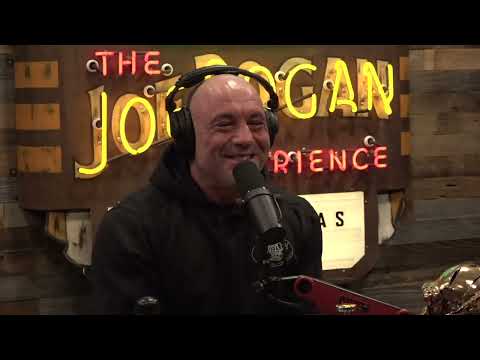
Joe Rogan Experience #1937 - Punkie Johnson
Joe Rogan (host), Joe Rogan (host), Punkie Johnson (guest), Narrator, Narrator, Narrator, Narrator, Narrator, Narrator, Narrator, Narrator
In this episode of The Joe Rogan Experience, featuring Joe Rogan and Joe Rogan, Joe Rogan Experience #1937 - Punkie Johnson explores from Comedy Store Bartender To SNL Star: Punkie Johnson’s Journey Joe Rogan and Punkie Johnson trace her unlikely rise from a New Orleans kid and Comedy Store bartender to becoming a cast member on Saturday Night Live. Punkie details how a freak accident lawsuit funded her move to Los Angeles, how the Comedy Store became both her comedy school and family, and how she learned to navigate success, imposter syndrome, and Hollywood politics.
From Comedy Store Bartender To SNL Star: Punkie Johnson’s Journey
Joe Rogan and Punkie Johnson trace her unlikely rise from a New Orleans kid and Comedy Store bartender to becoming a cast member on Saturday Night Live. Punkie details how a freak accident lawsuit funded her move to Los Angeles, how the Comedy Store became both her comedy school and family, and how she learned to navigate success, imposter syndrome, and Hollywood politics.
They dig into the craft and business of stand‑up: building hours under pressure, using small rooms to sharpen material, Rogan’s advice on ‘economy of words,’ and what it’s like to headline theaters without ever having opened for anyone. Punkie also explains the brutal, fast‑turnaround reality of writing, pitching, and producing sketches every week at SNL.
The conversation ranges widely into culture and personality—jealousy and delusion in comedy, toxic Hollywood validation cycles, tipping culture, Kanye and Elon, cancel culture dynamics, and social media outrage. They also spend substantial time on fighting, training, and fitness: boxing, Wing Chun, Mayweather’s defense, knockout artists, and Punkie’s desire to eventually step into the ring.
Threaded through is a strong theme of self‑awareness and growth: Punkie openly describes catching herself in envy, battling imposter syndrome, using weed as an occasional emotional reset, and actively choosing humility, hard work, and gratitude for the Comedy Store community that launched her career.
Key Takeaways
Use adversity creatively to change your life trajectory.
Punkie’s move to Los Angeles was unexpectedly funded by a lawsuit after she fell into an unmarked cement hole; rather than squander that money, she used it to give herself six months in LA to chase comedy and work at The Comedy Store.
Get the full analysis with uListen AI
Treat foundational jobs and communities as your ‘grad school.’
Her decade at The Comedy Store—bartending, hustling, and watching world‑class comics—functioned as both income and intensive training, giving her stage time, mentorship, and a sense of family that later powered her leap to SNL and the road.
Get the full analysis with uListen AI
Relentless editing and ‘economy of words’ make material stronger.
Rogan’s advice to strip out verbal ‘fat’ and get to the punchline faster reshaped Punkie’s writing; she rewrote long paragraphs into tight setups and punchlines, filling stories with references and act‑outs so there’s no dead air on stage.
Get the full analysis with uListen AI
Imposter syndrome is often a sign you’re actually progressing.
Both note that self‑critical, talented people regularly feel like frauds—especially when they jump quickly from 15‑minute sets to headlining hours or from club freedom to corporate TV; recognizing that feeling as normal helps you keep going instead of quitting.
Get the full analysis with uListen AI
Envy and resentment toward others’ success are self‑sabotage.
Punkie describes consciously catching herself being mad at other comics’ wins, realizing the only real reason was ‘because it ain’t you,’ and then redirecting that energy into her own preparation and craft—seeking to follow killers onstage instead of soft acts.
Get the full analysis with uListen AI
Corporate platforms demand different discipline than raw club environments.
Transitioning from the anything‑goes Comedy Store to rule‑bound SNL forced Punkie to self‑censor, think strategically about how jokes might be misinterpreted, and learn fast production skills (sets, costumes, wigs, edits) while still trying to stay authentic.
Get the full analysis with uListen AI
Physical training strengthens both performance and mental health.
Their talk on boxing, roadwork, sleds, bag rounds, and jump rope underscores how structured workouts reduce anxiety, boost creative focus, and build the physical and psychological resilience needed for grueling schedules, stage performance, and even potential fights.
Get the full analysis with uListen AI
Notable Quotes
“I just had to look in the mirror like, ‘Yo, you tripping. Chase your dreams. Don’t be chasing no females.’”
— Punkie Johnson
“Economy of words… fuck all that, get rid of all that fat, get to the point.”
— Joe Rogan
“My mother didn’t raise me to be no sucker… ‘Bitch, wake up. You was made for this, you was born for this, let’s go.’”
— Punkie Johnson
“If you’re good, you have [imposter syndrome], because the people that don’t have that are usually delusional.”
— Joe Rogan
“Once I stopped worrying about what other people were doing and what they had, things really shifted in my life.”
— Punkie Johnson
Questions Answered in This Episode
How did working service at The Comedy Store specifically shape Punkie’s voice and confidence as a stand‑up compared to traditional improv or acting schools?
Joe Rogan and Punkie Johnson trace her unlikely rise from a New Orleans kid and Comedy Store bartender to becoming a cast member on Saturday Night Live. ...
Get the full analysis with uListen AI
What practical steps can comics take to apply ‘economy of words’ to their own material without losing their personal storytelling style?
They dig into the craft and business of stand‑up: building hours under pressure, using small rooms to sharpen material, Rogan’s advice on ‘economy of words,’ and what it’s like to headline theaters without ever having opened for anyone. ...
Get the full analysis with uListen AI
How can performers in highly public, corporate environments like SNL protect their authenticity while still navigating modern backlash and cancellation risks?
The conversation ranges widely into culture and personality—jealousy and delusion in comedy, toxic Hollywood validation cycles, tipping culture, Kanye and Elon, cancel culture dynamics, and social media outrage. ...
Get the full analysis with uListen AI
In what ways do jealousy and delusion manifest differently in stand‑up versus other entertainment fields, and how can communities better address those dynamics?
Threaded through is a strong theme of self‑awareness and growth: Punkie openly describes catching herself in envy, battling imposter syndrome, using weed as an occasional emotional reset, and actively choosing humility, hard work, and gratitude for the Comedy Store community that launched her career.
Get the full analysis with uListen AI
For artists considering psychedelics or intense training regimens, how should they balance the potential for growth with the risks of anxiety, injury, or derailing their career focus?
Get the full analysis with uListen AI
Transcript Preview
(drumbeats) Joe Rogan podcast, check it out. The Joe Rogan Experience.
Train by day, Joe Rogan podcast by night, all day. (instrumental music plays) From the bartender at The Comedy Store-
That's right.
... to Saturday Night Live.
Yeah.
What the fuck?
Yeah, yeah. There, I'm still, I'm still processing that if you want me to be honest with you.
How many years was it?
(sighs) How many years I worked at the store?
Yeah.
(sighs) I think 10.
10 years at the store. W- what, what year did you start?
Yeah, I did-
What j- what year did you start comedy?
If I'm not mistaken, it was 2011.
Oh, cheers, my friend.
Cheers. Cheers.
So good to see you.
Thank you so much.
And s- congratulations on your success.
Thank you, thank you.
It's been amazing to see.
This, this a dream come true, be- just being here.
Awesome.
Just the success right here.
It's a dream come true for me to see you rise.
Mm.
I love it. I love it when I see people start off at the store and just get their feet under them and get their shit together and pull it off.
Yeah.
Whoo, it's so exciting.
Yeah. I, it's-
It's so exciting.
... it's still unreal. I'm still, I'm still, like, k- kind of mentally still in California 'cause I remember I was out there, just this little chick from New Orleans. I'm like, "What the hell am I doing in California? What am I doing driving down Sunset and seeing these beautiful palm trees?" It's the things that I would see on television. And then that time just went f- whew. It just, it just left.
Yeah, isn't weird, like, the first time I came to California was '93. It was with my friend Gary Valentine and we, we were, uh, out here to do some shit for MTV and we were driving around like, "Are we really here?"
Yeah.
Like, I was 26 and I was like, "What the fuck is this place? This place is so weird." It just felt I'm not supposed to be here or something.
Yeah. That's exactly what it felt like for me.
Yeah.
I don't, uh, I just got in where I fit in over there.
Yeah.
You know what I'm saying?
It's weird.
Got me a little job. I moved out there. I had me a little change 'cause I had, uh, I didn't work for six months when I first went out there because I fell in a hole in New Orleans.
A hole?
Yeah. (laughs) I was just-
What kind of hole?
I was just minding my business walking down the street and I, I just, fluke, I just fell out of the world into a hole. It was wet cement that was not blocked off.
Install uListen to search the full transcript and get AI-powered insights
Get Full TranscriptGet more from every podcast
AI summaries, searchable transcripts, and fact-checking. Free forever.
Add to Chrome