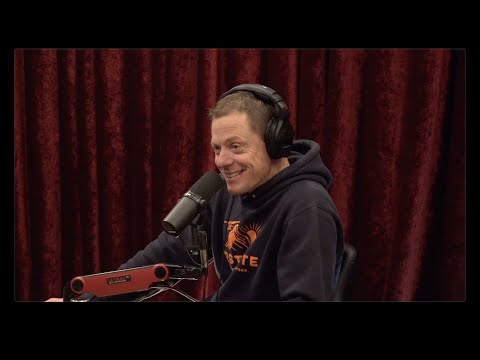
Joe Rogan Experience #2258 - Steven Rinella
Steven Rinella (guest), Narrator, Joe Rogan (host), Narrator, Narrator, Narrator, Narrator
In this episode of The Joe Rogan Experience, featuring Steven Rinella and Narrator, Joe Rogan Experience #2258 - Steven Rinella explores joe Rogan and Steven Rinella Explore Aging, Fame, Freedom, Survival, History Joe Rogan and Steven Rinella range from aging, purpose, and retirement to the psychological and political climate around Trump, Biden, COVID, and free speech in Canada and the U.S.
Joe Rogan and Steven Rinella Explore Aging, Fame, Freedom, Survival, History
Joe Rogan and Steven Rinella range from aging, purpose, and retirement to the psychological and political climate around Trump, Biden, COVID, and free speech in Canada and the U.S.
They dig into the downsides of extreme fame, parasocial relationships with podcast audiences, and Rogan’s refusal to enter politics or expand his operation into a big, hierarchical company.
A large middle section focuses on ecological and hunting topics: fishery management, invasive species, Gulf oil rigs as artificial reefs, freshwater contamination, mercury and arsenic exposure from fish, and the threat of chronic wasting disease (CWD) to deer populations and humans.
Rinella also plugs his new History Channel series “Hunting History” and describes dramatic wilderness stories—starvation accounts, cannibalism in the Donner Party, lost planes and ships, early American fur trade, mammoth hunting, and debates over early human migration into the Americas.
Key Takeaways
Humans rarely thrive doing nothing; they need ongoing challenges and meaningful tasks.
Rogan and Rinella argue that the fantasy of a peaceful, inactive retirement is dangerous—without ‘dragons to slay,’ people get dull, depressed, and cognitively decline. ...
Get the full analysis with uListen AI
Fame brings more risk from over-attached fans than from critics.
Rogan notes that people who dislike him simply avoid him, while intensely attached fans feel entitled to access, collaboration, or even his presence in their homes, creating security and boundary problems amplified by podcast intimacy.
Get the full analysis with uListen AI
Decentralized control keeps work enjoyable and sustainable.
Rogan emphasizes he only talks to guests he personally finds interesting and keeps his operation tiny to avoid bureaucracy, office politics, and ‘managing people,’ which he hates—one reason he rejects any idea of running for office.
Get the full analysis with uListen AI
Legal and cultural protections for free speech matter more than people realize.
The discussion about Canada’s hate-speech laws, compelled pronouns, and Jordan Peterson’s licensing battle is used as a warning about how quickly expression can be constrained when constitutional safeguards (like the U. ...
Get the full analysis with uListen AI
Wildlife and fisheries management is full of unintended ecological consequences.
Examples include oil rigs in the Gulf accidentally creating rich reef ecosystems, carp introduced to Lake Austin destroying vegetation and bass habitat, lakefront residents poisoning native shoreline plants, and debates over removing aging structures or invasive weeds.
Get the full analysis with uListen AI
Food from the wild can carry serious contaminants and emerging disease risks.
Stories of mercury poisoning from tuna, arsenic accumulation from heavy sardine consumption, and statewide consumption advisories on freshwater fish are paired with deep concern about CWD—an always-fatal prion disease in deer that could potentially impact humans and devastate deer herds.
Get the full analysis with uListen AI
Historical ‘mysteries’ often hinge on survival under extreme conditions.
Rinella’s new show investigates cases like the Donner Party, lost Great Lakes ship The Griffin, a missing Alaskan congressional flight, and early fur traders and mountain men, reframing them less as horror or legend and more as brutal survival problems shaped by environment and technology.
Get the full analysis with uListen AI
Notable Quotes
“If you’re alive, you’re gonna wanna do the same things you’re doing right now.”
— Joe Rogan
“You gotta worry about the people that like you. They like you a lot.”
— Steven Rinella
“There’s a certain level of fame that’s a little unmanageable, and I’m in that level.”
— Joe Rogan
“Psychology is more contagious than the flu.”
— Steven Rinella (quoting Evan Hafer)
“Hundreds of thousands of people have eaten CWD-positive meat… At what point do you get comfortable?”
— Steven Rinella
Questions Answered in This Episode
How should individuals balance the desire for financial security with the risk of losing purpose and mental sharpness in traditional retirement?
Joe Rogan and Steven Rinella range from aging, purpose, and retirement to the psychological and political climate around Trump, Biden, COVID, and free speech in Canada and the U.S.
Get the full analysis with uListen AI
What realistic safeguards could prevent governments from drifting toward censorship or overreach in the name of safety or public health?
They dig into the downsides of extreme fame, parasocial relationships with podcast audiences, and Rogan’s refusal to enter politics or expand his operation into a big, hierarchical company.
Get the full analysis with uListen AI
Given the mercury and arsenic examples, how should regular fish eaters weigh the trade-off between nutritional benefits and contaminant risks?
A large middle section focuses on ecological and hunting topics: fishery management, invasive species, Gulf oil rigs as artificial reefs, freshwater contamination, mercury and arsenic exposure from fish, and the threat of chronic wasting disease (CWD) to deer populations and humans.
Get the full analysis with uListen AI
At what level of CWD prevalence in deer or evidence of human transmission would it be rational to stop eating venison entirely?
Rinella also plugs his new History Channel series “Hunting History” and describes dramatic wilderness stories—starvation accounts, cannibalism in the Donner Party, lost planes and ships, early American fur trade, mammoth hunting, and debates over early human migration into the Americas.
Get the full analysis with uListen AI
How should museums, scientists, and Indigenous communities fairly resolve conflicts over ancient human remains and artifacts in light of both scientific value and cultural/religious concerns?
Get the full analysis with uListen AI
Transcript Preview
(drum roll) Joe Rogan podcast, check it out. The Joe Rogan Experience.
Train by day, Joe Rogan podcast by night, all day. (rock music)
Steve Rinella.
(laughs) That was a long exhale.
(laughs) I needed one.
I- is this Trump's chair?
Uh, he sat in that chair, yeah.
Oh.
(laughs)
I wanna soak up some of the tenacity, man.
(laughs) He's got a lot of that.
That, it took me a long time, man. Um, it took me a long time to, to, to see it. Like, I remember when people would talk, you know, th- th- there was this thing when he, when he emerged on the scene, it was a thing about, like, toughness.
Mm-hmm.
And I'd always defined, like in my mind, toughness was being able to go through some, like, alder-choked hellhole real fast.
Right.
Or hike up a hill.
Right.
So I was like, "That's not tough." And then later I was like, "Oh." (laughs)
Yeah.
Like that kind of-
Mental toughness.
That kind of tough, man.
I mean, think about what that guy went through. I mean, he had the entire media, the entire justice system. He had, uh, the, the deep state, the Central Intelligence Agency. He had all these people, like, conspiring to take him out. Literally an assassination attempt and then another one. In and out of the news in no time, nobody cared, no grace period.
No.
They, they, they went, they went, waited about a day, and then they started talking shit about him again.
That's the thing is I would've, uh, when I looked at like now that I've come to understand it better, I'm like, m- like, the fact that, uh, most people would've crawled into a hole.
Yeah.
You know, after a while. I got, I, I got a buddy, I don't wanna say who it is, but he, uh, he had sold his business and he told me, he goes, "Well, I'm gonna, when I sell my business, I'm gonna crawl into a deep, dark hole." And, um, later he's kinda back out and bought another business. And I said, "What about crawling into the deep, dark hole?" And he said, "Well, I did, but my wife was in there." (laughs)
(laughs)
He goes, "I have to get back. I'm not ready yet. I gotta get back out." (laughs)
Wha- th- people, th- I think that's like these sort of fictional depictions of the future that, you know, everybody wants this future where, you know, you're just holding hands and walking off into the sunset.
Mm-hmm.
The, the golden years. It's all bullshit. If you're alive, you're gonna wanna do the same things you're doing right now.
Yeah.
You're not gonna have some point in your life where you're gonna wanna do nothing and be happy that you don't have to do anything. You're gonna get depressed.
Install uListen to search the full transcript and get AI-powered insights
Get Full TranscriptGet more from every podcast
AI summaries, searchable transcripts, and fact-checking. Free forever.
Add to Chrome