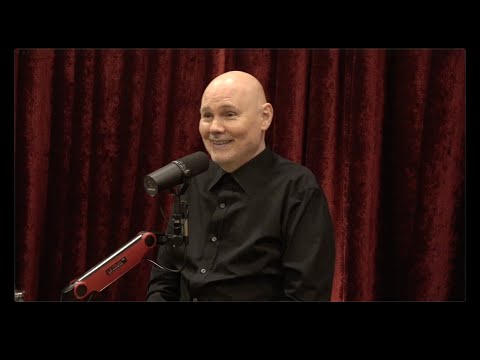
Joe Rogan Experience #2283 - Billy Corgan
Narrator, Billy Corgan (guest), Joe Rogan (host), Narrator, Narrator, Narrator, Narrator
In this episode of The Joe Rogan Experience, featuring Narrator and Billy Corgan, Joe Rogan Experience #2283 - Billy Corgan explores billy Corgan on Bill Burr rumors, fame’s cost, and artistic integrity Billy Corgan joins Joe Rogan to unpack the viral rumor that Bill Burr might be his half-brother, tracing it back to his chaotic, mob-adjacent upbringing and his father’s many secrets. They move into a wide-ranging discussion on stand-up comedy, authenticity in art, and how corporate systems often clash with truly original performers. Corgan reflects on the rise, fall, and persistence of Smashing Pumpkins, explaining why he refused to become a nostalgia act or bow to industry pressure despite criticism and changing generations. Throughout, they touch on CTE, addiction, plastic surgery culture, billionaires, and the podcasting boom as they contrast manufactured celebrity with hard-won creative longevity.
Billy Corgan on Bill Burr rumors, fame’s cost, and artistic integrity
Billy Corgan joins Joe Rogan to unpack the viral rumor that Bill Burr might be his half-brother, tracing it back to his chaotic, mob-adjacent upbringing and his father’s many secrets. They move into a wide-ranging discussion on stand-up comedy, authenticity in art, and how corporate systems often clash with truly original performers. Corgan reflects on the rise, fall, and persistence of Smashing Pumpkins, explaining why he refused to become a nostalgia act or bow to industry pressure despite criticism and changing generations. Throughout, they touch on CTE, addiction, plastic surgery culture, billionaires, and the podcasting boom as they contrast manufactured celebrity with hard-won creative longevity.
Key Takeaways
Virality can trap you in a narrative you don’t control.
Corgan’s offhand public musing about Bill Burr possibly being his half-brother—rooted in a family rumor and physical resemblance—snowballed into memes, fan pressure for DNA tests, and a staged‑yet‑real awkward confrontation with Burr, showing how quickly a bit can become a perceived truth.
Get the full analysis with uListen AI
Chaotic childhoods often shape artists’ edge and distrust of authority.
Growing up around mob-connected drug deals, guns, constant weed, and unstable parenting gave Corgan a high tolerance for discomfort and a lifelong refusal to bow to gatekeepers, but also left deep emotional scars that surface in his work.
Get the full analysis with uListen AI
The entertainment industry often wants control more than originality.
Corgan describes label executives telling him his voice, songs, and choices were “inconvenient” for business and urging him to just “give them what they want”—a dynamic he connects to what drove Chappelle away from Comedy Central when non‑creatives tried to steer his show.
Get the full analysis with uListen AI
Great artists frequently embed deeper truths than they consciously intend.
Corgan realized while high that songs he thought were about ex‑girlfriends were really about his mother, and fans independently felt those deeper themes, convincing him that there’s an unconscious, shamanic layer to songwriting that audiences can sense.
Get the full analysis with uListen AI
Authenticity becomes more valuable as culture drifts into “post‑truth.”
In a world of filters, manufactured bands, and influencer culture, Corgan argues that stubbornly being yourself—even when it costs you—is what sustains long careers and explains renewed appreciation from younger fans who were told not to like him.
Get the full analysis with uListen AI
Longevity in performance requires adapting without surrendering your core.
Using examples from Aerosmith, Van Halen, and the Rolling Stones, Corgan notes that surviving decades means evolving (or even radically shifting styles) while still honoring what made you compelling in the first place, rather than only replaying old hits.
Get the full analysis with uListen AI
New distribution models are shifting power toward creators.
Rogan and Corgan see podcasting and direct‑to‑fan platforms as previews of a future where musicians can bypass legacy gatekeepers, monetize peer‑to‑peer, and avoid the exploitative splits that historically siphoned most of the money away from artists.
Get the full analysis with uListen AI
Notable Quotes
“I’m the last person that’s gonna bow down for that shit. Fuck off.”
— Billy Corgan
“In the entertainment world, we’re used to it—people want you to play John Wayne. Bruce Springsteen literally said, ‘I’m not really Bruce Springsteen.’”
— Billy Corgan
“Putting people in a cage for doing something they want to do that harms no one, but you don’t want them to do, is fucking insane.”
— Joe Rogan
“The game is you versus you. It’s not you versus them. That’s the sucker’s game.”
— Billy Corgan
“We live in the age of plastic music now. The Monkees are the grandfathers of this thing.”
— Billy Corgan
Questions Answered in This Episode
If a lighthearted story can snowball into a full-blown public narrative, how should artists decide what personal anecdotes are safe to share?
Billy Corgan joins Joe Rogan to unpack the viral rumor that Bill Burr might be his half-brother, tracing it back to his chaotic, mob-adjacent upbringing and his father’s many secrets. ...
Get the full analysis with uListen AI
How much should an artist compromise with industry expectations if it means bigger reach—but potentially diluting their authentic voice?
Get the full analysis with uListen AI
What responsibility, if any, do labels and networks have to protect the mental health of the high‑risk, high‑talent performers they profit from?
Get the full analysis with uListen AI
As direct-to-fan platforms grow, how might the role of record labels and traditional media gatekeepers fundamentally change?
Get the full analysis with uListen AI
Are we, as audiences, complicit in rewarding manufactured images over authenticity—and if so, what would it look like to change that behavior?
Get the full analysis with uListen AI
Transcript Preview
(drumming) Joe Rogan podcast, check it out.
The Joe Rogan Experience.
Train by day, Joe Rogan podcast by night, all day. (instrumental music) All right, we're ... What's happening, man? Good to see you.
Thank you for having me back.
My pleasure. Um, how many times a day do you get bombarded by the whole Bill Burr thing?
When it gets into the family-
(laughs)
... and people I haven't talked to for 20 years.
Ugh, then do you have to break character and tell the truth?
No. You know, the thing is, i- i- this is what's crazy, okay? Uh, you want the whole setup story?
Sure, sure, sure.
I could be quick about it. Uh, so, uh, where I tape my podcast is in one of Howie Mandel's buildings, and he has another building in this area. So, uh, I was working on something, and, and I was supposed to go on Howie's show that day. And they said, "Howie will meet you out in the street or something, for whatever reason." So I go out in the street, and the first thing Howie says to me when he sees me, he goes, "Here comes Bill Burr." And I go, "You too?" Like, "Do you know this story?" And he said, "No, I don't know about it." And I said, "You know what? Heck with it, I'm just gonna s- tell it on your show, so don't ask me any more." And I went on the show, and I told the story about my, how 10 years ago, my stepmother came to me and said, "Do you know who Bill Burr is?" I'd never heard of Bill, didn't know who he was, 'cause I don't really consume much, you know, popular culture. I had no idea he was a famous comedian. He could've been the lawnmower guy. Looked up Bill, first thing I saw was like, oh my God, he looks just like Daddy. When I was 18 years old, at an IHOP my, on my 18th birthday, my father told me, "You have a half-brother that I sired at the same time as you whose name is Bill." So suddenly, these facts come together of my mother telling me these stories. I talked to my dad subsequently about it, and he was very cagey about it. And when I said, "Why won't you tell me where this person is or who this person is?" He said, um, "I'm trying to protect you." So when my stepmother had told me, it kinda made sense, like, well, if, if my half-brother is this super famous comedian, my dad, in a way, wouldn't want me to know, because he wouldn't want me to feel like I was number two-
(laughs)
... because Bill's so famous. I know it sounds crazy, right?
You think that's why he was trying to protect you?
Well, I don't know. So, so fast forward to Howie saying something on the street. So I was like, "You know what? I'm just gonna say something." And I swear to God, hand on my heart, last time I was with you in California, I almost pulled you aside after we were on, and I was gonna tell you the story, 'cause I knew you knew Bill, and I was gonna back channel, see if there was anything to the story from Bill's side.
Install uListen to search the full transcript and get AI-powered insights
Get Full TranscriptGet more from every podcast
AI summaries, searchable transcripts, and fact-checking. Free forever.
Add to Chrome