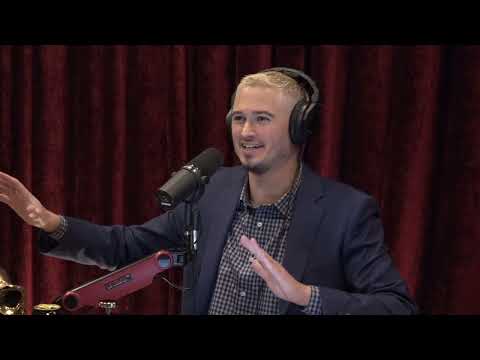
Joe Rogan Experience #1935 - Kyle Kulinski
Joe Rogan (host), Narrator, Kyle Kulinski (guest), Narrator, Narrator, Narrator, Narrator
In this episode of The Joe Rogan Experience, featuring Joe Rogan and Narrator, Joe Rogan Experience #1935 - Kyle Kulinski explores comedy, censorship, and power: Rogan and Kulinski dissect modern America Joe Rogan and Kyle Kulinski spend hours moving between stand‑up comedy, the evolution of media, online censorship, and U.S. politics and foreign policy.
Comedy, censorship, and power: Rogan and Kulinski dissect modern America
Joe Rogan and Kyle Kulinski spend hours moving between stand‑up comedy, the evolution of media, online censorship, and U.S. politics and foreign policy.
They contrast the old Hollywood-centered model of comedy with today’s podcast-driven, Austin-based scene, emphasizing creative freedom and community.
A major thread is how platforms, governments, and corporate money shape what people see and believe—from YouTube algorithms and Twitter Files to the war on drugs, Iraq, Afghanistan, and healthcare.
They close by gaming out 2024 politics, critiquing both parties, and debating figures like Ron DeSantis, Bernie Sanders, and Joe Biden, while stressing the value of independent media and open debate.
Key Takeaways
Comedy’s power base has shifted from Hollywood to decentralized podcast hubs.
Rogan describes how the old model—sitcoms, late-night shows, ‘getting into Hollywood’—has been replaced by comedians building audiences directly through podcasts and live touring, with Austin now functioning as a thriving, collaborative center.
Get the full analysis with uListen AI
Stand‑up success is less about raw funniness and more about disciplined craft.
They emphasize that many naturally funny people never touch a stage, while working comics obsess over writing, tightening bits, reading audiences, and handling intense performance pressure—treating it like a high-skill sport rather than just ‘talking.’
Get the full analysis with uListen AI
Platform algorithms and ‘authoritative content’ labels silently shape political reality.
Kulinski explains how YouTube’s post‑2017 shift toward boosting mainstream outlets and classifying independent news as ‘borderline’ throttled organic growth, showing how a few corporate and policy choices can make or break entire voices and narratives.
Get the full analysis with uListen AI
Government, intelligence agencies, and media often act as a unified narrative machine.
From the Iraq War to the Twitter Files and the Hunter Biden laptop story, they argue that agencies like the FBI and CIA launder preferred narratives through compliant media, while genuine whistleblowers and dissenters face punishment or silence.
Get the full analysis with uListen AI
Money in politics and corporate capture fundamentally distort public policy.
Examples like Kyrsten Sinema blocking broad drug price reforms after pharma donations, Chevron’s retaliatory campaign against Steven Donziger, and Big Pharma’s role in drug pricing illustrate how corporate interests routinely override public will.
Get the full analysis with uListen AI
Prohibition and punitive drug policy often worsen the harms they claim to solve.
They link fentanyl deaths to the crackdown on prescription opioids, argue for legalize–tax–regulate models, highlight safe injection sites and Portugal’s decriminalization, and point to promising treatments like psilocybin, MDMA, and ibogaine for addiction and PTSD.
Get the full analysis with uListen AI
Voters increasingly favor outsider energy, but the system still protects insiders.
Rogan and Kulinski see Trump, DeSantis, and potential candidates like Marianne Williamson as tapping into anti‑establishment sentiment, while party machinery, donor money, and media gatekeeping continue to favor safe, status‑quo figures like Biden.
Get the full analysis with uListen AI
Notable Quotes
“Comedy’s different in that it seems like you’re just talking… but once you start doing it you realize, ‘Oh, this is like a mass hypnosis I’m doing.’”
— Joe Rogan
“I’ve never had a conversation with an advertiser in over 10 years of doing this. I’ve gone above and beyond on purpose so that people know this is 100% coming from a genuine place.”
— Kyle Kulinski
“You have these people that are willing to do that. You have the Brian Stelters and the Don Lemons that are willing to play ball and stay narrow, and people just don’t like it… you know that’s not a real person.”
— Joe Rogan
“We reduced child poverty by 50% like that, and nobody stopped to say, ‘This kind of implies that child poverty is a choice.’”
— Kyle Kulinski
“You’ve got to accept the fact that it’s going to be messy. They want it to be not messy. There’s no way.”
— Joe Rogan
Questions Answered in This Episode
How much control should platforms like YouTube and Twitter have over what political content is amplified or throttled, and who should set those rules?
Joe Rogan and Kyle Kulinski spend hours moving between stand‑up comedy, the evolution of media, online censorship, and U. ...
Get the full analysis with uListen AI
Is it realistic to envision a U.S. political system where corporate money and lobbying no longer dominate policy decisions—and what concrete reforms would actually get us there?
They contrast the old Hollywood-centered model of comedy with today’s podcast-driven, Austin-based scene, emphasizing creative freedom and community.
Get the full analysis with uListen AI
Where should society draw the line between protecting people from harmful misinformation and allowing bad ideas to circulate so they can be publicly debunked?
A major thread is how platforms, governments, and corporate money shape what people see and believe—from YouTube algorithms and Twitter Files to the war on drugs, Iraq, Afghanistan, and healthcare.
Get the full analysis with uListen AI
What would a sane, evidence-based drug policy look like if it centered on harm reduction, individual freedom, and new therapeutic tools like psychedelics?
They close by gaming out 2024 politics, critiquing both parties, and debating figures like Ron DeSantis, Bernie Sanders, and Joe Biden, while stressing the value of independent media and open debate.
Get the full analysis with uListen AI
In an era of outsider politics and collapsing trust in institutions, what qualities should voters prioritize in 2024 candidates beyond party labels and culture‑war positioning?
Get the full analysis with uListen AI
Transcript Preview
(drum roll) Joe Rogan podcast, check it out.
The Joe Rogan Experience.
Train by day, Joe Rogan podcast by night, all day. (rock music plays) All right, we're up and running.
Yeah.
Hi, Kyle.
Hello, sir. (laughs)
Good to see you, brother.
Good to see you too, man. That was a great set last night.
Thank you. It was a lot of fun.
Yeah, that was a lot of fun.
That place crazy?
That place is crazy. Yeah.
Used to be an EDM club. We turned it into a comedy club.
That's hilarious. How long ago?
Just by coming here.
How long-
Two years ago.
Two years ago, it was an EDM club?
Yeah. Two years ago, it was like, like, all bunch of dirty people that were doing-
(laughs)
... MDMA and dancing around. Eh.
Well, I feel like last year it wasn't... Like, I don't think they had that cool projection of the alien on the back.
Oh, yeah, no.
Yeah, it's like they've upgraded it in just a year.
Yeah.
Yeah.
Well, it's, it's, you know, become a thing, you know. We're, we're there every week and then, uh, the club opens up within a couple of weeks and I'll show you that tomorrow.
Yeah, and you got a lot of comedians who have joined you here, right? Who, people who-
God, like 12 world class comedians-
... have sort of moved here.
... moved here.
And they all... Come on, they all just followed you, right? They saw what you did and they were like, "All right, let's go there."
Well, I kind of let them know, like, you don't have to be there. You don't have to be in Hollywood-
Yeah, everybody was in LA.
... stuck in traffic and you don't have to deal with... Like, the... It was always, in California, there was always the allure of Hollywood because they were gonna give you work, right? You'd get on a sitcom and you would do talk shows, you'd do all these different things. But those aren't really a thing anymore.
Yeah.
And so what else are you gonna be there for? Movies? How many movies are there?
Yeah.
You can go in for movies. And what do you want to do? Like, everybody wants to do standup. Like, Stan Hope said it once, and I thought about it, I was like, "Dad, that's right." He's like, "Really what you're doing when you're doing a television show is, it's an ad to get people to go see you do standup."
Mm-hmm.
Like, yeah, that's what it is.
How many of your comedian friends still do TV, movies, stuff like that?
A few of them, like, they do-
A few of them do?
Install uListen to search the full transcript and get AI-powered insights
Get Full TranscriptGet more from every podcast
AI summaries, searchable transcripts, and fact-checking. Free forever.
Add to Chrome