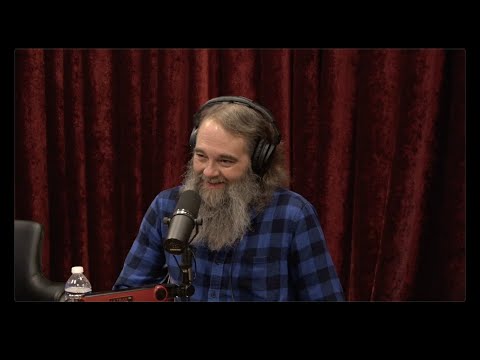
Joe Rogan Experience #2267 - Dan Richards
Narrator, Joe Rogan (host), Dan Richards (guest), Narrator, Narrator, Narrator, Narrator, Narrator
In this episode of The Joe Rogan Experience, featuring Narrator and Joe Rogan, Joe Rogan Experience #2267 - Dan Richards explores rogan and Richards challenge archaeology, ancient tech, and buried truths Joe Rogan and content creator Dan Richards (DeDunking) dive into ancient history controversies, from the Ark of the Covenant and the pyramids to Gobekli Tepe, Atlantis, and possible pre-Columbian transoceanic contact. They repeatedly return to the tension between mainstream archaeology and so‑called ‘pseudo‑archaeology,’ arguing that ego, career incentives, and politics often distort open scientific inquiry.
Rogan and Richards challenge archaeology, ancient tech, and buried truths
Joe Rogan and content creator Dan Richards (DeDunking) dive into ancient history controversies, from the Ark of the Covenant and the pyramids to Gobekli Tepe, Atlantis, and possible pre-Columbian transoceanic contact. They repeatedly return to the tension between mainstream archaeology and so‑called ‘pseudo‑archaeology,’ arguing that ego, career incentives, and politics often distort open scientific inquiry.
The conversation ranges from speculative tech theories like the Great Pyramid as a power plant and the Baghdad Battery as an early cell, to hard evidence such as Monte Verde, White Sands footprints, and vast bone beds in Alaska that point to catastrophic events and earlier human presence in the Americas. They also touch on UFOs, Mars anomalies, alleged Peruvian alien mummies, and how media narratives get built and weaponized.
Underlying it all is a critique of how institutions—from universities to public health agencies and political campaigns—gatekeep information, mischaracterize critics, and sometimes rewrite or bury inconvenient data. Rogan and Richards argue for more transparency, more testing, and less certainty from experts when the evidence is incomplete or contested.
Key Takeaways
Institutional science often resists paradigm shifts, even when evidence accumulates.
Cases like Clovis First, Monte Verde, and pre‑Clovis footprints show that dominant models can be defended with personal attacks and career threats instead of data, delaying acceptance of earlier human presence in the Americas.
Get the full analysis with uListen AI
Archaeology needs more systematic testing and less dismissal by analogy.
Rogers and Richards argue you can’t just say “it looks natural” (e. ...
Get the full analysis with uListen AI
Ancient engineering achievements remain underexplained by current models.
The extreme precision of the Great Pyramid, massive stone logistics, mysterious stone ‘nubs,’ and possible high‑speed drilling signatures suggest techniques or organizational models we haven’t fully reconstructed, without requiring sci‑fi technology.
Get the full analysis with uListen AI
There is credible evidence humans were in the Americas far earlier than once taught.
Sites like Monte Verde, Chile and White Sands, New Mexico (with ~20k+ year-old footprints) have overturned the neat Clovis‑First story, implying multiple migration routes and a deeper, more complex peopling of the Americas.
Get the full analysis with uListen AI
Gatekeeping and corruption can severely distort archaeological records.
Examples from Peru (looted elongated skulls, lost films, politicized ‘alien’ mummies) and the delayed investigation of Cusco tunnels show how artifacts can be stolen, mismanaged, or buried—compromising both data and public trust.
Get the full analysis with uListen AI
Speculative ideas should be clearly labeled as such, not sold as certainties.
The episode distinguishes between intriguing speculation (e. ...
Get the full analysis with uListen AI
Ego and narrative management erode trust across domains, from archaeology to public health and politics.
Whether it’s Fauci reversing on masks, academics branding critics as racists, or political operatives misrepresenting why Kamala Harris didn’t appear on Rogan’s show, the pattern of protecting status over truth encourages skepticism of all institutions.
Get the full analysis with uListen AI
Notable Quotes
“Science does not progress one discovery at a time; it progresses one funeral at a time.”
— Dan Richards (quoting Max Planck and applying it to archaeology)
“If you say ‘the science is settled’ when you don’t have all the information in the universe, you’re no longer worth a fuck to me in the lab.”
— Dan Richards
“We’re all just guessing. Just stop. Shut your hole.”
— Joe Rogan, on certainty about events like the Younger Dryas impact
“If you really want people to believe in God and the Bible, what better way than to say, ‘Not only is the Ark of the Covenant real, but we have it here’? That’s not yours to covet.”
— Joe Rogan
“The most interested people in archaeology are not archaeology students. I’m the one reading this shit at 2:00 in the morning with a beer in my hand.”
— Dan Richards
Questions Answered in This Episode
If institutional ego and career incentives strongly bias what gets researched or published, how can we design systems that keep archaeology (and science generally) more honest and self-correcting?
Joe Rogan and content creator Dan Richards (DeDunking) dive into ancient history controversies, from the Ark of the Covenant and the pyramids to Gobekli Tepe, Atlantis, and possible pre-Columbian transoceanic contact. ...
Get the full analysis with uListen AI
What specific, testable projects—underwater surveys, materials analysis, dating programs—would most decisively advance the debates around Atlantis, Yonaguni, and Bimini Road within a decade?
The conversation ranges from speculative tech theories like the Great Pyramid as a power plant and the Baghdad Battery as an early cell, to hard evidence such as Monte Verde, White Sands footprints, and vast bone beds in Alaska that point to catastrophic events and earlier human presence in the Americas. ...
Get the full analysis with uListen AI
How should we balance healthy skepticism with open-mindedness when assessing sensational claims like Peruvian ‘alien’ mummies or Mars anomalies that resemble artificial structures?
Underlying it all is a critique of how institutions—from universities to public health agencies and political campaigns—gatekeep information, mischaracterize critics, and sometimes rewrite or bury inconvenient data. ...
Get the full analysis with uListen AI
Given the clear evidence for earlier and more complex human presence in the Americas, what stories about prehistory and migration need to be rewritten in textbooks?
Get the full analysis with uListen AI
Are there ethical or geopolitical reasons why certain discoveries (e.g., a genuine advanced pre-Ice Age civilization, or proof of ancient transoceanic contact) might be downplayed or delayed—and should that ever be considered acceptable?
Get the full analysis with uListen AI
Transcript Preview
(drumming music) Joe Rogan podcast, check it out. The Joe Rogan Experience.
Train by day, Joe Rogan podcast by night, all day. (rock music)
Hey.
Hello. What's happening, dude?
Not much.
Good to see you again, man.
Good to see you too, Joe. Thanks for the invite.
Thanks, dude.
Oh, my pleasure. Thanks for coming on here, man. I really enjoy your videos, Joe. Your, um, your website, your channel, rather, on YouTube, DeDunking, is, uh, it's, it's really great because it's so obviously, like, it's one of those things where you don't need like some big crazy set or high production values to make something interesting. It's just you with a bookshelf behind you-
(laughs)
... talking about stuff, and it's great.
Well, thanks. I, I appreciate that, Joe. Yeah, I, I'm very passionate about this stuff, so it's, it... I'm glad that, uh, people are taking notice and that I'm sitting here talking to you right now about it. It's crazy to me, so thanks.
Well, you were one of the g-... You, like me, um, were one of the early readers of Fingerprints of the Gods.
Yeah.
And that's sort of how you got into this whole subject, right?
Yes, I, uh, I actually had that one pre-ordered from Hastings, uh, 'cause I'd read The Sign and the Seal.
Oh, okay.
And, uh, so I was already like, "Graham Hancock's pretty cool. I li- I like the way he's coming at these things." And, uh, I saw that there was a thing at Hastings that said to pre-order Fingerprints of the Gods for like $25 bucks or something, you get like $3 off, and so I did and was reading it cover to cover when, uh, I had Graham sign it. And him and Santa both were just looking at how beat the hell it is, right?
(laughs)
'Cause they'd been in a construction truck (laughs) where we're going job sites for like 20 years, but...
That's awesome. Um, so The Sign and the Seal, was that, uh, about Ethiopia and the-
Yeah, the Ark of the Covenant.
Yeah. What's your take on all that?
It's interesting. Uh, uh, any time they won't let you see the evidence, I get like, my, all of my alarm bells go off, right?
Right.
It's like... But I understand why they wouldn't want you to see it, if it really is the Ark. Um, I'd like to see... I guess the best thing we could do to, to test it without seeing the Ark would be to look into the, uh, the claims that these guys go blind and they show signs of radiation sickness.
Yeah, let's explain to everybody what the claim-
Oh, sorry.
That, that they believe that this one church in Ethiopia actually possesses the Ark of the Covenant and that these priests that are supposedly guarding this, they all exhibit signs of radiation poisoning.
Install uListen to search the full transcript and get AI-powered insights
Get Full TranscriptGet more from every podcast
AI summaries, searchable transcripts, and fact-checking. Free forever.
Add to Chrome