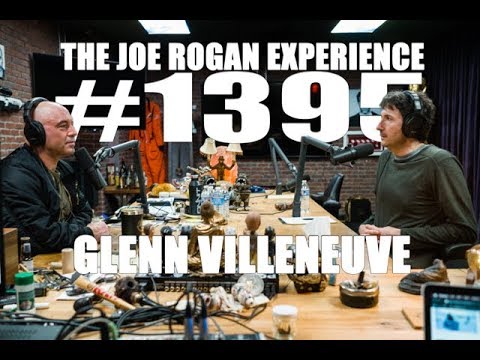
Joe Rogan Experience #1395 - Glenn Villeneuve
Joe Rogan (host), Glenn Villeneuve (guest), Jamie Vernon (guest), Glenn Villeneuve (guest)
In this episode of The Joe Rogan Experience, featuring Joe Rogan and Glenn Villeneuve, Joe Rogan Experience #1395 - Glenn Villeneuve explores alaskan Loner Explains Real Wilderness Survival, TV Fame, And Freedom Joe Rogan interviews Glenn Villeneuve, known from Life Below Zero, about leaving conventional life to live as a near hunter‑gatherer in Alaska’s Brooks Range. Glenn explains how he taught himself wilderness survival, built and later dismantled his off‑grid cabin, and lived for long stretches with minimal supplies, often relying solely on moose, caribou, and fish. They dig into the realities behind the TV show, including conflicts with producers, how storylines were shaped, and why he was eventually dropped despite fan popularity. The conversation also explores physical and psychological effects of isolation, diet and health in extreme subsistence living, wildlife encounters, and how modern tech and media could let him share his experiences on his own terms.
Alaskan Loner Explains Real Wilderness Survival, TV Fame, And Freedom
Joe Rogan interviews Glenn Villeneuve, known from Life Below Zero, about leaving conventional life to live as a near hunter‑gatherer in Alaska’s Brooks Range. Glenn explains how he taught himself wilderness survival, built and later dismantled his off‑grid cabin, and lived for long stretches with minimal supplies, often relying solely on moose, caribou, and fish. They dig into the realities behind the TV show, including conflicts with producers, how storylines were shaped, and why he was eventually dropped despite fan popularity. The conversation also explores physical and psychological effects of isolation, diet and health in extreme subsistence living, wildlife encounters, and how modern tech and media could let him share his experiences on his own terms.
Key Takeaways
Radical lifestyle changes require long, methodical preparation, not impulsive leaps.
Glenn spent seven years studying aviation, anthropology, and wilderness skills, and simplifying his finances before ever walking 60 miles off the road into the Brooks Range. ...
Get the full analysis with uListen AI
True subsistence living is a full‑time job that demands relentless adaptability.
He describes running out of moose meat, misjudging caribou migrations, eating weasels and wolf meat, tracking wolves to steal their kills, and learning to use every edible part of an animal—including stomach contents and colon—just to avoid starvation.
Get the full analysis with uListen AI
High‑meat, high‑fat diets can work in extreme conditions, but context matters.
Living on mostly moose and caribou meat and fat, Glenn felt best when most calories came from fat and when he ate organs and varied cuts, often raw or lightly dried. ...
Get the full analysis with uListen AI
Wilderness constantly tests both risk management and ethics.
He balances taking wolves’ food, shooting a grizzly near his family, and trapping for fur with deep respect for animals and strict self‑imposed limits (e. ...
Get the full analysis with uListen AI
Reality TV tends to prioritize formula over authenticity, even with real subjects.
Although Glenn lived the most “extreme” version of the show’s premise, producers resisted his more exploratory or educational story ideas (Stone Age sites, paragliding, philosophical climbs), pressured him creatively, and ultimately dropped him with minimal explanation after renewing his contract.
Get the full analysis with uListen AI
Legal frameworks often lag behind unconventional but low‑impact lifestyles.
For 17 years he quietly occupied state land without a permit until agencies flew in—after he was on TV—to retroactively bill him, require cabin removal, and constrain future use. ...
Get the full analysis with uListen AI
Prolonged isolation can heighten human appreciation rather than misanthropy.
After months alone, even a state trooper visit felt like “getting out of solitary,” and a random hiker encounter became a treasured two‑hour conversation. ...
Get the full analysis with uListen AI
Notable Quotes
“I just wanted to strip everything away that I could dispense with.”
— Glenn Villeneuve
“I walked 60 miles off that road by myself into the wilderness and started figuring out how to live off the land.”
— Glenn Villeneuve
“If you want to live that primitively off the land, that's all you do. It takes all your time.”
— Glenn Villeneuve
“There’s no world that’s more removed from the world of living by yourself in the woods than Hollywood.”
— Joe Rogan
“It doesn’t mean anything to me if I don’t share it with people anymore.”
— Glenn Villeneuve
Questions Answered in This Episode
If you build your own independent video series, what kinds of stories or teaching moments would you prioritize that TV never let you show?
Joe Rogan interviews Glenn Villeneuve, known from Life Below Zero, about leaving conventional life to live as a near hunter‑gatherer in Alaska’s Brooks Range. ...
Get the full analysis with uListen AI
Looking back, what was the single most dangerous decision you made in the Brooks Range, and would you make the same choice now?
Get the full analysis with uListen AI
How did periods of real hunger and semi‑starvation change your long‑term relationship with food, comfort, and risk?
Get the full analysis with uListen AI
What psychological shifts did you notice in yourself after months alone in the Arctic compared with long stretches back in Fairbanks or cities?
Get the full analysis with uListen AI
Given your conflicts with regulations and TV producers, what do you think a sane, fair system for people who want to live semi‑nomadic or subsistence lives on public land should look like?
Get the full analysis with uListen AI
Transcript Preview
Boom, here we go. What's up, Glenn? How are you, man?
Hey, Joe.
Nice to meet you in person.
Good to come down here.
(laughs)
Good to meet you.
Dude, you, uh, you're one of my favorite characters on that show. It was, uh, it was always weird watching you. For p- people who don't know what you're ... Life Below Zero, it's, um, this crazy show where people live, you know, in this very rugged terrain. And you, you had, you had the most interesting life 'cause you, when you lived up at the cabin, you would live by yourself. Just you in a very small room, just, uh, hunting all your food, and, and, and hiking around. You didn't use any vehicles, and you just kinda had a rifle and a frying pan and a pot and a place to sleep, and you seemed really happy up there.
Oh, yeah. I'm having a good time. I just wanted to strip everything away that I could dispense with, you know. Um, I got the idea I wanted to go back to living like a hunter-gatherer. Back in '97, I just got this idea. I was actually living in a tent in the woods down in Vermont and having such a good time, I thought, "Where could I go with this? What could I do with this kinda lifestyle?" And I decided to move to the Brooks Range of Alaska.
What was it, like so, you ... What made you go live in a tent in the first place?
I just always liked the outdoors. I just love nature. And, you know, I was doing other things too, but there was this, this one summer when I was in my 20s when I found this really cool spot in the woods, and I thought, "Hey, I'll set up a teepee over there, and I'll just hang out there this summer as much as I can." And I just had a great time, so I started thinking more about, you know, instead of just living in the woods kind of as a recreational thing, I started thinking about, "Hey how could you actually make a life living like this?" You know, get up every morning with the animals around, the sky, the water. Um, I started thinking about it. I started reading anthropological stuff about hunter-gatherers that summer, and I started getting ideas. And, uh, it took me seven years to make it to the Brooks Range and to get out to that lake that you've seen on TV and to actually start living that way. It took me a few years just to organize my life enough to move up to Alaska. And then once I got to Alaska, I was kinda in Fairbanks for about four years before I could really spend long periods of time in the wilderness. But once I got it all arranged, I just drove up the Hall Road, which is this industrial road that goes up to the North Slope Oil Fields. It's very, very, uh, unimproved in areas. Just gravel road for hundreds of miles. I drove about 300 miles north of Fairbanks. I parked my van, and I walked 60 miles off of that road by myself out into the wilderness and started figuring out how to live off the land.
Install uListen to search the full transcript and get AI-powered insights
Get Full TranscriptGet more from every podcast
AI summaries, searchable transcripts, and fact-checking. Free forever.
Add to Chrome