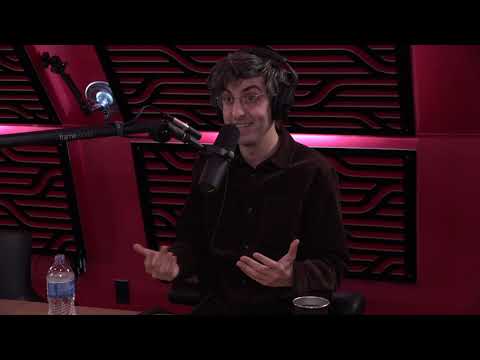
Joe Rogan Experience #1615 - Hamilton Morris
Hamilton Morris (guest), Narrator, Joe Rogan (host), Narrator
In this episode of The Joe Rogan Experience, featuring Hamilton Morris and Narrator, Joe Rogan Experience #1615 - Hamilton Morris explores psychedelics, Prohibition, and Pandemic: Hamilton Morris Dissects Drug Reality Joe Rogan and chemist‑journalist Hamilton Morris discuss how COVID-19 reshaped city life, personal behavior, and public policy, contrasting media panic with scientific uncertainty and political hypocrisy.
Psychedelics, Prohibition, and Pandemic: Hamilton Morris Dissects Drug Reality
Joe Rogan and chemist‑journalist Hamilton Morris discuss how COVID-19 reshaped city life, personal behavior, and public policy, contrasting media panic with scientific uncertainty and political hypocrisy.
They dive deeply into pharmacology and drug policy: COVID treatments, vitamins, hydroxychloroquine, opioid and benzodiazepine dependence, and why molecules should not be politicized.
Morris explains the emerging science and history of psychedelics—psilocybin, ketamine, ibogaine, 5‑MeO‑DMT—and their medical, anti‑addictive, and spiritual roles, while warning against both hysteria and over‑medicalization.
They close by criticizing prohibition, sentencing disparities, and social‑media outrage culture, arguing for adult freedom, personal responsibility, and more honest, evidence‑based conversations about drugs.
Key Takeaways
Separate pharmacology from politics when evaluating drugs.
Morris stresses that molecules like hydroxychloroquine and ivermectin should be judged on data, not on who endorses them; politicizing a compound impedes rational research and honest physician decision‑making.
Get the full analysis with uListen AI
Support both medical research and non‑medical freedom around psychedelics.
He welcomes the new wave of psychedelic clinical trials but warns that insisting drugs be framed only as ‘medicine’ or ‘sacred’ risks forgetting a core principle: competent adults should have the freedom to alter consciousness even without a medical excuse.
Get the full analysis with uListen AI
Recognize how prohibition magnifies harm and entrenches injustice.
From PCP scare stories to crack vs. ...
Get the full analysis with uListen AI
Treat dependence as both pharmacological and behavioral.
With opioids and benzodiazepines, the problem isn’t just receptor changes; long‑term use prevents people from developing coping skills for pain, anxiety, and sleep—so effective treatment must combine tapering, adjunct medications, and psychological/behavioral change.
Get the full analysis with uListen AI
Use context‑rich, communal frameworks for addiction treatment when possible.
Morris describes Gabonese iboga ceremonies where fasting, constant social support, ritual, and iboga’s complex pharmacology converge to help people break compulsions—highlighting how environment and meaning can be as critical as the drug itself.
Get the full analysis with uListen AI
Exploit modern information tools like Sci‑Hub to think for yourself.
He points out that Sci‑Hub quietly liberated virtually all scientific papers, giving anyone with internet access the same literature as elite universities—making it harder to excuse ignorance when forming opinions about medicine and policy.
Get the full analysis with uListen AI
Be wary of habits—even with ‘acceptable’ or legal substances.
Whether it’s cannabis at night, nicotine, or benzodiazepines, Morris argues that simple dependence—even without classic addiction—can subtly disempower you, so periodically abstaining and reassessing your relationship with any drug is a healthy discipline.
Get the full analysis with uListen AI
Notable Quotes
“A molecule shouldn’t be politicized. It should have efficacy or not, but it shouldn’t be a Republican molecule or a Democrat molecule.”
— Hamilton Morris
“No justification should be required. Even if it’s bad for me, it’s my choice as an adult.”
— Hamilton Morris
“There are only two types of people in our culture that we allow to talk about the world in terms of good guys and bad guys, and that’s cops and children.”
— Hamilton Morris
“If you were an evil person and you wanted the world to be fucked, what you would do is get Trump to promote everything good for you.”
— Joe Rogan
“We have the internet, the greatest educational tool ever devised, and it’s being used as a machine for competitively angry remarks.”
— Hamilton Morris
Questions Answered in This Episode
How would U.S. drug policy look if it were built from scratch on current pharmacological evidence instead of historical moral panics?
Joe Rogan and chemist‑journalist Hamilton Morris discuss how COVID-19 reshaped city life, personal behavior, and public policy, contrasting media panic with scientific uncertainty and political hypocrisy.
Get the full analysis with uListen AI
What safeguards could allow aggressive psychedelic and xenon research without repeating the mistakes of past pharmaceutical over‑marketing (e.g., OxyContin, benzodiazepines)?
They dive deeply into pharmacology and drug policy: COVID treatments, vitamins, hydroxychloroquine, opioid and benzodiazepine dependence, and why molecules should not be politicized.
Get the full analysis with uListen AI
If dependence itself is disempowering, how should clinicians and patients weigh short‑term relief against long‑term loss of coping skills when prescribing drugs like benzos or opioids?
Morris explains the emerging science and history of psychedelics—psilocybin, ketamine, ibogaine, 5‑MeO‑DMT—and their medical, anti‑addictive, and spiritual roles, while warning against both hysteria and over‑medicalization.
Get the full analysis with uListen AI
Could structured, community‑based psychedelic rituals—like the Gabonese iboga ceremonies—be adapted ethically within Western medical systems, or would medicalization strip away their essential elements?
They close by criticizing prohibition, sentencing disparities, and social‑media outrage culture, arguing for adult freedom, personal responsibility, and more honest, evidence‑based conversations about drugs.
Get the full analysis with uListen AI
Given tools like Sci‑Hub and widespread misinformation online, what practical steps can non‑experts take to critically evaluate claims about drugs, treatments, and public health policy?
Get the full analysis with uListen AI
Transcript Preview
(drum music) Joe Rogan podcast, check it out.
The Joe Rogan Experience.
Train by day, Joe Rogan podcast by night. All day. (energetic music) Hello, Hamilton.
Hey, Joe.
Good to see you, man. What's happening?
Good to see you. None of this.
This is, uh, our third podcast, but not really. I only count two of them, because of the first one we were literally so stoned we couldn't communicate.
(laughs)
Remember that one?
I remember it well.
(laughs)
I like it. I feel like I'm getting the tour. First it was your home, then the LA location, and now this new intermediate red tube.
Yeah, the red tube. Some folks call it the red pill, but that also has a lot of negative connotations.
So the red tube, then?
Yeah. The- the whatever it is. This is, uh, this is podcast studio number one, two, three, four, five? It's number five?
It's the third one I've been.
I think it's number five. It might be number six. One... Yeah. Well, number seven or number six, whichever is right next door and it's gonna be... (smacks lips)
Okay.
It's gonna be... All I've learned from constructing podcast studios, this one was very haphazardly constructed last minute, because we made the decision to get the fuck out of LA and we had five weeks. And, uh, my friend Matt Alvarez put this place together in five weeks. Set it all up and then five weeks later we were broadcasting from Texas.
It looks good.
It's not bad. It's okay. It's odd.
What is the optimal arrangement going to be?
The optimal arrangement is probably less weird on the eyes. Like the thing about this is like you're looking around and you're like, "Why are there back lights behind those sound panels? Why is everything red and black?"
(laughs)
Why is it- why is it like- like tube shaped? And it's just- it's an odd room, man. It's odd. But I like- I like it. I just don't- I just think we could do better. We can make it weird. Plus, I'm bored. Get bored easy. Been here for six months. Wanna mix it up.
Yeah.
Mix it up.
Yeah.
How's Brooklyn?
It's grim.
Is it?
It's grim right now.
Yeah?
It's- I've lived in New York for the majority of my life. I love New York City and this is by far the grimmest I have ever seen it.
Really?
I mean, this winter, because it's everything that the entire country is facing, but it's the worst for COVID. It's also extremely cold. Um, a lot of city services seem to have been impaired in one way or another. The streets are covered in garbage and ice and dog shit, and-
Ooh.
... you can't... Pretty much the only thing that I can do to maintain my sanity is run, but everything, including the outdoor running track, is covered in ice and shit.
Install uListen to search the full transcript and get AI-powered insights
Get Full TranscriptGet more from every podcast
AI summaries, searchable transcripts, and fact-checking. Free forever.
Add to Chrome