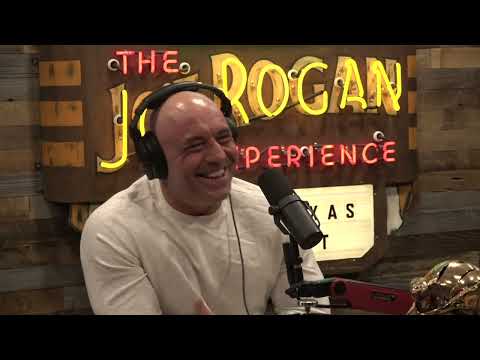
Joe Rogan Experience #1903 - Kurt Metzger
Narrator, Narrator, Joe Rogan (host), Kurt Metzger (guest), Narrator, Narrator, Narrator, Narrator, Joe Rogan (host), Narrator, Narrator, Narrator, Narrator, Joe Rogan (host), Narrator, Narrator, Narrator
In this episode of The Joe Rogan Experience, featuring Narrator and Narrator, Joe Rogan Experience #1903 - Kurt Metzger explores joe Rogan and Kurt Metzger Dive Into Drugs, Media Lies, and Power Joe Rogan and Kurt Metzger have a long-form, freewheeling conversation that moves from drugs and addiction to media corruption, government overreach, and cultural hypocrisy. They recount personal stories about nose surgeries, pill abuse, Suboxone withdrawal, and how exercise and vitamin D impact mood and recovery.
Joe Rogan and Kurt Metzger Dive Into Drugs, Media Lies, and Power
Joe Rogan and Kurt Metzger have a long-form, freewheeling conversation that moves from drugs and addiction to media corruption, government overreach, and cultural hypocrisy. They recount personal stories about nose surgeries, pill abuse, Suboxone withdrawal, and how exercise and vitamin D impact mood and recovery.
The discussion repeatedly circles back to how institutions—Big Pharma, legacy media, the government, and intelligence agencies—shape narratives on everything from the opioid crisis and COVID to Ukraine, FTX, and Twitter censorship.
They explore historical and current examples of covert operations and propaganda, such as CIA drug dealing, MKUltra, Afghanistan and Iraq wars, and media coordination, asking what can and cannot be questioned publicly today.
Throughout, they blend dark humor with skepticism, using anecdotes, documentaries, and news stories to argue that citizens must filter information carefully while still trying to stay sane—and even laugh—through the chaos.
Key Takeaways
Addiction treatments can be as brutal as the addiction itself.
Metzger describes Suboxone withdrawal as worse than quitting OxyContin cold turkey, and notes that systems built around methadone/Suboxone can trap people in new dependencies rather than fully resolving their addiction.
Get the full analysis with uListen AI
Basic health habits dramatically change mood and cognition.
Rogan and Metzger emphasize that regular exercise, sunlight, and vitamin D supplementation act as powerful, underappreciated mood stabilizers and cognitive enhancers—often overlooked while people reach for pharmaceuticals.
Get the full analysis with uListen AI
Media and pharma have deeply entangled incentives.
They point out how pharmaceutical advertising saturates mainstream news, shaping how antidepressants, opioids, and COVID policies are sold to the public, often via simplified or outdated theories like the 'chemical imbalance' model of depression.
Get the full analysis with uListen AI
Covert government actions once dismissed as ‘conspiracy’ are often historically documented.
Examples like CIA-linked drug trafficking, MKUltra LSD experiments, and entrapment cases show how intelligence and law enforcement agencies have engineered or manipulated crimes and public perception, blurring lines between security and abuse.
Get the full analysis with uListen AI
War narratives are heavily curated and time-sensitive.
They highlight how Western media shifted from criticizing Ukraine’s corruption and far-right elements to near-total suppression of such criticism once the Russian invasion framed Ukraine as a moral cause, showing how coverage changes with strategic needs.
Get the full analysis with uListen AI
Financial and tech elites can buy legitimacy through media and politics.
The FTX saga illustrates how massive donations, sponsorships, and flattering coverage allowed Sam Bankman-Fried to be treated as a genius and ethical hero until the collapse exposed how little due diligence had been done.
Get the full analysis with uListen AI
Online censorship and ‘shadow banning’ shape what seems to be consensus.
They discuss internal practices at platforms like Twitter, describing how algorithmic throttling, coordinated bot campaigns, and quiet deboosting of disfavored viewpoints can create the illusion of agreement and marginalize dissent without overt bans.
Get the full analysis with uListen AI
Notable Quotes
“Whatever they do over there, they're gonna do to you when it's convenient, like any kind of fucking gangster.”
— Kurt Metzger
“People think that people who do work out don't feel the exact same way they feel before they work out, because they kinda do.”
— Joe Rogan
“Learning is horrible. I don't recommend it.”
— Kurt Metzger
“It's not hurting comedy. It's much worse than that. It's killing you just speaking your mind.”
— Kurt Metzger
“We should demand the legality of [weed]. It’s a human rights issue.”
— Joe Rogan
Questions Answered in This Episode
How do we realistically stay informed without being overwhelmed or manipulated by media and institutional narratives?
Joe Rogan and Kurt Metzger have a long-form, freewheeling conversation that moves from drugs and addiction to media corruption, government overreach, and cultural hypocrisy. ...
Get the full analysis with uListen AI
Given what’s known about MKUltra, CIA drug operations, and entrapment cases, where should we now draw the line between ‘conspiracy theory’ and legitimate skepticism?
The discussion repeatedly circles back to how institutions—Big Pharma, legacy media, the government, and intelligence agencies—shape narratives on everything from the opioid crisis and COVID to Ukraine, FTX, and Twitter censorship.
Get the full analysis with uListen AI
What structural changes—if any—could actually reduce the influence of pharmaceutical money on medical practice and news coverage?
They explore historical and current examples of covert operations and propaganda, such as CIA drug dealing, MKUltra, Afghanistan and Iraq wars, and media coordination, asking what can and cannot be questioned publicly today.
Get the full analysis with uListen AI
Are platforms like Twitter capable of being true public squares, or will economic and political incentives always reintroduce opaque censorship and shadow bans?
Throughout, they blend dark humor with skepticism, using anecdotes, documentaries, and news stories to argue that citizens must filter information carefully while still trying to stay sane—and even laugh—through the chaos.
Get the full analysis with uListen AI
How should citizens in Western countries think about their governments’ roles in places like Haiti, Libya, Iraq, and Ukraine when official justifications often contradict long-term outcomes?
Get the full analysis with uListen AI
Transcript Preview
(drum roll) Joe Rogan podcast, check it out.
The Joe Rogan Experience.
(instrumental music plays) Train by day, Joe Rogan podcast by night, all day. Let's go.
Boy, you, you're going deep, fella.
I mean, that's why Elon Musk is a success.
Why?
'Cause he smoked weed on this show.
I don't think that's true. (laughs)
(laughs)
(laughs) That's what I...
(laughs)
(laughs) That's like when high school kids, like-
That guy's got a lot of money, and I saw him smoke weed on this show.
That's what happened, bro.
(laughs)
(laughs)
(laughs)
That was the root of it. I almost got him fucking f- like, removed from NASA top clearance inadvertently.
I- That's crazy, dude, that you would have to... Well, it's crazy how, yeah-
Meanwhile, we were drinking whiskey for like two hours before we hit that-
I know.
... blunt.
That's wild how slow that aspect, 'cause weed's so legal in so many places-
Yeah.
... you forget that it's not legal still.
Well, it was legal in California. That's what he asked me. He goes, "It is legal?" I go, "Yeah, it's legal here."
Yeah, but it's not... There's, there's California law, and then-
Yeah.
... there's, uh-
State law.
Yeah.
Federal law, rather. Yeah.
Or also, like, corporate, like investor confidence law, I guess, is what he violated.
Well, this is NASA. NASA had an issue with it, so it's government.
Yeah.
See, 'cause it's, marijuana's still very... Unfortunately, it's still federally Schedule I.
Yeah.
Which means it has no medical benefits, which is hilarious because I'm pretty sure cocaine is Schedule II 'cause cocaine has medical benefits.
'Cause of the throat, r-right? Like, Elvis would get it for his throat-
(laughs)
... on cotton swabs.
Is that what you're saying? The colonel?
No, well, that... I mean, officially, that's why they would give it to him. I was watching-
Oh, yeah.
... like, his entourage, like the guys from his entourage.
"We need to get Elvis some cocaine for his throat."
It was like this medical grade, the kind Robert Evans got busted trying to get, the pure like-
Oh.
... liquid, liquid (laughs) cocaine, and they would just dip these cotton swabs in it, and you stuck 'em, and they would just sit there and be ripped for hours, he said, on liquid. It was for his, uh, throat.
Well, if, it would numb it, 'cause they had... Like, I had lidocaine on my nose-
Yeah, right.
... which is like a cousin of cocaine, I guess, and one of the things that I thought was really interesting about it, it fucking killed my appetite. Like, I tried to go to-
Install uListen to search the full transcript and get AI-powered insights
Get Full TranscriptGet more from every podcast
AI summaries, searchable transcripts, and fact-checking. Free forever.
Add to Chrome