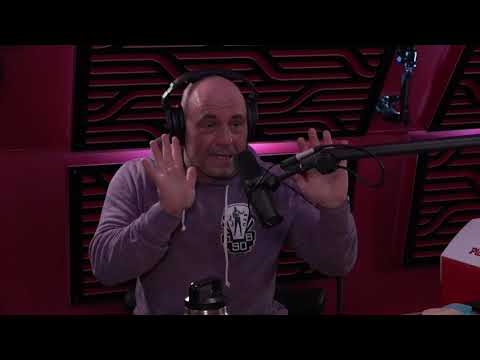
Joe Rogan Experience #1591 - Jordan Burroughs
Jordan Burroughs (guest), Joe Rogan (host), Narrator, Narrator, Narrator
In this episode of The Joe Rogan Experience, featuring Jordan Burroughs and Joe Rogan, Joe Rogan Experience #1591 - Jordan Burroughs explores olympic Wrestler Jordan Burroughs Weighs MMA, Legacy, and True Greatness Joe Rogan and Olympic gold medalist Jordan Burroughs dive into the realities of elite wrestling, from weight cuts and constantly changing rules to the difficulty of building an audience for grappling sports. Burroughs explains why he never transitioned to MMA, citing brain trauma, his family, and the difference between doing something for money versus purpose. They explore how social media, doping scandals, and the Olympic business model shape modern combat sports, and why U.S. wrestlers still struggle for professional recognition.
Olympic Wrestler Jordan Burroughs Weighs MMA, Legacy, and True Greatness
Joe Rogan and Olympic gold medalist Jordan Burroughs dive into the realities of elite wrestling, from weight cuts and constantly changing rules to the difficulty of building an audience for grappling sports. Burroughs explains why he never transitioned to MMA, citing brain trauma, his family, and the difference between doing something for money versus purpose. They explore how social media, doping scandals, and the Olympic business model shape modern combat sports, and why U.S. wrestlers still struggle for professional recognition.
The conversation also gets deeply personal: Burroughs discusses parenting, marriage, faith, and sustaining excellence over a decade at the top, while Rogan pushes him to see his post-competition potential as a coach and corporate speaker. They close by reflecting on mindset, discipline, and what it really means to be a champion in sport and in life.
Key Takeaways
Purpose matters more than money when choosing a combat career.
Burroughs admits MMA’s pay and fame are tempting, but questions whether stepping into a cage for a “cash grab” aligns with his faith, family priorities, and genuine sense of calling—highlighting the importance of alignment between values and career moves.
Get the full analysis with uListen AI
Elite performance is built on discipline, not just talent.
Burroughs was never the most gifted or dominant youth wrestler; he became an Olympic champion through relentless work, mental toughness, and structured habits, underscoring that sustained excellence is more mindset than genetics.
Get the full analysis with uListen AI
Recovery-focused weight cutting beats drastic last-minute dehydration.
He keeps his final 24-hour cut to roughly six–seven pounds and immediately rehydrates with electrolytes and light foods, emphasizing that extreme cuts destroy performance—especially with modern same-day weigh-ins and two-day tournaments.
Get the full analysis with uListen AI
Rules and presentation can make or break a sport’s mainstream appeal.
Frequent rule changes and obscure scoring in wrestling (and grappling generally) confuse casual viewers, while simple, visible violence in striking sports draws them in; Burroughs points to formats, storytelling, and clear rules as critical to growing wrestling’s audience.
Get the full analysis with uListen AI
Cheating at scale corrupts entire careers, not just one result.
Discussing Russia’s state-sponsored doping and the film ‘Icarus,’ Burroughs notes that retroactive medals never replace the lost podium moment, sponsorships, or legacy—illustrating how systemic cheating distorts life trajectories, not just scoreboards.
Get the full analysis with uListen AI
A stable home and supportive spouse are competitive advantages.
Both men stress that a healthy marriage and family environment free up mental bandwidth; a turbulent home life consumes emotional resources that could otherwise fuel training, focus, and long-term planning.
Get the full analysis with uListen AI
Championship habits are transferable beyond sport.
Rogan argues—and Burroughs ultimately agrees—that the same focus, discipline, and systems that produced world titles in wrestling can be applied to business, public speaking, or running a high-performance training center, turning an athletic career into a broader life platform.
Get the full analysis with uListen AI
Notable Quotes
“In fighting, you lose, you get something broken or you go unconscious. In wrestling, you lose, you get taken down or pushed out.”
— Jordan Burroughs
“You can lose your belt. You can never lose your gold. It always comes home with me.”
— Jordan Burroughs
“Once you know the way broadly, you can see it in all things.”
— Joe Rogan (quoting Miyamoto Musashi and applying it to Burroughs)
“Some guys are specimens, but there are not a lot of legends.”
— Joe Rogan
“Do you want your son to be a great athlete, or do you want to have a great relationship with him?”
— Jordan Burroughs (relaying his wife’s advice)
Questions Answered in This Episode
Should elite wrestlers like Jordan Burroughs feel an obligation to transition into MMA to grow their profile, or is it more powerful to elevate wrestling on its own terms?
Joe Rogan and Olympic gold medalist Jordan Burroughs dive into the realities of elite wrestling, from weight cuts and constantly changing rules to the difficulty of building an audience for grappling sports. ...
Get the full analysis with uListen AI
How could wrestling be restructured—rules, formats, media—to make it more understandable and compelling to non-wrestling audiences without diluting the sport?
The conversation also gets deeply personal: Burroughs discusses parenting, marriage, faith, and sustaining excellence over a decade at the top, while Rogan pushes him to see his post-competition potential as a coach and corporate speaker. ...
Get the full analysis with uListen AI
What is a fair and realistic global approach to anti-doping, given the contrast between countries that aggressively test and those implicated in state-sponsored cheating?
Get the full analysis with uListen AI
How can athletes proactively prepare for life after competition so that their identity and purpose don’t collapse when their sports career ends?
Get the full analysis with uListen AI
Where should we draw the ethical line between training innovation, legal performance enhancement, and future gene editing in the pursuit of athletic excellence?
Get the full analysis with uListen AI
Transcript Preview
(drumbeats) Joe Rogan podcast, check it out. The Joe Rogan Experience.
Train by day, Joe Rogan podcast by night. All day. (rock music) Jordan, pleasure to meet you, man.
Yeah, good to meet you, bro.
Really, uh, really a pleasure to meet you.
It's good to be here.
I'm a, I'm a big fan. I, I think what you're doing... First of all, I think it's amazing that no one's talked you into doing MMA. (smacks lips) It's incredible.
I've been close.
(laughs) How close?
But, uh, mostly, the lady outside, my wife, Lauren-
Really?
... is the one that's talked me out of it.
Really?
Yeah, bro. Like, when I graduated from college in 2011, University of Nebraska, wrestling was still on the brink of... It was in e- in its infancy of marketing and branding and really making it a professional career. So MMA was the new kid on the block, and it was growing and expanding, and we had a lot of our guys transitioning in, Henry Cejudo, Ben Askren, Daniel Cormier. And so I really thought about it. I was like, "Okay, I'm gonna wrestle in the Olympics in London 2012, win the gold, and then I'm gonna make the transition to MMA. I'll be 25 years old, I'll have plenty of time." And then I met Lauren.
Aw. (laughs)
And she's like, "Listen, you're doing well in the sport. Stay here. You're comfortable." It's just a different... It's a different sport, MMA, in comparison to wrestling, but it's a good thing.
It i- it is a different sport, and it a- also has a lot more head trauma, and there's a lot of things to consider.
100%.
You know?
That's what I think about all the time. I s- why I s- (laughs) listen, I think about going to MMA until I see a guy like "Platinum" Mike Perry get his whole thing split-
(clears throat)
... nose crooked.
Yeah.
I'm like, "Eh, I'm good." It's... Like, in wrestling, you lose, you get taken down, pushed out. You know, you get pinned. In fighting, you lose, you get something broken, choked out, tap. You know, it's unconscious. It's a very, very different sport. Wrestling, it's much ea-... It's a... You score as many points as possible wi- doing the least damage as possible.
W-
And MMA, I feel like it's, it's different.
It's a shame that there's not more attention put on the professional... Like,, eh, like, at one point in time, professional wrestling was actual wrestling.
Yeah, yeah.
It wasn't like WWE Entertainment. It was professional wrestling, and it was done-
Yeah.
... for prom-... Why can't they do that? I know they tried to do that a few years back.
That's an good question.
There was, uh, uh, an organization. I think, was it Kevin Jackson that was doing it?
Install uListen to search the full transcript and get AI-powered insights
Get Full TranscriptGet more from every podcast
AI summaries, searchable transcripts, and fact-checking. Free forever.
Add to Chrome