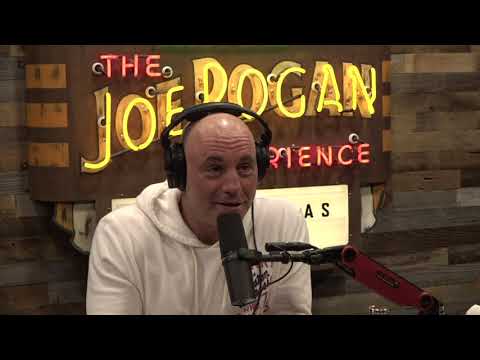
Joe Rogan Experience #1756 - John Abramson
John Abramson (guest), Joe Rogan (host)
In this episode of The Joe Rogan Experience, featuring John Abramson and Joe Rogan, Joe Rogan Experience #1756 - John Abramson explores joe Rogan, John Abramson Expose How Big Pharma Captures Modern Medicine Joe Rogan interviews physician and author Dr. John Abramson about his book *Sickening*, which argues that U.S. healthcare is structurally distorted by pharmaceutical industry profit motives. Abramson explains how drug companies control clinical trial data, shape medical journals and guidelines, and exploit weak regulation to maximize revenue at the expense of public health. They discuss landmark cases like Vioxx, Bextra, Neurontin, the opioid crisis, insulin pricing, and the controversial approval of the Alzheimer’s drug Aduhelm as examples of systemic failure rather than isolated scandals. The conversation also covers COVID-19 vaccines, ivermectin, monoclonal antibodies, and the broader role of lifestyle, inequality, and government oversight in determining Americans’ poor health outcomes despite the world’s highest healthcare spending.
Joe Rogan, John Abramson Expose How Big Pharma Captures Modern Medicine
Joe Rogan interviews physician and author Dr. John Abramson about his book *Sickening*, which argues that U.S. healthcare is structurally distorted by pharmaceutical industry profit motives. Abramson explains how drug companies control clinical trial data, shape medical journals and guidelines, and exploit weak regulation to maximize revenue at the expense of public health. They discuss landmark cases like Vioxx, Bextra, Neurontin, the opioid crisis, insulin pricing, and the controversial approval of the Alzheimer’s drug Aduhelm as examples of systemic failure rather than isolated scandals. The conversation also covers COVID-19 vaccines, ivermectin, monoclonal antibodies, and the broader role of lifestyle, inequality, and government oversight in determining Americans’ poor health outcomes despite the world’s highest healthcare spending.
Key Takeaways
Pharma effectively owns the clinical evidence doctors rely on.
Drug companies fund ~86% of trials, design them to favor their products, own the raw data, and only release their analyses to journals and guideline panels; peer reviewers and editors almost never see the actual datasets, making independent verification and true evidence-based medicine impossible.
Get the full analysis with uListen AI
Direct-to-consumer drug ads sell emotion, not real risk–benefit information.
Because prescription drug advertising is treated as protected speech, companies can flood TV with highly produced lifestyle imagery while downplaying absolute risk reduction, comparative effectiveness, and real treatment numbers, driving patients to request expensive, marginally beneficial drugs from their doctors.
Get the full analysis with uListen AI
Financial penalties rarely change corporate behavior without personal accountability.
Cases like Merck’s Vioxx (tens of thousands of estimated deaths, billions in revenue, no executives jailed) and Pfizer’s Bextra and Neurontin frauds show that even record fines are treated as business costs; Abramson argues that significant prison time and full public disclosure of data would rapidly alter incentives.
Get the full analysis with uListen AI
U.S. drug pricing is driven by market power and opaque middlemen, not value.
Brand-name drugs cost ~3. ...
Get the full analysis with uListen AI
Insulin and many “innovative” drugs offer little added benefit for huge added cost.
Abramson details how insulin analogs replaced cheaper recombinant human insulin through manipulated treatment targets and quality measures, despite limited evidence of better outcomes for most type 2 diabetics—wasting tens of billions that could fund effective lifestyle and prevention programs instead.
Get the full analysis with uListen AI
Most new drugs are not meaningful advances over existing therapies.
Only about one in eight approved drugs are truly new entities, and only roughly a quarter of those show clinically important improvement; the rest are minor reformulations or “me-too” products heavily marketed as breakthroughs despite comparable or inferior value.
Get the full analysis with uListen AI
Lifestyle and social conditions drive the majority of health outcomes.
Abramson estimates around 80% of health is determined by how people live and by social context (diet, exercise, stress, inequality), yet the U. ...
Get the full analysis with uListen AI
Notable Quotes
“The primary function of the drug companies is to make money for their investors. We’ve got to get over the illusion that their purpose is to serve our health.”
— John Abramson
“We’re essentially playing a professional basketball game where the players are calling their own fouls.”
— John Abramson
“That’s insane. Doctors don’t know that the peer reviewers didn’t have access to the data and couldn’t perform their independent analyses.”
— Joe Rogan
“If we can’t make progress on this, which is so obvious, then how are we gonna govern ourselves?”
— John Abramson
“Eighty percent of our health is determined by how we live our lives. It’s not the next drug innovation.”
— John Abramson
Questions Answered in This Episode
If journal editors and peer reviewers were given full access to clinical study reports and raw trial data, how might landmark drug approvals and guidelines from the last 20 years change in hindsight?
Joe Rogan interviews physician and author Dr. ...
Get the full analysis with uListen AI
What specific enforcement mechanisms—such as executive liability, data transparency mandates, or limits on reprints and rebates—would be most effective in realigning pharma incentives with public health?
Get the full analysis with uListen AI
How can doctors practically protect themselves and their patients from biased evidence while working inside a system where most research is industry-funded and aggressively marketed?
Get the full analysis with uListen AI
Given the acknowledged myocarditis risks and uncertain long-term data, how should parents, pediatricians, and regulators weigh COVID vaccination for healthy children against the broader social and political pressure to mandate it?
Get the full analysis with uListen AI
What realistic political or grassroots strategies could build the kind of cross-group coalition (patients, physicians, employers) needed to challenge Big Pharma’s dominance and shift resources into prevention and healthier living?
Get the full analysis with uListen AI
Transcript Preview
(drumbeats) Joe Rogan podcast, check it out. The Joe Rogan Experience. Train by day, Joe Rogan podcast by night, all day. (instrumental music plays)
All right, we're, we're on. Hello, John.
Joe.
Thanks for doing this, man.
Blessed to meet you.
So, uh, this is obviously a subject, um, that, uh, in this current era is, uh, very intriguing and very important for people, um, Big Pharma. And this is, uh, the subject of your book. How, uh, Big Pharma... What, what is the, uh, the, the, the heading? How Big Pharma Broke America? Is that what it is?
Uh, uh, it's, uh, I actually have a copy
Broke, broke our healthcare system. a copy of it before. Oh, good, because it's not available. I tried to get it and they, uh, they sent me copies of the audiobook, but it's in these weird wave files and when the, you have to turn your screen off or it shuts off, the sound. All right.
There you go.
Sickening. How Big Pharma Broke American Healthcare and How We Can Repair It. Um, so how did they break American healthcare? What happened? How did it, how did we get so deep in? And how is it that we're one of only two countries on earth that allows pharmaceutical companies to advertise?
Well, let, let's start with that question first.
Yeah, let's do that.
Um, so, uh, so it's, uh, the United States and New Zealand allow drug companies to advertise, but New Zealand has very active oversight of its pharmaceutical program. Active oversight of the, uh, evaluation of the efficacy of the drugs and to, whether the pricing of the drugs is reasonable. So, it turns out that even though we in New Zealand allow drug advertising, New Zealand spends the least per person amongst developed countries, and we spend the most by far.
Hm. So, uh, uh, so is, ha- has there ever been a conversation, like, whether it's, uh, publicly or privately that you know of where they've tried to stop this? Is this one of those things that once it gets into play, once there is a, a, a law that allows pharmaceutical drug companies to sponsor or, or, or to, uh, advertise, are we doomed then? Because then the amount of money that's involved in advertising and when you see those, "Brought to you by Pfizer," those CNN commercials, and when you see the, um, whether it's for allergy medications or antidepressants, the sheer volume of money that's involved, it seems like extracting that from our system would be very difficult to manage. Because they're gonna fight tooth and claw to keep that ad.
Absolutely. So, uh, as best I understand it, from, from the lawyers who do understand it, in, in our Constitution, the advertising of, uh, prescription drugs is, falls under the free speech, uh, mandate of our Constitution. And some things, uh, you can control the advertising of. Cigarettes and alcohol. There's no, uh, beneficial use of those. Uh, they're not a, um, they can be recreational, but there's no, uh, absolute benefit to them. But with drugs, there is a, an absolute benefit. And they, because of that, they qualify as protected under the, uh, First Amendment. However, that said, uh, the floodgates were opened, and it's clear that the drug companies are gonna spend as much advertising, however many billions of dollars, uh, they want, uh, to make as much money as they can. Uh, but there's nothing that says the drug ads need to be allowed, uh, that we need to allow them to be misleading. So, you never see in a drug ad that you have to treat, uh, 323 people with Trulicity for a year to prevent one cardiovascular event. They don't tell you that. They tell you, "Trulicity for diabetes prevents cardiovascular events in diabetics." But if they said, "You have to treat 323 people to get one better and the other three- 322 aren't gonna have a cardiovascular benefit," then you'd be delivering information that people can use. And if you said that you can't play, uh, violins or have family picnics while you're, uh, reciting all the side effects, then people would listen to the side effects.
Install uListen to search the full transcript and get AI-powered insights
Get Full TranscriptGet more from every podcast
AI summaries, searchable transcripts, and fact-checking. Free forever.
Add to Chrome