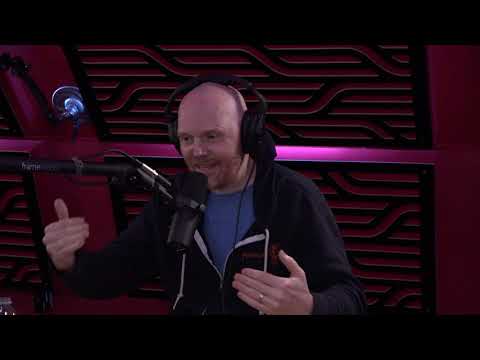
Joe Rogan Experience #1575 - Bill Burr
Bill Burr (guest), Narrator, Joe Rogan (host), Narrator, Narrator
In this episode of The Joe Rogan Experience, featuring Bill Burr and Narrator, Joe Rogan Experience #1575 - Bill Burr explores bill Burr and Joe Rogan Revisit Standup, Outrage Culture, and Escapism Joe Rogan and Bill Burr spend the episode swapping stories about standup comedy, from brutal early gigs and drive‑in shows during COVID to legendary comics like Steve Martin and Bill Hicks. They dig into how fame can soften a comic, why some performers deliberately seek out ‘hell rooms’ to stay sharp, and how the pandemic has weirdly rekindled their love of pure, low‑stakes standup.
Bill Burr and Joe Rogan Revisit Standup, Outrage Culture, and Escapism
Joe Rogan and Bill Burr spend the episode swapping stories about standup comedy, from brutal early gigs and drive‑in shows during COVID to legendary comics like Steve Martin and Bill Hicks. They dig into how fame can soften a comic, why some performers deliberately seek out ‘hell rooms’ to stay sharp, and how the pandemic has weirdly rekindled their love of pure, low‑stakes standup.
A major thread is Burr’s frustration with online outrage and cultural commentary around his material, and his recent decision to stop caring about critics and reclaim standup as something for him and the live audience, not for social‑media judges. They also talk about social media addiction, algorithms, and the value of stepping away into old movies, foreign films, and other obsessions.
Throughout, they contrast past and present—70s talk shows, exploitation movies, old car flicks, early horror—with today’s hypersensitivity, streaming overload, and the constant comparison trap in show business.
The episode closes with reflections on career momentum, deathbed regrets, and the importance of doing standup your own way despite criticism, with Burr emphasizing that comics turning on other comics over jokes are “cowardly” and should be avoided.
Key Takeaways
Deliberately seek difficult rooms to stay sharp as a performer.
Burr and Rogan describe Joey Diaz intentionally doing grim open mics and off‑brand rooms even after he got popular, to avoid getting soft from adoring, easy crowds and to keep his skills honed in front of people who don’t know or care who he is.
Get the full analysis with uListen AI
Treat your act as yours, not as content for online critics.
Burr talks about realizing he’d spent years looking over his shoulder for social‑media backlash; performing at Chappelle’s no‑phones shows reminded him standup is for the people in the room, and he’s recommitted to doing the material he finds funny regardless of think‑pieces.
Get the full analysis with uListen AI
Ignore post‑hoc ‘explanations’ of why your work succeeds.
He’s annoyed by writers who confidently explain why his SNL “white women” bit worked, as if they understand his own joke better than he does; his takeaway is to stop reading that commentary because it’s often arrogant, click‑driven, and disconnected from the creative reality.
Get the full analysis with uListen AI
Use ‘post and ghost’ and physical separation to limit social‑media damage.
Rogan describes posting and then leaving his phone in another room to avoid getting sucked into replies, while both admit how addictive scrolling is and how it hijacks time that could go to actual passions.
Get the full analysis with uListen AI
Curate what algorithms feed you instead of blaming them.
They point out that platforms mostly show you more of what you engage with; Ari Shaffir’s “puppies only” experiment on YouTube shows that if you only click on positive or neutral content, the feed shifts away from outrage and negativity.
Get the full analysis with uListen AI
Stop comparing your career to others and focus on your lane.
Using examples like Steve Martin quitting standup and the jealousy around Dane Cook’s arena success, they argue that comparison “steals joy. ...
Get the full analysis with uListen AI
Pandemic downtime is a chance to reassess how you use time.
Stories about deathbed last words (“So much wasted time”) and Burr never using his dream pool push the idea that relentless work can still feel empty if you never enjoy life; COVID forced both comics to slow down and question how they balance work, family, and actual enjoyment.
Get the full analysis with uListen AI
Notable Quotes
““The worst thing that could happen to a comic, ’cause you get real soft because everybody loves you, and they go to see you, and they laugh at anything you say.””
— Joe Rogan (about Steve Martin and arena‑level success)
““It worked because it’s true… The part where I say ‘toxic white male’ is to get the person who wrote that article to come along for the ride.””
— Bill Burr (on why his SNL ‘white women’ bit landed)
““This isn’t theirs. This is mine… I’m just up here fucking around, saying crazy shit that I think’s funny. My act is mine.””
— Bill Burr (on reclaiming standup from online outrage)
““Comparison is the thief of joy.””
— Joe Rogan (on comics obsessing over others’ success)
““If you talk to 20 people, 20 people have 20 different opinions and 20 different game plans… It’s like we’re going into a game and half the team is running one play and the other half is running the other play.””
— Bill Burr (on America’s fragmented COVID response)
Questions Answered in This Episode
How much should comedians adjust their material—if at all—for the realities of social media and cancel culture?
Joe Rogan and Bill Burr spend the episode swapping stories about standup comedy, from brutal early gigs and drive‑in shows during COVID to legendary comics like Steve Martin and Bill Hicks. ...
Get the full analysis with uListen AI
Is it possible to get the benefits of social media for promotion without suffering its psychological downsides, and if so, how?
A major thread is Burr’s frustration with online outrage and cultural commentary around his material, and his recent decision to stop caring about critics and reclaim standup as something for him and the live audience, not for social‑media judges. ...
Get the full analysis with uListen AI
What specific habits or guardrails can performers put in place to avoid becoming ‘soft’ when crowds already love them?
Throughout, they contrast past and present—70s talk shows, exploitation movies, old car flicks, early horror—with today’s hypersensitivity, streaming overload, and the constant comparison trap in show business.
Get the full analysis with uListen AI
How should artists think about ‘success’ so they don’t wind up with deathbed regrets about wasted time, even if they achieve fame?
The episode closes with reflections on career momentum, deathbed regrets, and the importance of doing standup your own way despite criticism, with Burr emphasizing that comics turning on other comics over jokes are “cowardly” and should be avoided.
Get the full analysis with uListen AI
Where is the ethical line between critiquing another comic’s material and joining an online mob that tries to end their career?
Get the full analysis with uListen AI
Transcript Preview
(drumming) Joe Rogan podcast, check it out.
The Joe Rogan Experience. Train by day, Joe Rogan podcast by night. All day. (rock music plays)
We gotta know about your fights. We're already rolling, so just keep rolling.
Oh, sorry.
Sorry.
Oh, we are?
Go ahead. Yeah, yeah, yeah. Okay. Yeah. No, he just- We're talking about, uh, Steve Byrne's new movie.
Yeah, Opening Act.
Oh, Steve Byrne got in a lot of fights?
Y- yeah. He had more than-
He's so nice.
He is. He is, but I don't know what it was, but I remember, (laughs) he was, like, at the Comic Strip and s- he did the late night show and somehow somebody threw a chair at him. I remember it hit him in the head and h- he got cut.
(laughs)
And then, like, two days later I go to the Comic Strip and, uh, somebody had taken his headshot down and put, like, staples in his forehead where he got hit-
(laughs)
... by the chair and put it back up. I guess back, back when you could do stuff like that and could just tease somebody, you know?
Yeah.
So, uh, yeah, so he had that movie coming. I was just saying it got nominated f- for one of th- one- some film festival award, so I was very, very happy for him.
That, he's a guy, like, if you, you had told me, like, "Do you think Steve Byrne has ever been in a fight?" I'd be like, "Pfft, no. He's so nice. Who's gonna fight Steve Byrne?"
Uh, I'll let S-
I've only seen him-
... I'll let Steve come on here one day and tell the stories.
I would love to hear it. W-
I, I know a half a dozen.
Well, Al Madrigal's another one.
(laughs)
Like, when I heard about Al M- that Al Madrigal has a temper, I'm like, "What?"
Al?
Like, 'ca- I didn't... I've never seen it. That's weird. Like, m- the side to Al I know is always hugs. Like, I, I've, I've known Al since he was an opening act at the old Cob's-
(laughs)
... in San Francisco, down, you know, downstairs, the little tiny club. Did you ever work that place?
No, I did, I've done the regula- I didn't know that there was another one.
The old Cob's was tiny. It was a little, tiny place.
Right.
It was like a... There was, uh, Tom Sawyer, the guy who r- ran the, the second Cob's, he used to run, like... It was a great club. It was great.
Right.
He'd... He w- he had a real good taste for comedy, so the com- the level of comedy was very good. Don Herrera told me about it.
Install uListen to search the full transcript and get AI-powered insights
Get Full TranscriptGet more from every podcast
AI summaries, searchable transcripts, and fact-checking. Free forever.
Add to Chrome