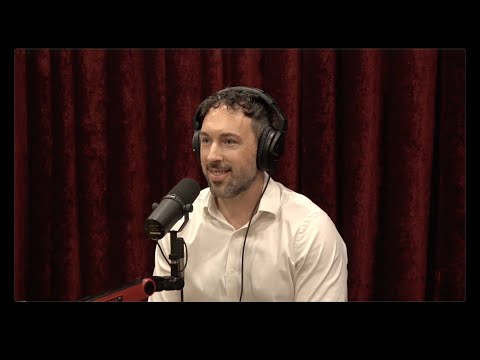
Joe Rogan Experience #2420 - Chris Masterjohn
Chris Masterjohn (guest), Joe Rogan (host), Joe Rogan (host)
In this episode of The Joe Rogan Experience, featuring Chris Masterjohn and Joe Rogan, Joe Rogan Experience #2420 - Chris Masterjohn explores mitochondria, seed oils, and lifestyle: rethinking health from the cell up Joe Rogan and nutrition researcher Chris Masterjohn focus heavily on mitochondrial function as the root driver of health, aging, energy, and disease. They discuss how sleep, creatine, red and infrared light, nutrition, and exercise all influence mitochondrial energy production and, in turn, everything from cognition and libido to longevity. Masterjohn argues for a “food first, pharma last” approach, warning against indiscriminate megadosing of supplements like methylene blue, CoQ10, and thiamine without testing. The conversation also challenges mainstream narratives on seed oils, cholesterol, thyroid, and statins, emphasizing long-term evidence and the need to prioritize robust lifestyle foundations before drugs.
Mitochondria, seed oils, and lifestyle: rethinking health from the cell up
Joe Rogan and nutrition researcher Chris Masterjohn focus heavily on mitochondrial function as the root driver of health, aging, energy, and disease. They discuss how sleep, creatine, red and infrared light, nutrition, and exercise all influence mitochondrial energy production and, in turn, everything from cognition and libido to longevity. Masterjohn argues for a “food first, pharma last” approach, warning against indiscriminate megadosing of supplements like methylene blue, CoQ10, and thiamine without testing. The conversation also challenges mainstream narratives on seed oils, cholesterol, thyroid, and statins, emphasizing long-term evidence and the need to prioritize robust lifestyle foundations before drugs.
Key Takeaways
Prioritize mitochondrial health as the foundation of longevity and performance.
Mitochondria power energy production, repair, and distribution in every tissue; their gradual decline (about 1% per year on average) underlies aging, so interventions that preserve or improve mitochondrial function have outsized impact on healthspan.
Get the full analysis with uListen AI
Use a food-first, pharma-last approach before leaning on high-dose supplements or drugs.
Masterjohn stresses getting nutrients from whole foods (e. ...
Get the full analysis with uListen AI
Creatine benefits far more than muscle and may help cognition and sleep loss resilience.
Creatine acts like a cellular power grid, distributing energy produced by mitochondria; research suggests 20 g acute doses can blunt cognitive decline from sleep deprivation and support brain healing after injury, while everyday users who don’t eat 1–2 pounds of meat may benefit from daily supplementation.
Get the full analysis with uListen AI
Be cautious with methylene blue and megadosing of nutrients without testing.
Methylene blue “rewires” mitochondrial electron flow and can help if there is a specific block, but can worsen energy production if not; similarly, very high doses of CoQ10 or thiamine can help some people and harm others, so Masterjohn recommends mitochondrial testing and even home lactate/glucose checks when experimenting.
Get the full analysis with uListen AI
Red and near‑infrared light can systemically support mitochondria and may improve vision.
Red/infrared light directly enhances mitochondrial engines and water structuring inside cells; studies show chest exposure can acutely improve eyesight, and Rogan reports improved macular degeneration with red-light bed use plus macular-support nutrients like lutein and zeaxanthin.
Get the full analysis with uListen AI
Train for function and skill, not just VO2 max or isolated strength.
Data showing gymnasts and pole vaulters live ~8 years longer than the general population (vs. ...
Get the full analysis with uListen AI
Long-term evidence indicates seed oils increase vulnerability to tissue damage and disease.
Older trials (5–8+ years) and mechanistic work show high‑PUFA seed oils make LDL particles more prone to oxidative damage, driving inflammatory plaque and, over time, higher cancer and total mortality—effects that short 7–12‑week studies often miss.
Get the full analysis with uListen AI
Notable Quotes
“I would argue that mitochondrial dysfunction and aging are the same thing.”
— Chris Masterjohn
“Everyone who’s not eating one or two pounds of meat per day should probably be taking creatine.”
— Chris Masterjohn
“Food first, pharma last. If you can meet a need with food, you should meet the need with food.”
— Chris Masterjohn
“Seed oils make your tissues more vulnerable to damage; they don’t damage your tissues by themselves.”
— Chris Masterjohn
“Healthy is you have abundant energy to put towards productive things, with very low anxiety and a very strong libido.”
— Chris Masterjohn
Questions Answered in This Episode
How could an ordinary person practically assess and improve their mitochondrial function without access to specialized testing?
Joe Rogan and nutrition researcher Chris Masterjohn focus heavily on mitochondrial function as the root driver of health, aging, energy, and disease. ...
Get the full analysis with uListen AI
Given the long-term data on seed oils, what realistic steps can people take to avoid them when eating out or buying packaged foods?
Get the full analysis with uListen AI
How should someone prioritize among creatine, CoQ10, red-light therapy, and other mitochondrial supports if they can only afford or tolerate a few interventions?
Get the full analysis with uListen AI
What kinds of lab or at‑home markers (like lactate, thyroid panels, or lipids) best reflect whether your body is truly in a metabolic state of abundance?
Get the full analysis with uListen AI
How might public health advice change if guidelines were built around mitochondrial health and long-term trials, rather than short-term biomarker shifts like LDL lowering?
Get the full analysis with uListen AI
Transcript Preview
(drumbeats) Joe Rogan podcast, check it out. The Joe Rogan Experience.
Train by day, Joe Rogan podcast by night, all day. (instrumental music) Hi, Chris.
How are you? Good, how you doing?
Very nice to meet you.
Nice to meet you as well.
I have enjoyed your content online for-
Thank you.
... a few years now.
Yeah.
So, uh, it's really solid stuff and I thought what better day than to bring Chris in, right after everybody fucked up their diet.
(laughs)
(laughs)
Yeah, that's right. Um, well, I just want to tell, uh, public health message that you did not get sleepy because the turkey was high in tryptophan.
(laughs)
So we'll leave it at that.
Yeah, that's weird. Isn't that a weird one?
Mm-hmm.
That's a weird myth that's persisted for a long time.
It's... I mean, the weirdest thing is the origins of it. Apparently, it came from researchers in the... and not, I'm sorry, not researchers, journalists in the '80s who were trying to come up with a reason to explain why everyone was tired on Th- after Thanksgiving meal and, uh, they just looked as far as, "Oh, turkey has tryptophan which is an amino acid that the, is the precursor to melatonin which is a s- you know, you could call it a sleeping chemical, so like makes you get tired at night. That must be why." Um, but it turns out that A, turkey's not that high in tryptophan, like even whey protein is higher in, uh, tr- tryptophan than turkey is.
(laughs)
And then B, tryptophan doesn't make you tired. Um, yeah, I- I dare anyone to go out and have, uh, like a, just a slice of turkey for breakfast and see if it knocks you out. (laughs)
(laughs) It's overeating.
Yeah.
It's like so obvious.
Yeah.
I mean, people are eating tons of stuffing, tons of sides. They're, they're eating so much food.
Yeah.
You're gorging. It's a gorging day.
Yeah. For sure.
Yeah. I mean, it's not good. (laughs)
And if, you know, if you, if you look at, uh, like a lion in the wild, one thing that you'll notice is that they are on the prowl when they are hungry. They're alert, their body's k- revved up, and then they have a feast and they just fall asleep. And the reason is that we're, you know, our... and you, you even see this in physiology, they call the parasympathic, parasympathetic nervous system the rest and digest system and that's because we are biologically wired to be alert when we need to work to get our food, and then we're wired to, you know, eat that food, feel like we've g- gotten our fill, we've done what we need to do and we can, now we can rest and take a sleep.
Install uListen to search the full transcript and get AI-powered insights
Get Full TranscriptGet more from every podcast
AI summaries, searchable transcripts, and fact-checking. Free forever.
Add to Chrome