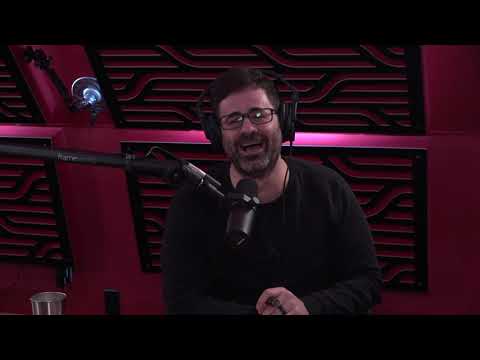
Joe Rogan Experience #1594 - Yannis Pappas
Joe Rogan (host), Narrator, Yannis Pappas (guest), Yannis Pappas (guest), Narrator
In this episode of The Joe Rogan Experience, featuring Joe Rogan and Narrator, Joe Rogan Experience #1594 - Yannis Pappas explores joe Rogan And Yannis Pappas Deconstruct America, Comedy, And Conflict Joe Rogan and comedian Yannis Pappas have a sprawling, nearly four-hour conversation that ranges from barbecue and New York vs. LA culture to social media addiction, free speech, and the evolution of MMA.
Joe Rogan And Yannis Pappas Deconstruct America, Comedy, And Conflict
Joe Rogan and comedian Yannis Pappas have a sprawling, nearly four-hour conversation that ranges from barbecue and New York vs. LA culture to social media addiction, free speech, and the evolution of MMA.
They dissect the toxicity of Twitter, the pressure on celebrities and politicians to conform, and how podcasting and long-form conversation are reshaping public discourse.
Rogan and Pappas repeatedly loop back to themes of empathy, struggle, and personal growth, using stories from comedy, fighting, COVID illness, and parenting to illustrate how hardship can create better people.
The episode also dives into hot-button issues like cancel culture, trans athletes in sports, policing, COVID lockdown policies, and even UFOs, with both guests trying to balance criticism with an underlying belief that society can still trend in a better direction.
Key Takeaways
Long‑form conversation is an antidote to social media distortion.
Rogan and Pappas argue that platforms like Twitter reward rage and pithy attacks, while podcasts allow for nuance, context, and seeing people as whole humans rather than caricatures.
Get the full analysis with uListen AI
Struggle and adversity are crucial for growth and perspective.
From Pappas being shot and battling panic attacks to his rough COVID bout and Rogan’s bad psychedelic trips and fight experiences, both frame hardship as the main driver of empathy, maturity, and gratitude.
Get the full analysis with uListen AI
Free speech should be met with better speech, not deplatforming.
They see the banning of Parler and other speech controls as a dangerous precedent: suppressing bad or offensive ideas tends to expand outward and ultimately undermines open debate instead of defeating those ideas on their merits.
Get the full analysis with uListen AI
Social and political extremes on left and right mirror each other.
Both hosts note that woke activists and hardcore Trump loyalists share a zealotry that resists evidence, sees opponents as evil rather than mistaken, and pushes everyone into rigid team identities.
Get the full analysis with uListen AI
Comedy depends on context and intent, which are lost in text.
They emphasize that jokes—especially dark or offensive ones—aim to make people laugh, not harm; stripping them of tone and environment (e. ...
Get the full analysis with uListen AI
Policy choices around COVID must weigh all consequences, not just one metric.
Rogan criticizes strict lockdowns in places like California and New York for ignoring economic collapse, mental health, substance abuse, and domestic violence, arguing for more balanced, adaptive approaches.
Get the full analysis with uListen AI
Empathy is strengthened by seeing every adult as a former baby.
Rogan describes a mental shift after becoming a father: he now looks at everyone—from online haters to rioters—as once‑vulnerable children shaped by their environments, which tempers his instinct to simply condemn them.
Get the full analysis with uListen AI
Notable Quotes
“The problem is, it's a negative, evil place… you never come out of those Twitter arguments feeling good.”
— Joe Rogan
“Comedy is nothing without context. You could take a fish out of water and try to judge that fish, but that’s not its context.”
— Yannis Pappas
“The worst thing that’s ever happened to you is the worst thing that’s ever happened to you.”
— Joe Rogan (quoting an idea he heard from someone else)
“The real answer for wrong speech is better speech.”
— Joe Rogan
“When I became a father, I started thinking of everybody as a baby… that poor bastard used to be a baby.”
— Joe Rogan
Questions Answered in This Episode
How would mainstream political debates change if candidates had to do a three‑hour, unedited podcast instead of short, moderated TV formats?
Joe Rogan and comedian Yannis Pappas have a sprawling, nearly four-hour conversation that ranges from barbecue and New York vs. ...
Get the full analysis with uListen AI
Where should society draw the line between protecting vulnerable groups (e.g., trans people) and preserving fairness in competitive sports?
They dissect the toxicity of Twitter, the pressure on celebrities and politicians to conform, and how podcasting and long-form conversation are reshaping public discourse.
Get the full analysis with uListen AI
Are current deplatforming efforts (like removing Parler) likely to reduce extremism, or just drive it into more radical, less visible spaces?
Rogan and Pappas repeatedly loop back to themes of empathy, struggle, and personal growth, using stories from comedy, fighting, COVID illness, and parenting to illustrate how hardship can create better people.
Get the full analysis with uListen AI
In what practical ways can individuals cultivate the kind of empathy Rogan describes—seeing every person as a former baby shaped by circumstance?
The episode also dives into hot-button issues like cancel culture, trans athletes in sports, policing, COVID lockdown policies, and even UFOs, with both guests trying to balance criticism with an underlying belief that society can still trend in a better direction.
Get the full analysis with uListen AI
Given how destructive social media can be to mental health and discourse, what personal rules or cultural norms could realistically make its use healthier?
Get the full analysis with uListen AI
Transcript Preview
(drumbeats) Joe Rogan podcast, check it out.
The Joe Rogan Experience.
Train by day, Joe Rogan podcast by night. All day. (instrumental music plays) Oh hello, Joe. Hello, Joe Rogan.
Good to see you here.
Good to see you.
Nice to, uh, have you in Texas.
Yeah. N- well, it's been ... Yeah. This is nice. I'm trying to work on being a better New Yorker-
How's that?
... by not, like, comparing everything the first day to, like, New York. That's how New Yorkers are. Every time you, like, go to a new city they're like, "Ah, this is like the Brooklyn of ..." "This is like the Queens of ..."
Oh, yeah.
"This is like the Brooklyn Bridge of ... "
Yeah, this is a different animal down here.
Yeah.
It's uh-
It's like hipsters who have guns. I like it. (laughs)
(laughs) That's a good way of putting it.
Yeah, yeah.
Hipsters with concealed carry permits.
Yeah.
Yeah.
I hung- I hung out, uh, last night with one of the dudes from the Drinking Bros podcast.
Oh, okay.
And, uh, yeah. He was like, "I'm gonna walk home in the park." And then he made a joke. He was like, "Yeah, if anyone talks to me I'll just shoot 'em." And he was like, "Don't worry, I haven't killed anyone st- stateside." And I was like, "Uh, he means that shit." Yeah. (laughs)
(laughs)
Yeah, so it's, uh, I went to Terry's too.
Terry Black's?
Is that, uh-
Yeah.
Yeah.
Terry Black's Barbecue.
Yeah.
Yeah.
That was the best, uh, brisket I've ever had in my entire life.
Uh, yeah people say that, "Oh, you gotta go to this place." I'm like, "No I don't." If- if barbecue's better than that, I don't want it.
(laughs)
I don't- I just like- y- you can't- I don't know how you can get better. I mean, I don't wanna ruin my life. If barbecue's better than that, I don't know how I'm gonna eat anything else.
Yeah. It's- I- it was the best I've ever had and they were telling me it's the fourth best. So I was like-
Who says that?
That's what they were saying. They were going like, "You gotta go to this other-"
Yeah they do- they always do that here though.
Yeah.
"Oh, you gotta go to Franklin's 'cause you gotta wait in line."
(laughs)
I've had Franklin's. It's fucking amazing.
Yeah.
It's really good. It's not that much different.
Right.
I don't- I mean, it's just all great. The brisket at Terry Black's is fucking insane.
Yeah.
They slice it, it's sopping wet. The- the juices are pouring out of it. You eat it, it's melting in your mouth. You don't need any teeth to chew it.
Install uListen to search the full transcript and get AI-powered insights
Get Full TranscriptGet more from every podcast
AI summaries, searchable transcripts, and fact-checking. Free forever.
Add to Chrome