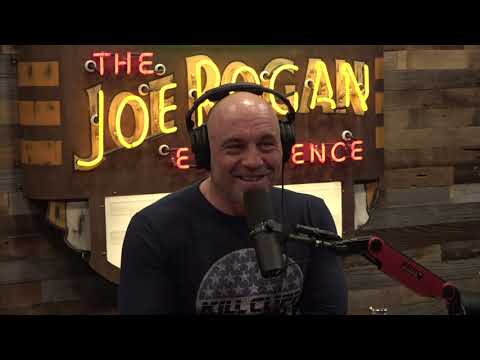
Joe Rogan Experience #1722 - Bartow Elmore
Narrator, Joe Rogan (host), Bartow Elmore (guest), Narrator, Narrator
In this episode of The Joe Rogan Experience, featuring Narrator and Joe Rogan, Joe Rogan Experience #1722 - Bartow Elmore explores how Coca-Cola Seeded Monsanto’s Toxic Empire And Food Future Historian Bartow Elmore explains how Coca‑Cola’s ingredient supply chains—especially for caffeine and sweeteners—provided the early ‘seed money’ that allowed Monsanto to grow from a small chemical maker into a global agribusiness powerhouse.
How Coca-Cola Seeded Monsanto’s Toxic Empire And Food Future
Historian Bartow Elmore explains how Coca‑Cola’s ingredient supply chains—especially for caffeine and sweeteners—provided the early ‘seed money’ that allowed Monsanto to grow from a small chemical maker into a global agribusiness powerhouse.
He traces the hidden histories of Coca‑Cola’s coca-leaf monopoly, synthetic caffeine from coal tar, and Monsanto’s portfolio of toxic products such as PCBs, Agent Orange, Roundup, and new drifting herbicides like dicamba.
The conversation shows how industrial agriculture became deeply dependent on fossil fuels and petrochemicals, why that system is now locked into escalating herbicide use and weed resistance, and how towns, farmers, and ecosystems have borne the costs.
Elmore argues that without structural change—reforming subsidies, regulating chemicals more honestly, and supporting regenerative agriculture—lawsuits and incremental fixes won’t be enough to shift the food system off its current, unsustainable path.
Key Takeaways
Coca‑Cola quietly maintained a legal coca-leaf supply chain and market monopoly.
Coke removed cocaine’s psychoactive component early in the 20th century but kept coca-leaf flavoring (Merchandise No. ...
Get the full analysis with uListen AI
Early Coca‑Cola contracts effectively created Monsanto as a major chemical company.
Monsanto’s first big, stabilizing customer was Coca‑Cola, buying saccharin and then caffeine; Monsanto scaled up by extracting caffeine from waste tea and later synthesizing it from coal-tar derivatives, turning cheap fossil inputs into high-margin beverage ingredients.
Get the full analysis with uListen AI
Monsanto repeatedly recognized dangers of its chemicals but chose to keep selling.
Internal documents show the company knew PCBs and dioxin-contaminated herbicides were highly toxic and globally persistent, yet deliberated between “going out of business” and “selling the hell out of them,” continuing production while workers, communities, and Vietnam veterans were exposed.
Get the full analysis with uListen AI
Roundup and GMO crops didn’t reduce chemical dependence; they escalated it.
Roundup Ready crops initially displaced older, harsher herbicides, but massive glyphosate use triggered resistant ‘superweeds,’ forcing farmers back onto older chemicals like 2,4‑D and into new multi-herbicide stacks; total herbicide use per acre has increased, not decreased.
Get the full analysis with uListen AI
New herbicide systems like dicamba create coercive pressure on neighboring farms.
Dicamba volatilizes in heat and drifts onto nearby fields, damaging crops that lack the resistant trait; internal documents showed Monsanto expected farmers to buy its dicamba-tolerant seeds “for protection from their neighbor,” effectively pushing adoption through off-target damage risk.
Get the full analysis with uListen AI
Seed patents and aggressive contracts have fundamentally altered farming culture.
Post‑1980s patent law and Monsanto’s ‘technology use agreements’ ended traditional seed-saving for soy and other crops, tied farmers to annual seed purchases, fueled debt, and enabled surveillance and lawsuits against those suspected of saving or sharing proprietary seed.
Get the full analysis with uListen AI
Modern agriculture is structurally locked to fossil fuels, not just for fuel but for materials.
Around 80% of Monsanto’s mid‑20th‑century product lines were derived from coal, oil, or gas, and even “green” innovations like plant-based plastic bottles often depend on petrochemically driven monocrops like sugarcane and corn; meaningful change requires reducing this fossil-based chemical reliance and shifting subsidies toward regenerative, diversified farming.
Get the full analysis with uListen AI
Notable Quotes
“But for Coca‑Cola, there would be no Monsanto.”
— Bartow Elmore
“You’re essentially owning life. Are we allowed to patent and own life forms? That seems crazy.”
— Joe Rogan
“They literally wrote, ‘Sell the hell out of them as long as we can,’ about PCBs—after they knew how toxic they were.”
— Bartow Elmore
“A fifth grader can look at this and say, ‘This is the future of agriculture?’ when you see that radioactive slag mountain.”
— Bartow Elmore
“Imagine how insane we’ll look in 100 years: taking a finite natural resource, turning it into a container we use once, and then throwing it away.”
— Bartow Elmore
Questions Answered in This Episode
Given the documented health and environmental harms, what concrete regulatory changes would most effectively curb the use of glyphosate, dicamba, and similar herbicides without crashing food production?
Historian Bartow Elmore explains how Coca‑Cola’s ingredient supply chains—especially for caffeine and sweeteners—provided the early ‘seed money’ that allowed Monsanto to grow from a small chemical maker into a global agribusiness powerhouse.
Get the full analysis with uListen AI
How could U.S. farm subsidies and the Farm Bill be redesigned to genuinely favor regenerative, diversified agriculture instead of fossil-fuel-intensive monocrops?
He traces the hidden histories of Coca‑Cola’s coca-leaf monopoly, synthetic caffeine from coal tar, and Monsanto’s portfolio of toxic products such as PCBs, Agent Orange, Roundup, and new drifting herbicides like dicamba.
Get the full analysis with uListen AI
What ethical and legal frameworks should govern patents on seeds and living organisms, and is it realistic to roll back or reform existing seed IP regimes?
The conversation shows how industrial agriculture became deeply dependent on fossil fuels and petrochemicals, why that system is now locked into escalating herbicide use and weed resistance, and how towns, farmers, and ecosystems have borne the costs.
Get the full analysis with uListen AI
How might coca-growing communities in Peru and elsewhere be economically and culturally transformed if coca leaves were re-legalized for benign products like teas and foods?
Elmore argues that without structural change—reforming subsidies, regulating chemicals more honestly, and supporting regenerative agriculture—lawsuits and incremental fixes won’t be enough to shift the food system off its current, unsustainable path.
Get the full analysis with uListen AI
What practical steps can ordinary consumers in cities—who lack access to local farms—take to reduce their participation in this petrochemical-dependent food system?
Get the full analysis with uListen AI
Transcript Preview
(drumming) Joe Rogan podcast, check it out. The Joe Rogan Experience.
Train by day, Joe Rogan podcast by night. All day. (rock music plays) Seed money. Tell me, tell me about all this dirtiness.
(laughs)
Tell me about these, these monsters-
(inhales deeply)
... and the money that they make.
Yeah. Uh...
How'd you get involved in this, first of all?
Yeah, sure.
How'd ... Why, why'd this become, uh, your field of study?
(smacks lips) Well, thanks, Joe, for having me on. This is, this is awesome.
My pleasure. Thanks for being here.
Yeah.
I'm excited to talk to you about this.
Yeah. So-
Very important subject, right?
Yeah. For me it was. I... You know, I... It really started with the first project I worked on, the first book I wrote, which was the history of Coca-Cola and its environmental impact around the world.
You were just telling us that Pepsi is actually older than Coke, which is surprising.
Dr Pepper. Yeah, Dr Pepper.
Dr Pepper's older?
Yeah. Yeah, Dr Pepper's older, weirdly. And it's-
(coughs)
You think of it as like the, you know-
Yeah, I thought it was like the new kid on the block.
Yeah, exactly.
That's the oldest?
1885. Not the oldest, but it's older than Coke.
What's the oldest?
Coke was 1886. I don't really even know what the oldest one would be.
So Dr Pepper came along first, then Coca-Cola, and then Pepsi?
And then Pepsi later.
So Pepsi is still bullshit.
Pepsi's (laughs) look, you're talking to a guy from Atlanta-
(laughs)
So I agree with you there. (laughs)
What does that mean?
Well, Atlanta's like-
Is Coke from Atlanta?
Yeah, Coke's from Atlanta.
Oh, okay.
And, uh, you know, when we were growing up, it was like in the water. You had to drink Coca-Cola. In fact, when you want any soft drink, you just say, "I want a Coke."
Yeah. Nobody says, "I'd like a Pep-" Well, maybe they did.
(laughs)
But the thing about Pepsi is like it never had cocaine in it, did it?
No. Actually, this is, this is relevant. I mean, so this, this was the beginning of this book, because I was doing that. I was looking at all the ingredients that go into Coca-Cola and saying, "Okay, where ... What's in the drink, first of all?" 'Cause it's from my hometown, it's where it started. I said, "Okay, I want to find out all these natural resources in the product." And, you know, "Is coca in the drink?" And also caffeine, we'll get to that, that's how it connects-
Yeah.
... to Monsanto. But, um, coca was the most interesting actually, 'cause I thought, you know, "It's called Coca-Cola, so does it have cocaine in it?" Um, and so I went back to look at that, and turns out, yeah, you know, trace amounts back-
Install uListen to search the full transcript and get AI-powered insights
Get Full TranscriptGet more from every podcast
AI summaries, searchable transcripts, and fact-checking. Free forever.
Add to Chrome