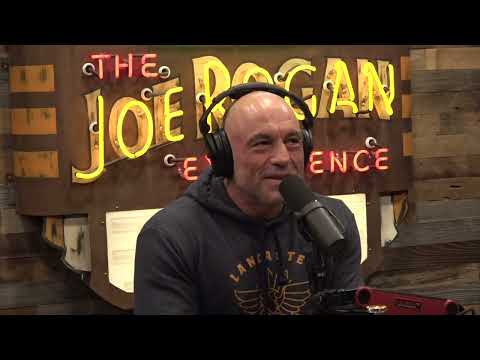
Joe Rogan Experience #2058 - Elliott West
Joe Rogan (host), Elliott West (guest), Narrator
In this episode of The Joe Rogan Experience, featuring Joe Rogan and Elliott West, Joe Rogan Experience #2058 - Elliott West explores unmasking the American West: Empire, Genocide, and Rapid Transformation Joe Rogan and historian Elliott West explore how the American West was radically transformed between 1850 and 1880, arguing that Western expansion was as important as the Civil War in creating modern America.
Unmasking the American West: Empire, Genocide, and Rapid Transformation
Joe Rogan and historian Elliott West explore how the American West was radically transformed between 1850 and 1880, arguing that Western expansion was as important as the Civil War in creating modern America.
They trace deep pre‑contact histories, early Native–European interactions, and the catastrophic impact of disease, gold, and industrial capitalism on Indigenous peoples and ecosystems.
The conversation reexamines myths about the West—cowboys, Indians, buffalo, and Comanche power—showing how corporate ranching, resource extraction, and federal policy reshaped the continent.
West also explains how boarding schools, reservations, and extermination campaigns destroyed Native ways of life yet inadvertently forged a pan‑Indian identity that did not exist before.
Key Takeaways
Western expansion is as central as the Civil War to understanding modern America.
West argues that the acquisition and transformation of the western third of North America—through railroads, corporate ranching, federal land policy, and Pacific orientation—shifted the U. ...
Get the full analysis with uListen AI
Native–European contact was deep, early, and complex—far predating Lewis and Clark.
The story of 1720s Native delegations visiting Paris shows that Plains peoples were cosmopolitan, multilingual, and enmeshed in imperial politics long before Americans framed the West as an untouched wilderness in 1804–06.
Get the full analysis with uListen AI
Disease-driven demographic collapse was catastrophic but not purely ‘no-immunity’ magic.
Up to 90% of Native populations died, but West notes this was due to childhood exposure patterns, poverty, and cascade effects (loss of productive adults collapsing entire societies), rather than some innate European genetic advantage.
Get the full analysis with uListen AI
Economic commodification of nature drove mass wildlife slaughter and Indigenous dispossession.
Buffalo were first overharvested by Native hunters for robe markets, then annihilated when their hides became industrial leather during a global shortage, while gold in California triggered state-funded killing campaigns that qualify as genocide.
Get the full analysis with uListen AI
Plains horse cultures created powerful Native empires that rivaled European states.
With horses reintroduced to their evolutionary homeland, groups like the Comanche and Lakota built sophisticated military and trade empires—“horse-man” systems that dominated the mid-continent until outgunned by industrial America.
Get the full analysis with uListen AI
Boarding schools and reservations aimed to “kill the Indian” but instead forged ‘the Indian.’
Policies intended to erase tribal cultures by enforcing Christianity, English, and farming also brought many distinct peoples together, helping create a shared pan-Indian identity and political consciousness that hadn’t existed before.
Get the full analysis with uListen AI
Popular Western myths obscure corporate, imperial, and genocidal realities.
Cowboy and wagon-train stories focus on rugged individuals and hostile “savages,” but West shows ranching was heavily corporate, federal and state governments enabled or funded extermination campaigns, and settlers’ search for better lives was intertwined with massive Indigenous and ecological loss.
Get the full analysis with uListen AI
Notable Quotes
“Between 1850 and 1880, the western third of North America was literally remade—ecologically, culturally, socially—into a new world.”
— Elliott West
“Except for the Black Death, this was the most horrific thing that has ever happened in recorded human history to Indian peoples.”
— Elliott West
“What defeated the Indians wasn’t the military—it was the transformation of their world into another in which they didn’t fit.”
— Elliott West
“The boarding schools didn’t kill the Indian; they created the Indian.”
— Elliott West
“You cannot possibly understand America as we know it without looking at this story of continental expansion.”
— Elliott West
Questions Answered in This Episode
If Western expansion is as important as the Civil War in creating modern America, how should school curricula and public memory be redesigned to reflect that?
Joe Rogan and historian Elliott West explore how the American West was radically transformed between 1850 and 1880, arguing that Western expansion was as important as the Civil War in creating modern America.
Get the full analysis with uListen AI
What would a truly honest film or series about the American West look like if it foregrounded Indigenous perspectives, corporate power, and genocide rather than the lone cowboy myth?
They trace deep pre‑contact histories, early Native–European interactions, and the catastrophic impact of disease, gold, and industrial capitalism on Indigenous peoples and ecosystems.
Get the full analysis with uListen AI
How might acknowledging the corporate and federal roles in Western development change contemporary debates about land use, national parks, and resource extraction?
The conversation reexamines myths about the West—cowboys, Indians, buffalo, and Comanche power—showing how corporate ranching, resource extraction, and federal policy reshaped the continent.
Get the full analysis with uListen AI
In what ways are the long-term ecological consequences of buffalo extermination, predator removal, and overhunting still shaping North American landscapes today?
West also explains how boarding schools, reservations, and extermination campaigns destroyed Native ways of life yet inadvertently forged a pan‑Indian identity that did not exist before.
Get the full analysis with uListen AI
How should modern Americans—especially descendants of immigrants who arrived long after conquest—think about responsibility, repair, or restitution in light of this history?
Get the full analysis with uListen AI
Transcript Preview
(drumming music plays) Joe Rogan podcast, check it out.
The Joe Rogan Experience.
Train by day, Joe Rogan podcast by night, all day. (rock music plays) Hello, sir.
Hello.
Thanks for doing this. I really appreciate it.
You're quite welcome. Good to be here.
I really enjoyed you on the Meat Eater podcast, and, uh, that's why I reached out. And, uh, I started w- uh, reading your, uh, the book on the Nez Perce.
Mm-hmm.
And then I, I picked this up as well, Continental Reckoning. That is ... That's a hell of a book.
(laughs)
That's-
It's a big book. (laughs)
That's a big book. How long did it take you to write this?
The writing, probably, uh, eight to 10 years. The, uh, research and so forth, more than, more than 20 years, yeah.
Wow.
Yeah, long time.
So this is a lifetime of work.
It is.
Continental Reckoning: The American West in the Age of Expansion. One of the most fascinating subjects, I think, in the history of the human race. I mean, it is just such ... It's such an amazing story and such a tragic story and such a crazy story of the amount of change that took place over a relatively short period of time.
Yeah, 30 years.
Yeah. And how little most people really understand about the actual history of the Native Americans and, and that. One of the things that was most fascinating about the Meat Eater podcast was that at the time that Lewis and Clark had come to America, a hundred years before that, there had been Native Americans that had traveled to France.
That's right.
And met with the king.
That's right. Yep, yep. Yep. Um, that's right. Uh, 18- or 1720s, uh, there was a group of, of native people from Kansas, Missouri area, and they had been courted by the French because the French wanted to expand their fur trade into, uh, into that area, up the Missouri River. So they, uh ... And the Spanish had recently suffered a terrible military defeat there, in sort of what's today Eastern, Eastern Nebraska. So, so the French sent this guy named, uh, Etienne Bourgmont to make contact. Now, he already had contact there. In fact, he had a son by one of the women in the Missouria tribe. Uh, made contact, made some friends, made some allies, uh, courted them, and then to sort of seal the deal, he took back a delegation of about six Indians. Now, this is from Eastern Nebraska. (laughs)
Which tribe was this?
There were several tribes, the Missouria tribe, the Illinois tribe, uh, I think some Osage. Uh, and they were, uh ... And he, he then took them back from there down the Mississippi, down to New Orleans, uh, and then over across the Atlantic, uh, to Le Havre, and then they went by coach from there to Paris. Uh, and they spent several months there, uh, in Paris being fêted by King Louis XV, uh, visiting the Paris Opera, which they said was a great place full of sorcerers. (laughs)
Install uListen to search the full transcript and get AI-powered insights
Get Full TranscriptGet more from every podcast
AI summaries, searchable transcripts, and fact-checking. Free forever.
Add to Chrome