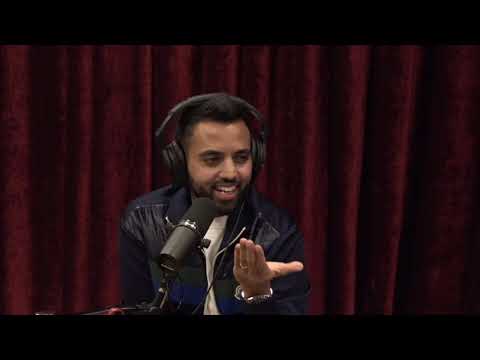
Joe Rogan Experience #1773 - Akaash Singh
Narrator, Joe Rogan (host), Akaash Singh (guest), Narrator, Narrator, Narrator, Narrator, Narrator, Narrator, Narrator
In this episode of The Joe Rogan Experience, featuring Narrator and Joe Rogan, Joe Rogan Experience #1773 - Akaash Singh explores joe Rogan and Akaash Singh Defend Comedy, Cancel Apu, Not Rogan Joe Rogan and Akaash Singh dig into cancel culture around comedy, Rogan’s own controversy, and the recent backlash to Awkwafina’s so‑called “Blaccent.” They argue comics should apologize for genuine regret, but not for online mobs or performative outrage. A big chunk of the conversation centers on representation and overcorrection, especially around The Simpsons’ Apu, casting and accents, and how wokeness can both improve and distort cultural conversations. They also explore the craft of stand-up, imitation versus authenticity, crowd work, grind and study, plus side tracks into fitness, drugs, politics, and how fame and social media warp incentives.
Joe Rogan and Akaash Singh Defend Comedy, Cancel Apu, Not Rogan
Joe Rogan and Akaash Singh dig into cancel culture around comedy, Rogan’s own controversy, and the recent backlash to Awkwafina’s so‑called “Blaccent.” They argue comics should apologize for genuine regret, but not for online mobs or performative outrage. A big chunk of the conversation centers on representation and overcorrection, especially around The Simpsons’ Apu, casting and accents, and how wokeness can both improve and distort cultural conversations. They also explore the craft of stand-up, imitation versus authenticity, crowd work, grind and study, plus side tracks into fitness, drugs, politics, and how fame and social media warp incentives.
Key Takeaways
Apologize for real regret, not for online performance.
Rogan and Singh argue comics should absolutely apologize when they genuinely regret something, but warn against apologizing for “nonsense” demanded by mobs who don’t know you and are often acting in bad faith.
Get the full analysis with uListen AI
Overcorrection can erase good representation instead of improving it.
Singh sees canceling Apu as confusing hurt feelings with oppression: some jokes were hacky and the white actor is a legitimate discussion, but erasing a complex, aspirational immigrant character went too far.
Get the full analysis with uListen AI
Intent and underlying mentality matter more than a single bad joke.
They echo Patrice O’Neal’s idea that both great and terrible jokes come from the same place—trying to be funny—so it’s more important to judge the comedian’s overall mentality than one failed or offensive line.
Get the full analysis with uListen AI
Wokeness can highlight real injustices but easily drifts into absurdity.
They acknowledge wokeness has pushed society toward greater equality and awareness, but criticize its rigid ideological traps, uneven standards (e. ...
Get the full analysis with uListen AI
Global censorship of comedy is far more dangerous than Western micro‑controversies.
Singh contrasts Western Apu discourse with India jailing a Muslim comic on hearsay and the Taliban murdering an Afghan comedian, arguing Western South Asian activists are oddly silent on truly repressive cases.
Get the full analysis with uListen AI
Serious study can dramatically accelerate a comic’s growth.
Singh describes hand‑transcribing top comics’ specials, analyzing every laugh, and using that to crack how “funny works,” suggesting structured study plus stage time can transform a comedian after years of stagnation.
Get the full analysis with uListen AI
Authenticity and tribe protect comics more than chasing any “base.”
They urge performers not to contort themselves to please a political base, but to build a loyal, long‑term audience by being themselves and surrounding themselves with a supportive, honest crew of comics and friends.
Get the full analysis with uListen AI
Notable Quotes
“You should apologize if you regret something. This idea that you should never apologize—if you regret something, I don’t think there’s anything wrong with apologizing.”
— Joe Rogan
“What I want to differentiate is the difference between your hurt feelings and being oppressed.”
— Akaash Singh
“If someone has a joke and it’s terrible or it offends you, or someone has a joke and it kills, it all comes from the same place. They’re just trying to be funny.”
— Joe Rogan (quoting Patrice O’Neal’s idea)
“We have come a long way in the last 50, 60 years, and I think we’re acting like it’s still that. Apu is not that.”
— Akaash Singh
“Every conspiracy theorist I know is miserable. It’s a dark life. I’m cool being ignorant. You guys can have the truth, I want a happy family.”
— Akaash Singh
Questions Answered in This Episode
Where is the line between valid representation criticism and overcorrection, using Apu as a case study?
Joe Rogan and Akaash Singh dig into cancel culture around comedy, Rogan’s own controversy, and the recent backlash to Awkwafina’s so‑called “Blaccent. ...
Get the full analysis with uListen AI
How should audiences weigh a comedian’s decades‑long body of work and intent against a montage of their worst moments?
Get the full analysis with uListen AI
Are we actually moving toward less discrimination, or just shifting who is socially allowed to be mocked or imitated?
Get the full analysis with uListen AI
What responsibilities, if any, do Western South Asian entertainers have to speak about free‑speech abuses in India and elsewhere?
Get the full analysis with uListen AI
Could the kind of systematic stand‑up study Singh describes be formalized into something like a ‘comedy curriculum,’ or would that kill what makes stand‑up organic?
Get the full analysis with uListen AI
Transcript Preview
(drumming) Joe Rogan podcast, check it out. The Joe Rogan Experience.
Train by day, Joe Rogan podcast by night, all day. (heavy guitar music) Well, hey, fella. How you doing?
Hey, buddy. How are you?
(laughs)
I'm good. You're good? You seem good.
If you stay offline-
(laughs)
... it's just real life.
Yeah.
You just have to stay offline.
And real life is people who know you-
Yeah.
... and you're a great guy.
Yeah, you, you just... life goes on-
Yeah.
... as normal.
Yeah.
You know, in a lot of ways, like, all this is a relief, 'cause it's, like, just, 'cause that, that video had always been out there.
Right.
It's like, this is a political hit job.
Yes.
And so they're taking all this stuff that I've ever said that's wrong and smooshing it all together.
Right.
But it's good, 'cause it makes me address some shit that I really wish wasn't out there.
And you know why I'm proud of you? 'Cause I, I think comedians have, for years, done this immature thing where it's like, "We don't apologize. We say whatever we want." You can apologize if you say some wild shit-
(laughs)
... and we've all said some wild shit, and you apologize and own that it's wrong. Good for you.
You should apologize if you regret something.
Yes.
This idea that you should never apologize.
Yes.
Like, if you regret something, I don't think there's anything wrong with apologizing, but I, I do think you have to be very careful to not apologize for nonsense.
Correct.
Like, you see Awkwafina? She apolo- it's like she defended-
(laughs)
... I guess she didn't apologize. She did, sort of defended the way she talks.
Yes.
And they were saying that it was a Blackcent.
Yeah.
Which is, you know... Come on, man.
Which, uh, I probably have one of those. But it's-
There's a lot of people who have those. It's fine.
Can I tell you the tricky thing about not being Black or white in this country? And we're not victims, but it is tricky, because there is a way to, quote unquote, "act Black." Not that it's good or bad, but there's a Black identity and a white identity-
Mm-hmm.
... in America, and the rest of us just kind of have to pick a side.
Ah.
So there's no way for me, growing up, to act Indian. People used to ask me, "Why do you always act so Black?" And I would be like, "Buddy, if you can tell me how to act Indian, I'll do it." I swear to God, I was pre-med, I tried, didn't work out. What else can I do?
Install uListen to search the full transcript and get AI-powered insights
Get Full TranscriptGet more from every podcast
AI summaries, searchable transcripts, and fact-checking. Free forever.
Add to Chrome