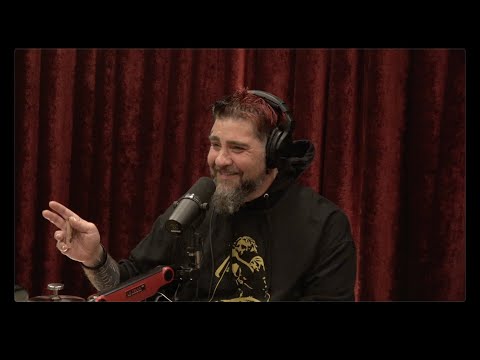
Joe Rogan Experience #2296 - Big Jay Oakerson
Big Jay Oakerson (guest), Narrator, Narrator, Joe Rogan (host), Narrator, Narrator, Narrator, Narrator, Narrator, Narrator, Narrator, Narrator
In this episode of The Joe Rogan Experience, featuring Big Jay Oakerson and Narrator, Joe Rogan Experience #2296 - Big Jay Oakerson explores joe Rogan and Big Jay Oakerson Roast Aging, Comedy, and Culture Wars Joe Rogan and Big Jay Oakerson spend several hours swapping stories about standup, aging as performers, and the evolution of comedy from the 80s and 90s to today. They dive into Hollywood and indie films, political correctness, and how modern sensitivities collide with classic shock humor and racial caricatures. The conversation swings through body modification and insecurity (tattoos, plastic surgery, BBLs, penis surgery), crime and undercover work, and famous comics, fighters, and musicians they’ve met or watched implode. Underneath the jokes is a recurring theme: authenticity in comedy, the costs of chasing fame or money, and the importance of just being funny instead of trying to be socially virtuous on stage.
Joe Rogan and Big Jay Oakerson Roast Aging, Comedy, and Culture Wars
Joe Rogan and Big Jay Oakerson spend several hours swapping stories about standup, aging as performers, and the evolution of comedy from the 80s and 90s to today. They dive into Hollywood and indie films, political correctness, and how modern sensitivities collide with classic shock humor and racial caricatures. The conversation swings through body modification and insecurity (tattoos, plastic surgery, BBLs, penis surgery), crime and undercover work, and famous comics, fighters, and musicians they’ve met or watched implode. Underneath the jokes is a recurring theme: authenticity in comedy, the costs of chasing fame or money, and the importance of just being funny instead of trying to be socially virtuous on stage.
Key Takeaways
Comic identity now lasts longer, but aging makes the look vs. reality awkward.
Jay jokes about still having dyed hair, piercings, and painted nails into his 60s; they both acknowledge you can get away with almost anything onstage as long as you stay funny—but bombing while looking outrageous amplifies how bad it feels.
Get the full analysis with uListen AI
The old comedy path—tight 5 → Montreal → sitcom deal—is largely dead.
They reminisce about managers pushing ‘sitcom sets’ and blazer costumes, but note that today careers are built more through standup, podcasts, and self-made specials instead of chasing development deals that often go nowhere.
Get the full analysis with uListen AI
Trying to retrofit old media with today’s moral standards is messy and often absurd.
They look at examples like Aunt Jemima ads, Dr. ...
Get the full analysis with uListen AI
Body modification trends expose deep insecurity but also a market of risky procedures.
From BBLs, butt implants, and breast implants to experimental penis surgeries and cover-up tattoos, they keep returning to how people make permanent choices on immature brains or for short-term validation, often with serious health risks.
Get the full analysis with uListen AI
There are far more dangerous, organized psychopaths than most people realize.
Rogan recounts a long interview with an undercover FBI agent who infiltrated biker gangs and neo-Nazis, underscoring how many violent, organized groups exist and how easily someone’s life path could have gone the other way under different circumstances.
Get the full analysis with uListen AI
Comedy’s core job is still to be funny, not to deliver social justice.
They criticize the idea that standup must ‘move society forward’ or be primarily about trauma and activism, arguing that comics like Brian Regan or Dave Attell are proof that you can be purely joke-focused and still be great and valuable.
Get the full analysis with uListen AI
Success in TV or side gigs can quietly erode standup if you’re not careful.
Rogan and Jay both describe how acting, hosting, or ‘network’ opportunities are tempting but can pull you away from the stage; those who kept doing clubs (like Brian Regan, Gaffigan, Fitzsimmons) are the ones who can still tour powerfully when other income dries up.
Get the full analysis with uListen AI
Notable Quotes
“As long as you’re still funny, you can pull it off. But when you’re bombing with red hair and three nose rings, it becomes an issue.”
— Joe Rogan
“I thought you had to be clean, wear a blazer, write a sitcom set. Turns out you just have to be funny.”
— Big Jay Oakerson
“Just because it’s hard to do doesn’t mean it’s good to do. Climbing Everest is hard. So is dying on Everest.”
— Joe Rogan
“If you’re not using your comedy to move society forward, they say you’re wasting time. Then what is Dave Attell? Or Brian Regan? They shouldn’t be in comedy?”
— Big Jay Oakerson (paraphrasing and criticizing Hannah Gadsby’s stance)
“Female bodies are just as strong and as fast as male bodies? No, they’re not. High school boys beat professional women’s teams.”
— Joe Rogan
Questions Answered in This Episode
How much should comics adapt their material or style for younger, more sensitive audiences without losing their core voice?
Joe Rogan and Big Jay Oakerson spend several hours swapping stories about standup, aging as performers, and the evolution of comedy from the 80s and 90s to today. ...
Get the full analysis with uListen AI
Is the modern, self-built path to success (podcasts, YouTube, festivals like Skankfest) ultimately healthier for comedy than the old sitcom/development-deal model?
Get the full analysis with uListen AI
Where is the line between playful offense in comedy and genuinely harmful rhetoric, and who gets to draw that line?
Get the full analysis with uListen AI
Given how many dangerous people operate in organized groups, does comedy have any responsibility to address or satirize them, or is that beyond its scope?
Get the full analysis with uListen AI
Are procedures like BBLs and extreme cosmetic surgery fundamentally a personal freedom issue, or should there be stronger age limits and medical safeguards because of dysmorphia and long-term risk?
Get the full analysis with uListen AI
Transcript Preview
(drum roll) Joe Rogan podcast, check it out.
The Joe Rogan Experience.
Train by day, Joe Rogan podcast by night, all day. (rock music)
Big J.
... over here, buddy.
Rock and roll. What's happening?
Hell yeah.
You went with the three nose rings now. You're getting crazy.
Yeah. It's getting carried away. I went to go... I had a cold, and I think I blew my nose, one of them out.
(laughs)
So then I went to go get it re-put back in, and then I was like, "Throw another one in there while you're at it."
Fuck it.
Um, just me fighting age, I think.
Is that what it is?
Yeah, yeah, yeah.
There's something weird when you're fighting age. Like, you know you're doing it, but you can't help it. (laughs)
Oh, yeah. Absolutely. Like, when people make fun of m- just the way I dress or whatever, coloring my hair, my piercings, t- And they're always like, it's like, "Is it gonna change at some point?" And I am hitting an age where I'm like, I can't just do a (laughs) hard shift one day. But it is funny to think, like, I can't see myself at 65-
With painted nails.
... doing some of this stuff. Yeah, yeah, yeah.
(laughs)
I don't know.
Why not? Who gives a shit?
You can't, but it's also like, I feel if I saw it, I'd have a million and one jokes about it.
Right.
But it's still, at the end of the day, you're like... You know, I'd walk out, I'd go, "Oh, I forgot my pocket scarf. I gotta go back upstairs."
(laughs)
(laughs) I forgot my Gouachemals.
As long as you're still funny, you can pull it off. But when you're bombing with red hair and three nose rings-
Shit. That's true.
... it becomes an issue.
That is true.
As long as you stay funny.
That's why I think when I first started, I tried to blend in, whatever I was. I started in that black circuit, so like, I had so much Fubu shit on.
Oh, there you go.
And just like, yeah, jerseys and stuff, so I definitely played it up. The funniest was having a big silver chain with a cross that I'm Jewish. (laughs)
(laughs)
But I just really was like, "I think they'll like me more if I have a cross."
When I first started, I thought you had to dress like those guys on Evening at the Improv, so I got a blazer-
(laughs)
... and I rolled the sleeves up. And I had like a wacky T-shirt that I wore.
(laughs) The costume?
Yeah, the costume. They have a button on your blazer, some s- wacky button.
Install uListen to search the full transcript and get AI-powered insights
Get Full TranscriptGet more from every podcast
AI summaries, searchable transcripts, and fact-checking. Free forever.
Add to Chrome