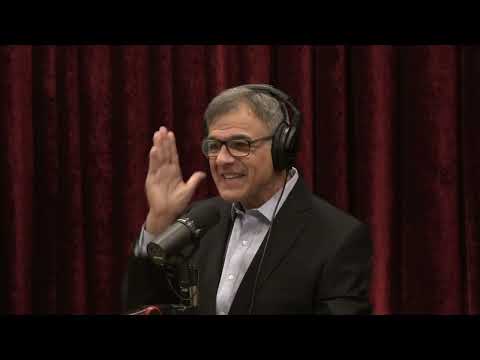
Joe Rogan Experience #2392 - John Kiriakou
Narrator, John Kiriakou (guest), Joe Rogan (host), Narrator
In this episode of The Joe Rogan Experience, featuring Narrator and John Kiriakou, Joe Rogan Experience #2392 - John Kiriakou explores cIA Whistleblower Explains Torture Program, Deep State, And Retaliation Joe Rogan interviews former CIA officer John Kiriakou about his role in capturing high‑value al‑Qaeda targets, his refusal to participate in the post‑9/11 torture program, and the U.S. government’s subsequent prosecution and imprisonment of him after he spoke publicly. Kiriakou describes in detail the so‑called “enhanced interrogation techniques,” why they constituted torture, and how they were largely ineffective compared to traditional FBI interrogation methods. He lays out how internal dissent was punished, how the intelligence bureaucracy outlasts presidents and shapes policy, and how political actors like John Brennan allegedly weaponized the Espionage Act against whistleblowers. The conversation expands into broader issues: FBI entrapment cases, January 6, propaganda laws, U.S.–Israel politics, and the structural incentives that push American security institutions toward abuse and secrecy.
CIA Whistleblower Explains Torture Program, Deep State, And Retaliation
Joe Rogan interviews former CIA officer John Kiriakou about his role in capturing high‑value al‑Qaeda targets, his refusal to participate in the post‑9/11 torture program, and the U.S. government’s subsequent prosecution and imprisonment of him after he spoke publicly. Kiriakou describes in detail the so‑called “enhanced interrogation techniques,” why they constituted torture, and how they were largely ineffective compared to traditional FBI interrogation methods. He lays out how internal dissent was punished, how the intelligence bureaucracy outlasts presidents and shapes policy, and how political actors like John Brennan allegedly weaponized the Espionage Act against whistleblowers. The conversation expands into broader issues: FBI entrapment cases, January 6, propaganda laws, U.S.–Israel politics, and the structural incentives that push American security institutions toward abuse and secrecy.
Key Takeaways
Refusing to participate in torture derailed Kiriakou’s CIA career and marked him as a problem internally.
After declining training in “enhanced interrogation techniques” on moral and legal grounds, he was passed over for promotion and labeled as having a “shocking lack of commitment to counterterrorism,” signaling how strongly the institution enforced conformity around the torture program.
Get the full analysis with uListen AI
The CIA’s torture methods were both brutal and strategically ineffective compared to rapport‑based interrogations.
Kiriakou details cold cells, extreme sleep deprivation, and waterboarding that killed or nearly killed detainees, then contrasts that with FBI agent Ali Soufan’s non‑coercive questioning of Abu Zubaydah, which produced high‑value, life‑saving intelligence until CIA torture shut him down.
Get the full analysis with uListen AI
Internal dissent existed but was systematically suppressed or punished rather than channeled into oversight.
He cites officers quitting black sites, secretaries fainting, and career‑ending moves like curtailing torture‑related assignments; yet no one publicly blew the whistle, and the only person imprisoned related to the program was the one who exposed it.
Get the full analysis with uListen AI
The intelligence and security bureaucracy can outlast presidents and steer policy regardless of elections.
Veteran officials explicitly told Kiriakou they could simply slow‑roll policies they disliked until a president left office, reinforcing his view that a de facto “deep state” exists that is unelected and largely unaccountable.
Get the full analysis with uListen AI
The Espionage Act and over‑criminalization give prosecutors enormous leverage to destroy targeted individuals.
Kiriakou describes being charged with multiple felonies, threatened with 45 years in prison, and financially broken before espionage counts were dropped—illustrating how the process itself is punishment and how average people stand little chance against the system.
Get the full analysis with uListen AI
FBI and federal law‑enforcement incentives can drive entrapment‑style operations and exaggerated threats.
He and Rogan walk through cases where informants or undercover agents appear to originate plots (bridge bombings, terrorism schemes, January 6 provocations), arguing that clear career incentives exist to “make cases” even when suspects are marginal or manipulated.
Get the full analysis with uListen AI
Legalized domestic propaganda and foreign‑influence gaps erode trust in information and policy.
Kiriakou notes that the NDAA now permits the U. ...
Get the full analysis with uListen AI
Notable Quotes
““Let’s call a spade a spade. This is a torture program.””
— John Kiriakou, recounting what a senior CIA officer told him about “enhanced interrogation techniques”
““If they wanna get you, they’re gonna get you, and there’s nothing you can do to protect yourself.””
— John Kiriakou, on over‑criminalization and federal prosecution power
““We do not torture.””
— George W. Bush, as quoted by Kiriakou, contrasting public denial with internal reality
““Your problem is you think this is about justice, and it’s not about justice. It’s about mitigating damage.””
— John Kiriakou’s defense attorney, urging him to accept a plea deal
““I’m on the right side of history, and you are not.””
— John Kiriakou, in a message to a senior CIA official before going to prison
Questions Answered in This Episode
How should democratic societies balance the need for secret intelligence operations with mechanisms that genuinely protect whistleblowers and dissenters?
Joe Rogan interviews former CIA officer John Kiriakou about his role in capturing high‑value al‑Qaeda targets, his refusal to participate in the post‑9/11 torture program, and the U. ...
Get the full analysis with uListen AI
Given the documented failures and illegality, why did no senior officials face accountability for the U.S. torture program, and what does that imply about U.S. rule of law?
Get the full analysis with uListen AI
To what extent are FBI stings and informant‑driven plots legitimate counterterrorism tools versus manufactured crimes that justify budgets and power?
Get the full analysis with uListen AI
How can citizens realistically distinguish between information, propaganda, and targeted influence campaigns—domestic or foreign—in a heavily mediated environment?
Get the full analysis with uListen AI
What specific reforms to the Espionage Act, FARA, and intelligence oversight structures would meaningfully reduce abuse without crippling legitimate national‑security work?
Get the full analysis with uListen AI
Transcript Preview
(drumming music plays) Joe Rogan podcast, check it out.
The Joe Rogan Experience.
Train by day, Joe Rogan podcast by night, all day. (rock music plays)
So you're saying you pro- replaced Mike Baker?
Yeah. Mike's a great guy. He was a good officer. He was, uh ... He doesn't really talk about his work a lot. Maybe it's 'cause a lot of years have passed, but he was the real deal. I replaced him in Athens, and he had done a lot of preliminary legwork in Athens. Athens was a tough place. At the time, uh, w- the American government spent more money on security in Athens than they spent anywhere else in the world, including Beirut.
Why?
There ... It was a combination of two things. There were two indigenous Greek groups that were exceedingly dangerous. One was called Revolutionary Organization 17 November. They had killed the CIA station chief, two US defense attaches, just bad guys all around. The other was called, um, Popular Revolutionary Struggle. And then on top of that, you add Abu Nidal, the Libyans, the PFLP, the PFLPGC, the DFLP. Everybody was there, because there was this informal agreement between the Greek government of, uh, Andreas Papandreou at the time, and these terrorist groups that, if you don't kill Greeks, we'll leave you alone.
Oh, boy.
Yeah.
(laughs)
But killing Americans wasn't part of the deal, so it was every man for himself.
Wow. Your story is pretty nuts, man.
It's-
And your story-
... twisty.
... of getting in trouble and eventually going to prison for something that was com- what they were doing, what you reported on, was completely illegal.
Mm-hmm.
And you were completely honest about it. Um, and it was essentially about the US torture program.
Right.
Tell us how this all started. Like, how long had you been involved in the CIA?
Oh, by then I had been in the CIA ... Well, by the time I got to Pakistan as the head of, uh, counter-terrorism operations after 9/11, I'd been in the CIA almost 13 years. And, um, and I was responsible for all counter-terrorism operations in the country. W- a- Al-Qaeda was, was running out of Afghanistan into Pakistan because we were bombing the daylights out of them. And so my job was to find them and grab them, and then just hold them, or send them to trial was the original idea. And, um, we, we were planning at the time for our first big name capture, right? W- uh, bin Laden, Ayman Zawahiri. We had killed, uh, Mohammed, um, Atef, he was the head of what they called Military Affairs for Al-Qaeda. We killed him at Tora Bora. But then there was Abu Zubaydah, and then there was this unknown person that we later learned was Khalid Sheik Mohammed. So we were looking for any of these four or five people, and then there were, there were others, those responsible for the embassy bombings in Africa, uh, the USS Cole bombing. So it just so happened that in February of 2002, we got a lead on Abu Zubaydah, and, um, and we captured him. It took us six weeks to track him down, and we were close a couple of times. Close where we would bust down the door, and there's, like, an uneaten, like half-eaten sandwich on the counter, a cigarette still burning. Sometimes we were a day or two behind him, but he knew we were looking, and he knew we were close. So we finally got him, and then the question is what do you wanna do with him? And they, uh, they told me, uh, "Hang onto him. We're gonna send out a plane, and, uh, we'll take it from there." So they did, and I wasn't cleared to know what they were gonna do with him, just like the guys on the plane weren't cleared to know who it was we had captured and, and who, why they were taking this guy where they were taking him. But, um-
Install uListen to search the full transcript and get AI-powered insights
Get Full TranscriptGet more from every podcast
AI summaries, searchable transcripts, and fact-checking. Free forever.
Add to Chrome