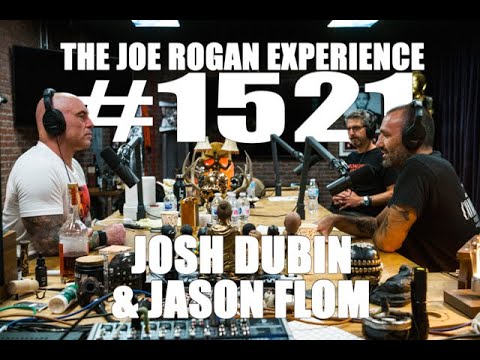
Joe Rogan Experience #1521 - Josh Dubin & Jason Flom
Joe Rogan (host), Josh Dubin (guest), Jason Flom (guest), Narrator, Joe Rogan (host), Josh Dubin (guest), Jason Flom (guest), Josh Dubin (guest), Joe Rogan (host), Joe Rogan (host)
In this episode of The Joe Rogan Experience, featuring Joe Rogan and Josh Dubin, Joe Rogan Experience #1521 - Josh Dubin & Jason Flom explores fighting Junk Science and Mass Incarceration: Inside Wrongful Convictions Joe Rogan speaks with Innocence Project advocates Josh Dubin and Jason Flom about wrongful convictions, junk forensic science, and the systemic drivers of mass incarceration in the U.S.
Fighting Junk Science and Mass Incarceration: Inside Wrongful Convictions
Joe Rogan speaks with Innocence Project advocates Josh Dubin and Jason Flom about wrongful convictions, junk forensic science, and the systemic drivers of mass incarceration in the U.S.
They detail harrowing cases of innocent people on death row, coerced confessions, planted evidence, and discredited forensic methods like bite marks, blood spatter, arson analysis, and shaken baby syndrome.
The conversation broadens into the war on drugs, cash bail, racial disparities, and the near-total lack of accountability for prosecutors, judges, and police who enable wrongful convictions.
Throughout, they outline ways listeners can help: supporting the Innocence Project, pressuring governors and local officials, serving on juries thoughtfully, and voting in DA and judicial races.
Key Takeaways
Most forensic disciplines used in court, aside from DNA, are scientifically unsound.
Bite mark analysis, blood spatter, arson investigation, shoe tread comparisons, and shaken baby syndrome diagnosis have been repeatedly debunked, yet remain admissible and have helped send countless innocent people to prison or death row.
Get the full analysis with uListen AI
The system incentivizes convictions over truth, creating a 'win at all costs' culture.
Prosecutors and some police treat cases like a game where a conviction is the 'W'; even when exonerating evidence appears, they often double down to protect prior verdicts and their careers instead of correcting errors.
Get the full analysis with uListen AI
Coerced confessions are common, and anyone can be vulnerable to them.
Interrogators are legally allowed to lie, deprive suspects of sleep and food, and use psychological pressure; adolescents, people with mental vulnerabilities, and even military veterans are especially prone to falsely confess after hours of such tactics.
Get the full analysis with uListen AI
Cash bail and pretrial detention drive guilty pleas and trap the poor.
People too poor to post bail often lose jobs, housing, and family stability if they stay jailed, so many plead guilty quickly just to get out—even when innocent—fueling mass incarceration without improving public safety.
Get the full analysis with uListen AI
The war on drugs and mandatory minimums have massively expanded the prison population.
Nonviolent drug offenses, especially simple possession (including marijuana), still account for huge numbers of arrests and incarcerations, disproportionately impacting poor communities and people of color while failing to reduce crime.
Get the full analysis with uListen AI
Accountability for wrongful convictions is virtually nonexistent for officials.
Judges and prosecutors enjoy broad immunity; police who beat confessions out of suspects or plant evidence are rarely punished, while exonerees often receive no compensation or wait years for civil relief, if any.
Get the full analysis with uListen AI
Ordinary people can influence the justice system through voting, jury service, and advocacy.
Voting in DA and judicial elections, serving thoughtfully on juries, demanding DNA testing, signing petitions, supporting exoneree services, and pressuring governors and legislators can all materially affect outcomes in current and future cases.
Get the full analysis with uListen AI
Notable Quotes
“The justice system is an efficient eating and killing machine for poor people of color.”
— Josh Dubin quoting Innocence Project attorney Chris Fabricant
“What percentage of innocent people are you okay with executing?”
— Jason Flom
“Every time we convict an innocent person, the real perpetrator remains free.”
— Jason Flom
“There is no presumption of innocence. We throw that around like it exists. It doesn't exist.”
— Josh Dubin
“The war on drugs is one of the most disgusting and confusing aspects of our enlightened culture.”
— Joe Rogan
Questions Answered in This Episode
If most forensic disciplines besides DNA are unreliable, what standards should courts adopt to determine what counts as valid scientific evidence?
Joe Rogan speaks with Innocence Project advocates Josh Dubin and Jason Flom about wrongful convictions, junk forensic science, and the systemic drivers of mass incarceration in the U.S.
Get the full analysis with uListen AI
How can we design real accountability mechanisms for prosecutors, judges, and police who knowingly contribute to wrongful convictions without undermining legitimate law enforcement?
They detail harrowing cases of innocent people on death row, coerced confessions, planted evidence, and discredited forensic methods like bite marks, blood spatter, arson analysis, and shaken baby syndrome.
Get the full analysis with uListen AI
What would a truly reformed pretrial system look like if we eliminated cash bail but still needed to manage public safety and court appearances?
The conversation broadens into the war on drugs, cash bail, racial disparities, and the near-total lack of accountability for prosecutors, judges, and police who enable wrongful convictions.
Get the full analysis with uListen AI
In practice, how can jurors distinguish between solid evidence and junk science or coerced confessions when they lack scientific and legal expertise?
Throughout, they outline ways listeners can help: supporting the Innocence Project, pressuring governors and local officials, serving on juries thoughtfully, and voting in DA and judicial races.
Get the full analysis with uListen AI
What political and cultural shifts are necessary to move from a punishment-based model of justice to one focused on prevention, treatment, and rehabilitation—especially for drug-related and low-level offenses?
Get the full analysis with uListen AI
Transcript Preview
Dope. Josh, Jason, (slaps desk) thank you. Thanks for being here. Try to keep this sucker like a fist from your face. Gentlemen, what's happening? How are you?
Thanks for having us. Happy to be here.
My pleasure, my pleasure. Te- let's, let's just start this off, just tell everybody what you guys are here for and what you do.
Okay. Well, we do a lot of things, um...
You do a lot of things.
(laughs) Or I do. I, I guess.
Shout out to Andre Ward for introducing us.
Oh, yeah. Yeah, absolutely. One of my, one of my best friends and, and actually personal heroes. But, uh, so Jason and I both work at the Innocence Project. Um, I'm the, I'm the ambassador, the innocence ambassador at the Innocence Project in New York. And, um, we're here to get the word out about wrongful convictions. We have a podcast. Jason has had a long, successful podcast called Wrongful Conviction with Jason Flom. I'm the host of a new spinoff of that called Wrongful Conviction: Junk Science, which examines all of these disciplines of forensic sciences that have been proven, um, to be total bullshit, total junk, as the name would suggest. There's-
Let's, let's get to that.
Yeah.
I, I wanna hear what those are. But, um, Jason, can you just tell everybody what you, you were, you were originally in the record business?
Yeah, um, thanks for bringing that up. I've been in the music business since I was 18 years old. So I've signed acts over the years, everybody from-
I said record business 'cause I'm old. (laughs)
Yeah, I still call it-
(laughs)
(laughs) I still call it that too.
You've been in the 8-track game for a while. (laughs)
It sounds nostalgic a little bit, right?
Yeah.
We miss those di- vinyl discs and stuff.
A little bit, yeah.
And, uh, they used to be able to clean your weed on and everything else-
(laughs)
... on the, on the album covers. But, um, yeah, I've been in the music business since I was 18. So I've signed acts over the years, everybody from Stone Temple Pilots and Skid Row all the way to Tori Amos and Katy Perry and Kid Rock, and more recently Greta Van Fleet and Lorde. And, you know, it's been an amazing run. At various times I was chairman and CEO of Atlantic Records, Virgin Records, Capitol Records. But my calling in life has been, uh, e- eliminating mandatory sentencing, decriminalizing drugs, uh, basically getting people out of prison that don't belong there and reversing mass incarceration, which I believe to be the worst failed social policy disaster since slavery. And it's really just an extension of slavery. So, I really appreciate you having us here, and I can't wait to tell you the story of how we first met. But, um, anyoo-
Install uListen to search the full transcript and get AI-powered insights
Get Full TranscriptGet more from every podcast
AI summaries, searchable transcripts, and fact-checking. Free forever.
Add to Chrome