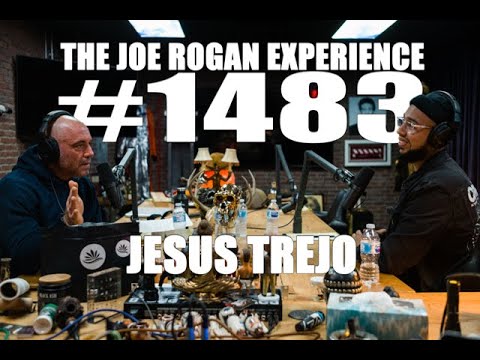
Joe Rogan Experience #1483 - Jesus Trejo
Jesus Trejo (guest), Joe Rogan (host), Jamie Vernon (guest), Jamie Vernon (guest), Jamie Vernon (guest), Guest (remote clip speaker) (guest), Jamie Vernon (guest)
In this episode of The Joe Rogan Experience, featuring Jesus Trejo and Joe Rogan, Joe Rogan Experience #1483 - Jesus Trejo explores joe Rogan and Jesus Trejo Explore Comedy, Chaos, and Coronavirus Culture Joe Rogan sits down with comedian Jesus Trejo to celebrate Trejo’s first one-hour Showtime special, “Stay At Home Son,” and to unpack the 13‑year grind that led to it. They dive deep into how standup material is built, the pressure of yearly specials, and the creative adaptations comedians made during the pandemic. The conversation veers into bigger themes: mortality, reincarnation, animal behavior, nature’s brutality, and the psychological toll of COVID lockdowns. They close by talking police brutality, riots, personal responsibility, and how standup and community (especially The Comedy Store) shape a comic’s life and outlook.
Joe Rogan and Jesus Trejo Explore Comedy, Chaos, and Coronavirus Culture
Joe Rogan sits down with comedian Jesus Trejo to celebrate Trejo’s first one-hour Showtime special, “Stay At Home Son,” and to unpack the 13‑year grind that led to it. They dive deep into how standup material is built, the pressure of yearly specials, and the creative adaptations comedians made during the pandemic. The conversation veers into bigger themes: mortality, reincarnation, animal behavior, nature’s brutality, and the psychological toll of COVID lockdowns. They close by talking police brutality, riots, personal responsibility, and how standup and community (especially The Comedy Store) shape a comic’s life and outlook.
Key Takeaways
A strong hour of comedy typically takes many years to build and keeps evolving even after taping.
Trejo spent 13 years in standup before his first special, worked the hour for about a year, and still found new tags and better phrasing immediately after filming—underscoring that a special is a snapshot, not a finished product.
Get the full analysis with uListen AI
Comedians who adapt quickly to new constraints can thrive in crisis.
Rogan highlights Andrew Schulz, Tim Dillon, Fahim Anwar, and Kyle Dunnigan as examples of comics who pivoted from clubs to high-output online content during lockdown—using monologues, sketches, and Instagram face‑swaps to keep building material and audience.
Get the full analysis with uListen AI
Good policing requires both character and physical competence; training like jiu-jitsu could reduce deadly force.
Discussing the killing of George Floyd and other incidents, Rogan argues some officers are either psychologically unsuited or too poorly trained to control bodies without resorting to lethal techniques, and praises Andrew Yang’s idea that cops should reach at least a purple belt level in jiu-jitsu.
Get the full analysis with uListen AI
Lockdowns alone are a blunt tool; improving baseline public health is a neglected strategy.
Rogan questions indefinite ‘stay home’ orders and notes the absence of official messaging on exercise, diet, and metabolic health—arguing that strengthening immune systems could significantly lower mortality from COVID and other illnesses.
Get the full analysis with uListen AI
Human beings are deeply disconnected from nature’s reality and danger.
Stories of people taking selfies with alligators, living among giant gators and tigers, and watching “nature is metal” clips show how sanitized modern life is compared to constant predation and risk in the wild, blurring our sense of what’s truly dangerous.
Get the full analysis with uListen AI
Environment and role models heavily shape life trajectories, but self-programming is possible.
Trejo describes growing up with limited English, being mis-tracked in school, and then finding mentors, books, and programs that expanded his world; both he and Rogan stress that what you read, watch, and who you’re around ‘programs’ your expectations and discipline.
Get the full analysis with uListen AI
Comedy is both therapy and community, and its loss during lockdown impacts mental health.
They talk about missing the nightly routine of writing, performing, and the social fabric of The Comedy Store—framing standup as a creative outlet, a source of purpose, and a mental health anchor for comics.
Get the full analysis with uListen AI
Notable Quotes
“The more you know, the more you realize the possibilities—and the less you really think you ever knew anything.”
— Joe Rogan
“I imagine that this is day one of standup for me, and this is the only material I got, and I think it’s hilarious.”
— Joe Rogan
“This is not a lone wolf sport. Nobody gets here just, ‘No, I did it.’”
— Jesus Trejo
“You’re giving extraordinary powers to an ordinary person. That’s what being a cop is. You have to be an exceptional person to handle that.”
— Joe Rogan
“The only commodity in life that’s worth anything is time. So now it’s like, ‘Hey, make it count.’”
— Jesus Trejo
Questions Answered in This Episode
How would the comedy landscape change if most working comics followed the yearly ‘new hour’ model versus polishing material over many years?
Joe Rogan sits down with comedian Jesus Trejo to celebrate Trejo’s first one-hour Showtime special, “Stay At Home Son,” and to unpack the 13‑year grind that led to it. ...
Get the full analysis with uListen AI
What specific public-health policies could realistically integrate nutrition and fitness into pandemic preparedness, rather than relying primarily on lockdowns and masks?
Get the full analysis with uListen AI
How can police departments systematically screen out people psychologically unsuited for power, and what kind of ongoing mental‑health support should be mandatory?
Get the full analysis with uListen AI
In what ways does modern technology (phones, watches, AR, social media) subtly control our behavior, and how can individuals regain agency without disconnecting entirely?
Get the full analysis with uListen AI
How did Jesus Trejo’s bilingual, immigrant upbringing and early mis-education shape his comedic voice, and what might his path have looked like without mentors or The Comedy Store community?
Get the full analysis with uListen AI
Transcript Preview
Jesus, my man.
What's up, man?
What's up, brother? Good to see you.
Good to see you, man. Thank you so much for this amazing opportunity. I, I, I couldn't sleep last night.
Aw, get outta here.
Yeah, I was... Yeah, no, I was excited. I laid down my, my, my outfit and ironed it.
(laughs)
I'm like... You know, I got... Yeah, lint roller.
That's so crazy. Dude, you and I have been friends for years.
Yeah.
You gotta, you gotta relax.
But this is a big deal. I mean, you're, you're, you're-
Try to get that shit outta your head. Try to get that big deal outta your head.
Yeah.
Just clean it, clean it. You got a big deal. Tomorrow night, showtime. Well, when this airs, it'll be tonight.
Yeah, it'll be tonight, yeah.
Showtime.
My first one-hour special.
That's amazing.
Yeah.
I'm excited for you. I've seen you working it out. It's hilarious shit.
Thank you, man.
And I know you've been really grinding up until this pandemic, but luckily, you filmed it. You got under the wire, right?
Yeah.
How, how many months out were you?
Um, I filmed it November 2nd.
Oh, okay.
Yeah.
So you missed it by a couple months. That's good.
Yeah, November 2nd, I filmed it. And, you know, people think I, I named the special Stay-at-Home Son because of what was going on, but I, I landed on the, on the title, uh, in the summer.
It's called Stay at Home?
Yeah, Stay-at-Home Son.
Okay.
And, uh, I... You know, if, if I would've named it now, I would've put a comma right before the son, you know? (laughs)
(laughs)
Really drove the point, but yeah, I was excited and, and, yeah, my first one-hour special. It's like one of those things where you, like, you dream about it as a kid, and here it is and it's like, "Ooh."
How many years you been doing standup now?
Uh, 13.
Oh, that's good.
I started when I was 20, and I'm 33 now.
There's a thing that they say. Uh, I don't know who they are, but I say it too. (laughs)
(laughs) Who are they?
Who are they?
(laughs)
10 years. Takes 10 years to become a real comic.
Hmm.
That's what they always say. I don't know why they say that.
Is it like the black belt? It's like, you know, it takes 10 years to... More, more or less to get a black belt, then the learning begins?
Well, you're always learning, you know. I think that learning begins stuff is kinda... It's a weird way to say it 'cause you're always learning, you know?
Yeah.
Install uListen to search the full transcript and get AI-powered insights
Get Full TranscriptGet more from every podcast
AI summaries, searchable transcripts, and fact-checking. Free forever.
Add to Chrome