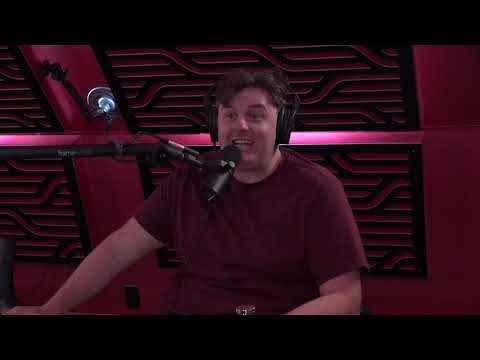
Joe Rogan Experience #1610 - Snowpacalypse with Tim Dillon
Joe Rogan (host), Narrator, Tim Dillon (guest), Narrator, Narrator, Joe Rogan (host), Narrator, Narrator
In this episode of The Joe Rogan Experience, featuring Joe Rogan and Narrator, Joe Rogan Experience #1610 - Snowpacalypse with Tim Dillon explores rogan and Dillon Roast Politics, Tech Censorship, and Comedy Itself Joe Rogan and Tim Dillon riff on the Texas snowstorm, political hypocrisy, tech censorship, media dysfunction, and the state of stand-up comedy, mixing serious critique with heavy sarcasm. They skewer figures like Ted Cruz, Andrew Cuomo, Bill de Blasio, Gavin Newsom, and Caitlyn Jenner while debating the limits of free speech and the growing power of tech elites. The conversation circles repeatedly back to how media incentives, social media outrage, and ideological rigidity distort public life and comedy. They close by talking about building a new, freer stand‑up scene in Austin and what it takes to actually succeed in comedy versus just complaining online.
Rogan and Dillon Roast Politics, Tech Censorship, and Comedy Itself
Joe Rogan and Tim Dillon riff on the Texas snowstorm, political hypocrisy, tech censorship, media dysfunction, and the state of stand-up comedy, mixing serious critique with heavy sarcasm. They skewer figures like Ted Cruz, Andrew Cuomo, Bill de Blasio, Gavin Newsom, and Caitlyn Jenner while debating the limits of free speech and the growing power of tech elites. The conversation circles repeatedly back to how media incentives, social media outrage, and ideological rigidity distort public life and comedy. They close by talking about building a new, freer stand‑up scene in Austin and what it takes to actually succeed in comedy versus just complaining online.
Key Takeaways
Political optics often matter more than actual capability.
Rogan and Dillon mock the outrage over Ted Cruz fleeing to Cancun during the Texas storm, noting he couldn’t literally make the weather warmer, yet optics now dominate public judgment more than concrete responsibility or competence.
Get the full analysis with uListen AI
Tech “guardrails” can easily slide into broad speech control.
They describe a billionaire tech founder on Clubhouse calling for “guardrails” online; Rogan and Dillon warn that while it might start with QAnon and harassment, such controls predictably expand into policing jokes, dissent, and legitimate debate.
Get the full analysis with uListen AI
Audiences underestimate how much media is driven by incentive and fear.
From Cuomo’s alleged nursing‑home cover‑up to CNN’s dependence on Trump for ratings, they argue that news organizations and politicians are guided by self‑preservation and financial incentives as much as public service or truth.
Get the full analysis with uListen AI
Comedy is one of the few real meritocracies—but only if you’re honest with yourself.
They insist stand‑up rewards people who are undeniably funny and relentless workers; those who don’t “make it” often blame others instead of examining their own laziness, lack of output, or refusal to evolve.
Get the full analysis with uListen AI
Mocking sacred cows is essential to a healthy culture.
Their bits on Caitlyn Jenner, QAnon, nurses, and high‑status intellectuals (Weinsteins, Chelsea Handler, etc. ...
Get the full analysis with uListen AI
Online platforms shape conversation through visibility and feedback loops.
Rogan defends YouTube‑style comment sections as crucial for audience interaction and notes how Google’s curation can bury uncomfortable stories, while DuckDuckGo surfaces them—showing how platforms subtly gate what people see and discuss.
Get the full analysis with uListen AI
Building new creative communities requires both infrastructure and generosity.
Rogan talks about using his reach, wealth, and Austin base to create a “stand‑up haven” with multiple clubs, safe experimentation, and cross‑promotion—arguing established comics have a responsibility to lift up newer, truly funny voices.
Get the full analysis with uListen AI
Notable Quotes
“You can’t say, ‘You’re not right, so you can’t talk.’ Because then the people that have the power to hit that switch will hit it whenever they disagree.”
— Joe Rogan
“Most people go, ‘Well, fuck it then.’ I like to do both—I work very hard and still blame others.”
— Tim Dillon
“Comedy is kind of a meritocracy. If you are undeniably funny and you keep going, the odds are in your favor.”
— Joe Rogan
“If you want a society where it’s only the targets that you approve, you sound a lot like those people on the left that you criticize.”
— Tim Dillon
“We don’t live that long. There’s room for everybody. If you abandon mocking things, we are fucked.”
— Joe Rogan
Questions Answered in This Episode
Where should platforms draw the line between preventing real‑world harm (e.g., QAnon violence) and preserving open, messy conversations online?
Joe Rogan and Tim Dillon riff on the Texas snowstorm, political hypocrisy, tech censorship, media dysfunction, and the state of stand-up comedy, mixing serious critique with heavy sarcasm. ...
Get the full analysis with uListen AI
How much responsibility do comedians have for the downstream effects of their jokes in a hyper‑clipped, outrage‑driven media environment?
Get the full analysis with uListen AI
Is comedy truly a meritocracy, or do structural advantages (connections, geography, algorithms) still skew who breaks through?
Get the full analysis with uListen AI
What would a healthier news and social media ecosystem look like if it weren’t built around anger, fear, and partisan loyalty?
Get the full analysis with uListen AI
Can a place like Austin realistically become a long‑term alternative to LA/NY for stand‑up without eventually absorbing the same industry pressures?
Get the full analysis with uListen AI
Transcript Preview
(drumbeats) Joe Rogan podcast, check it out.
The Joe Rogan Experience.
Train by day, Joe Rogan podcast by night. All day. (rock music)
Wouldn't it be cool to have like, uh, Aerosmith right now?
I'm back.
Yeah. Great.
(sings) I'm back in the saddle again.
Great. The Snowpocalypse, Tim Dillon.
(sniffs)
Hey, holding up? Did I move you out here at a bad time, do you think?
I mean, uh, we considered suing you.
(laughs)
(laughs)
I was sitting there going, "Can I take legal action against him?" Like, I called a lawyer and apparently I cannot.
Listen, I, I'll give you free meals-
Yeah.
... every time we go out, forever.
We were-
How about that?
I mean, I was on a bread line two days ago.
(laughs)
My opener flies into town, we're gonna fly out for shows, all the flights grounded, we can't go anywhere. I mean, we're waiting outside of a supermarket for an hour, and then we're eating fish sticks in the dark of my house with no power. And I'm like, "You know, Joe fucking Rogan, man, uh, this was a real fucking leap of faith." But it's looking better today.
It'll be fine.
It'll be fine.
Listen, it was a once in... They're calling it a once in a 120-year storm, but I think what that means is like, ever recorded. Like, you go back to 1800 is what we're talking about.
Right.
Or 1900, rather.
Yeah.
Like when... What was the... What kind of fucking instruments did they... were they using?
Yeah, what were they, what were they jotting down?
Farmers Almanac was the big thing back in those days and-
Yeah.
... I don't think they have it.
How did that work?
I don't know.
'Cause that fucking thing was apparently kinda accurate.
I don't know.
It's kinda witchcrafty.
Yeah. It's crazy. Yeah, it's crazy.
Yeah, they would predict like next year's-
Yeah.
... winter cycles.
Yeah, and harvests-
Yeah.
... and things like that, yeah.
What did they do? How was... how did it work?
Well, it was just wild driving around Texas and seeing nothing but snow.
Mm.
And you... L- it looked like Vermont, it looked like you were in the Northeast, but it didn't... It was like wild to be in Texas driving around and nothing was open.
Yeah.
So like gas stations weren't open, uh, fast food wasn't open. Nothing was open.
No.
You know?
Tell you what was open, the Houston Airport. My boy Ted Cruz is like... (laughs)
Yeah, he was out.
Yeah.
And by the way, isn't it sad that like he couldn't get away with it? It's like, here's the thing about the Bush family. Say what you want about them, maybe whacked Kennedy, bygones, but I mean-
Install uListen to search the full transcript and get AI-powered insights
Get Full TranscriptGet more from every podcast
AI summaries, searchable transcripts, and fact-checking. Free forever.
Add to Chrome