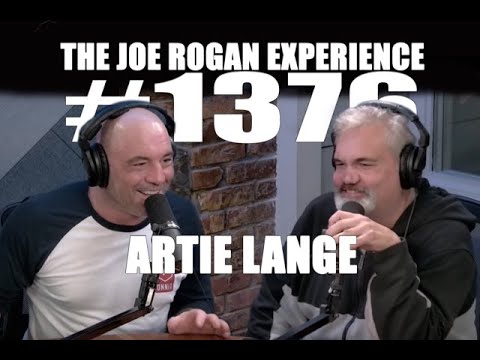
Joe Rogan Experience #1376 - Artie Lange
Joe Rogan (host), Artie Lange (guest), Narrator, Narrator
In this episode of The Joe Rogan Experience, featuring Joe Rogan and Artie Lange, Joe Rogan Experience #1376 - Artie Lange explores artie Lange Details Drug Chaos, Jail, Recovery, And Comedy Redemption Joe Rogan talks with Artie Lange about his decades-long addictions to cocaine, heroin, and gambling, and how those habits intertwined with his success on MADtv, The Howard Stern Show, and stand-up comedy.
Artie Lange Details Drug Chaos, Jail, Recovery, And Comedy Redemption
Joe Rogan talks with Artie Lange about his decades-long addictions to cocaine, heroin, and gambling, and how those habits intertwined with his success on MADtv, The Howard Stern Show, and stand-up comedy.
Artie describes the extreme chaos of using drugs while touring, gambling away millions, repeated arrests, brutal withdrawal experiences, and time in jail, rehab, and halfway houses.
He explains how drug court, extended separation from drugs, and concern for his mother finally pushed him toward genuine recovery, with about nine months of sobriety at the time of the conversation.
They also discuss the psychology of addiction, the romanticization of self-destruction in comedy, the supportiveness of the modern podcast/comedy ecosystem, and Artie’s hope to help others through brutally honest storytelling.
Key Takeaways
Long-term addiction often starts early and becomes a default way of life.
Artie traces his first high to age 11 and cocaine at 16, leading to a 35-year run where being high and chasing chaos felt normal, even as he built a successful career.
Get the full analysis with uListen AI
“One day at a time” works better than promising lifetime sobriety.
He emphasizes that vowing to “never get high again” creates overwhelming pressure; instead he focuses on staying clean minute-by-minute, which accumulates into days and months.
Get the full analysis with uListen AI
Legal pressure and real consequences can catalyze genuine change, but desire must come from within.
Drug court’s intense monitoring and the real threat of prison helped force distance from drugs, yet Artie stresses he had to internally decide he was done hurting himself and his mother.
Get the full analysis with uListen AI
Substitution of obsessions is crucial—finding healthy “highs” to replace destructive ones.
Rogan and Artie talk about channeling the same obsessive energy that once went into drugs and gambling into work, exercise, or creative projects, rather than relying on willpower alone.
Get the full analysis with uListen AI
The lifestyle around heroin and fentanyl is as deadly as the drugs themselves.
Artie describes dope sickness, precipitated withdrawals, friends overdosing on fentanyl-laced drugs, and the desperate behaviors (scoring in strange cities, risking arrest) that addiction produces.
Get the full analysis with uListen AI
Comedy and show business can enable and romanticize destructive behavior.
He notes that audiences and media often celebrated his wild stories, and he rationalized his addictions as part of his “brand,” echoing patterns seen in other legendary but self-destructive comics.
Get the full analysis with uListen AI
Helping other addicts is both a recovery tool and a moral obligation.
Artie highlights the 12th step principle: by helping others in NA/AA, you not only potentially save them, but also strengthen your own sobriety and sense of purpose.
Get the full analysis with uListen AI
Notable Quotes
“I can’t guarantee people I’m never gonna get high again. I just know I’m not gonna get high in the next 10 minutes.”
— Artie Lange
“Heroin is… if I saw some kid thinking about trying heroin for the first time, I would tackle them.”
— Artie Lange
“They can get it out of your body, but they can’t get it out of your brain.”
— Artie Lange, quoting Charlie Parker on heroin
“Comedy is the only thing that hasn’t abandoned me.”
— Artie Lange
“The culture of being generous is very important… selfish people, they die alone.”
— Joe Rogan
Questions Answered in This Episode
How can families and friends realistically support someone like Artie without enabling them or burning out themselves?
Joe Rogan talks with Artie Lange about his decades-long addictions to cocaine, heroin, and gambling, and how those habits intertwined with his success on MADtv, The Howard Stern Show, and stand-up comedy.
Get the full analysis with uListen AI
What specific practices or routines could help someone with an “addictive personality” channel that energy into healthy obsessions?
Artie describes the extreme chaos of using drugs while touring, gambling away millions, repeated arrests, brutal withdrawal experiences, and time in jail, rehab, and halfway houses.
Get the full analysis with uListen AI
Given Artie’s stories about drug court and jail, what reforms would actually make the justice system more effective for addicts rather than purely punitive?
He explains how drug court, extended separation from drugs, and concern for his mother finally pushed him toward genuine recovery, with about nine months of sobriety at the time of the conversation.
Get the full analysis with uListen AI
How should comedians and audiences reconcile the appeal of wild, self-destructive stories with the real human cost behind them?
They also discuss the psychology of addiction, the romanticization of self-destruction in comedy, the supportiveness of the modern podcast/comedy ecosystem, and Artie’s hope to help others through brutally honest storytelling.
Get the full analysis with uListen AI
What would an honest, practical prevention strategy for young people look like in the age of fentanyl and prescription opioids?
Get the full analysis with uListen AI
Transcript Preview
... network.
(laughs)
Are the timers on? All right, we're, we're rolling. Uh, first of all, before we get started, I wanna say thank you to Luis J. Gomez for hooking this up. Le- shout out to the Legion of Skanks. Without them, we would be nothing.
Yes.
We're here. (laughs)
Absolutely.
What's up, buddy? Good to see you, man.
(laughs) What's up, Joe Rogan?
My brother, what's happening?
(laughs) Hey, I'm alive.
You're ali- look, man, I've been following this whole ... Everybody's been following you, and like-
Yeah, but tha- first of all, thanks for being so nice. You're very supportive, Joe.
My pleasure.
I mean, that means a lot to me. Yeah.
I'm happy to see you hea- healthy and happy.
Yeah, thank you.
I mean, you, you look good. Your face looks good.
Yeah.
You look thin.
(laughs)
You know, you look, you look healthy. You look like you're, you're vibrant, you know?
Yeah. No, I, I, I'm present.
Yes.
I talked to Dave Attell and, uh, Dave Attell came to visit me in rehab and he said, uh, "Y- you're present. You don't wanna leave every five seconds."
Yes.
Which is what cocaine does to you.
Right.
(laughs) You know? So, uh, no, I feel good. I feel good. I mean, i- it's, I got nine months clean. Two-
That's amazing.
Yeah.
That's amazing.
Two days ago it was nine months.
What's, what's the hump? Like what do they say you have to get over before you can stay clean?
Well, first of all, i- it, it, my, my drug history is insane. It's, it started when ... The first time I got high, and I tell these young kids 'cause, you know, I'm 52 now, so-
Me too.
... I, I was in, you know, I was in rehab and jail, o- o- and a halfway house the last ni- eight months and w- with some of the craziest motherfuckers you've ever met in your life. And they all have stories, but once they know my story-
(clears throat)
... 'cause I had some success in life, basically as a full-blown junkie, they're fascinated by it.
Right.
Uh, and, um, the first time I got high was 1979. Okay? Jimmy, Jimmy Carter-
Whoa.
... was president. (laughs)
Holy shit.
So when you tell a 22-year-old kid that, they're like blown away that I'm even alive, and I am too. I, I was ... I, I, I hit a home run in Little League. I'll never forget this. And, um, I, uh, uh, uh, uh, my buddy's older brother, we used to call this kid Sick Jack, I don't know what happened to him, but he, uh, he handed me a joint. And I, I, I took a puff o' the, o' the weed and from t- uh, 11 years old I knew I, I, I loved it so much. I just loved being... I loved the feeling of being outta control. You talk to a normal person, they go, "I hate being outta control." I loved it. I loved like, wow. And you have an excuse for it. I was fucked up. (laughs)
Install uListen to search the full transcript and get AI-powered insights
Get Full TranscriptGet more from every podcast
AI summaries, searchable transcripts, and fact-checking. Free forever.
Add to Chrome