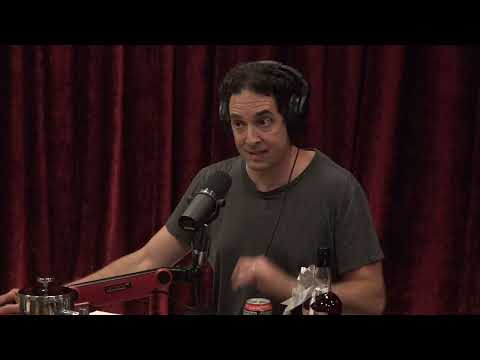
Joe Rogan Experience #1864 - Alex Berenson
Alex Berenson (guest), Narrator, Joe Rogan (host), Joe Rogan (host), Narrator, Alex Berenson (guest), Narrator, Narrator, Narrator
In this episode of The Joe Rogan Experience, featuring Alex Berenson and Narrator, Joe Rogan Experience #1864 - Alex Berenson explores alex Berenson Details Twitter Ban, Government Pressure, Vaccine Fallout Allegations Alex Berenson recounts how he was banned from Twitter over a 2021 tweet questioning COVID vaccine efficacy, then sued the company and was reinstated after a judge allowed his breach‑of‑contract case to proceed. He describes internal Twitter communications indicating the White House specifically pressed the platform about why he was still allowed to tweet, which he now plans to use in a forthcoming First Amendment lawsuit against the Biden administration. The conversation broadens into a critique of Section 230 interpretations, media collusion on “misinformation,” and the role of pharmaceutical companies and public health agencies in shaping the COVID narrative. Berenson also raises concerns about excess all‑cause mortality, declining birth rates in highly vaccinated countries, and the long‑term safety of mRNA vaccines, while Rogan presses on media failures, censorship, and political hypocrisy.
Alex Berenson Details Twitter Ban, Government Pressure, Vaccine Fallout Allegations
Alex Berenson recounts how he was banned from Twitter over a 2021 tweet questioning COVID vaccine efficacy, then sued the company and was reinstated after a judge allowed his breach‑of‑contract case to proceed. He describes internal Twitter communications indicating the White House specifically pressed the platform about why he was still allowed to tweet, which he now plans to use in a forthcoming First Amendment lawsuit against the Biden administration. The conversation broadens into a critique of Section 230 interpretations, media collusion on “misinformation,” and the role of pharmaceutical companies and public health agencies in shaping the COVID narrative. Berenson also raises concerns about excess all‑cause mortality, declining birth rates in highly vaccinated countries, and the long‑term safety of mRNA vaccines, while Rogan presses on media failures, censorship, and political hypocrisy.
Key Takeaways
Platform policies can create enforceable obligations even under Section 230.
Berenson’s suit argued that when Twitter publicly adopted COVID misinformation and strike policies, it effectively modified its contract with users; a federal judge let his breach‑of‑contract claim and discovery move forward, pressuring Twitter to settle and reinstate him.
Get the full analysis with uListen AI
Government pressure on private platforms can raise serious First Amendment issues.
Internal Twitter Slack messages Berenson obtained suggest White House officials singled him out in 2021, asking why he hadn’t been banned; he plans to sue the Biden administration and former adviser Andy Slavitt for allegedly coercing a private company to suppress a specific critic.
Get the full analysis with uListen AI
Public health narratives around vaccines shifted as real‑world data emerged.
Rogan and Berenson highlight that early official claims—vaccines stop infection and transmission—have since been walked back, with platforms like YouTube now permitting statements that once triggered bans; Berenson maintains he focused on data and short‑lived efficacy from the start.
Get the full analysis with uListen AI
Risk–benefit calculations differ sharply by age and health status.
Berenson argues vaccines may have benefited older, high‑risk people during Delta by delaying infection into a milder Omicron era, but he sees little justification—and heightened myocarditis risk—for mass vaccination and boosting of healthy younger people and children.
Get the full analysis with uListen AI
Excess mortality and fertility shifts in highly vaccinated countries are under‑examined.
He points to roughly 10–15% above‑normal all‑cause mortality and notable birth‑rate drops in parts of Europe and other mRNA‑using countries, calling for serious investigation into causes including, but not limited to, vaccines instead of dismissing or blaming climate change or “long COVID” by default.
Get the full analysis with uListen AI
Media and institutional groupthink have eroded public trust.
The discussion links Russiagate, COVID coverage, and climate narratives to an elite media monoculture and initiatives like the Trusted News Initiative, arguing that coordinated “misinformation” framing, pharma advertising dependence, and refusal to admit error have driven people toward independent outlets.
Get the full analysis with uListen AI
Admitting mistakes is vital to credibility but culturally discouraged in major outlets.
Rogan contrasts his own willingness to acknowledge errors with what he sees as mainstream media’s and experts’ refusal to revisit early COVID claims; both suggest this incentive structure keeps bad narratives alive and deepens the institutional trust crisis.
Get the full analysis with uListen AI
Notable Quotes
““I wrote a tweet that began, ‘It doesn’t stop infection or transmission.’ And they banned me.””
— Alex Berenson
““The White House privately demanded Twitter ban me months before the company did so.””
— Alex Berenson
““Even if the vaccines worked, the way people like me were treated was wrong.””
— Alex Berenson
““If telling the truth indicates that you’re gonna have a problem with vaccine hesitancy, the problem is the vaccine. The problem is never the truth.””
— Joe Rogan
““I used to believe in the system broadly. A lot of people, including me, now don’t.””
— Alex Berenson
Questions Answered in This Episode
What concrete legal standards should govern when government communication with platforms crosses from persuasion into unconstitutional coercion?
Alex Berenson recounts how he was banned from Twitter over a 2021 tweet questioning COVID vaccine efficacy, then sued the company and was reinstated after a judge allowed his breach‑of‑contract case to proceed. ...
Get the full analysis with uListen AI
How can we design vaccine trials and post‑marketing surveillance to reliably detect rare but serious adverse events without shutting down innovation?
Get the full analysis with uListen AI
To what extent are current excess mortality and fertility trends attributable to delayed care, COVID infection itself, socioeconomic fallout, versus vaccination side effects?
Get the full analysis with uListen AI
What institutional reforms—of media, regulatory agencies, or platforms—could realistically restore public trust after the COVID era?
Get the full analysis with uListen AI
How should societies balance emergency public‑health actions with preserving civil liberties and protection for dissenting scientific voices in the next crisis?
Get the full analysis with uListen AI
Transcript Preview
(drumming) Joe Rogan Podcast, check it out.
The Joe Rogan Experience.
Train by day, Joe Rogan Podcast by night. All day. (instrumental music plays)
(sniffing) Smell that? That's vindication.
(laughs)
You are the sweet smell of vindication.
Not, not, not yet, my friend.
(laughs)
Not yet.
Not yet, but it's, it's definitely in the air.
(laughs)
Has there ever been a person that has, uh, gone to court and got back on Twitter, besides you?
There has not.
That's pretty impressive. That's pretty impressive.
Uh, s- (laughs) there's more common.
There's more?
Oh, yeah.
So explain the process. So you were, uh, what was the exact, uh, definition of what they kicked you off for?
Oh, are, are we, are we live?
Yeah, we're live.
Oh, oh, good, good.
We're rolling.
Okay, um, uh, all right. So, uh, it was almost exactly this time last year, Joe. It was August 28th, 2021. Uh, I, uh, wrote a tweet that began, "It doesn't stop infection or transmission." And they banned me. Um, I went on to say, uh, "This is not a vaccine, or don't think of it as a vaccine. Think of it as a therapeutic, meaning a drug, that has side effects, and that you have to dose in advance of illness." And then the last line was, "And we wanna mandate it? Insanity." Okay, I, I would say that that's been pretty well vindicated by events.
That's...
(laughs)
That's vindication.
So, so they banned me. That was, they said that was my fifth strike and that I was not allowed to tweet anymore, and my account was not available to anybody. All the previous tweets were gone. Uh, the 300,000 people, too bad. Um, so I sued them, uh, in December. And here's it gets, it gets interesting and tricky. Uh, so other people have sued Twitter and Facebook and YouTube, uh, and Wikipedia, actually, all these companies, um, and said, you know, "You've banned us." Uh, uh, you know, "I just wanna be able to use your platform. I haven't done anything wrong." And the companies say, "We can do whatever we want. We can ban you. We can, you know, attach labels to your tweets, this, that, and the other." Uh, and there's a law called Section 230 of the Communications Decency Act. It's a federal law from 1998, I wanna say, maybe '96, uh, that basically was intended for two purposes. Purpose one was we don't want these companies to get sued over stuff that people are saying on them. So in other words, I go on and I say, you know, terrible things, defamatory things about Joe Rogan, or I say terrible things about my ex-wife, whatever, okay? Or I say, you know, "Go shoot the president." The, whatever it is that I'm saying, I'm saying something that's harassing or hateful or illegal. We can't expect, uh, a bulletin board or Facebook or, uh, or, or Twitter or whoever to police all that stuff. There's too much of it. It's not fair. So we're gonna give them complete protection from that. And that makes total sense, by the way, all right? You can't, you know, you can't have these people, uh, policing everything that's uploaded or downloaded. It's not, it's not within their capability, okay? The second idea was we want these folks to be able to give their users a better experience, and so we're gonna give them some protection, limited protection, to moderate the content that's posted, meaning let's say I'm posting tons of pornography and, you know, I'm posting it to a Christian website that, uh, that, you know, that's advertising itself as a family-friendly place. The idea was the, uh, 230's gonna allow me to take action against, uh, that user in good faith for harassa- harassing or objectionable content. So I'm gonna be allowed to ban stuff or to age restrict it. And, and that was really intended, when you look back at the statute, for porno- pornography especially. Okay. So what happened was the companies, with the help of the Ninth Circuit, which is, uh, the, the federal, uh, judges in, in California, which is where most of these companies are based, um, California and the West Coast, uh, managed to get bigger protection. And this really, this was happening for a while, and then it really happened in 2015. There was this case where a group of Sikhs, uh, uh, you know, an Indian minority group, the government of India went to Facebook and said, "We don't like these people. They're protesting against us. You gotta ban them. You gotta ban their, their group website." And Facebook said, "Okay," and pulled them. They sued Facebook. They said, "This is not right." And by the way, like, this was a classic example of a government telling, uh, you know, it's didn't, not wanting dissent, okay? They didn't... Facebook, uh, the, the Indian government didn't wanna deal with this group, so they told Facebook to ban it, okay? The Ninth Circuit said that 230 protection that allows you complete immunity if, if Alex Berenson says, you know, "Here's naked pictures of my, of my ex-girlfriend," that also allows you to ban whoever you want whenever you want. The, they called it first-party/third-party. They said there's no distinction in the statute between the immunity you get for, uh, you know, for, for this, for this defamation that Alex might be doing versus your own decision to ban these people who don't wanna be banned. And ever since then, 230's been a beast, and every time somebody has sued, the companies have said, "Look at Sikhs versus Facebook. We win."... and that's basically been how it's been. They've been allowed to do whatever they want. And so, uh, by the way, I know I'm not even talking about my case yet, but this is the legal background.
Install uListen to search the full transcript and get AI-powered insights
Get Full TranscriptGet more from every podcast
AI summaries, searchable transcripts, and fact-checking. Free forever.
Add to Chrome