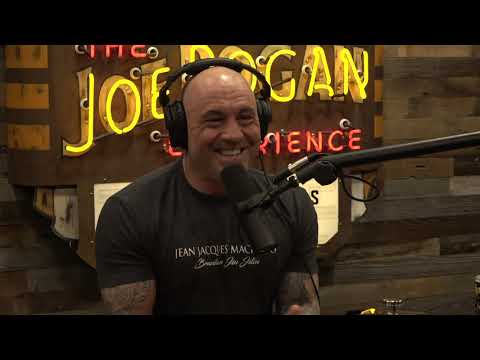
JRE MMA Show #111 with John Danaher
Narrator, Joe Rogan (host), John Danaher (guest), Guest (guest), Guest (guest), Guest (guest)
In this episode of The Joe Rogan Experience, featuring Narrator and Joe Rogan, JRE MMA Show #111 with John Danaher explores john Danaher Dissects Jiu-Jitsu’s Future, Greatness, and Human Potential Joe Rogan and John Danaher explore how modern grappling promotions like FloGrappling’s Who’s Number One are reshaping jiu-jitsu by rewarding submission-focused, spectator-friendly styles rather than point-driven stalling. They argue that lasting change will come less from rule modifications and more from coaching cultures that insist on finishing fights and building systems-based training.
John Danaher Dissects Jiu-Jitsu’s Future, Greatness, and Human Potential
Joe Rogan and John Danaher explore how modern grappling promotions like FloGrappling’s Who’s Number One are reshaping jiu-jitsu by rewarding submission-focused, spectator-friendly styles rather than point-driven stalling. They argue that lasting change will come less from rule modifications and more from coaching cultures that insist on finishing fights and building systems-based training.
Danaher lays out jiu-jitsu’s structural weaknesses—leg locks (now largely fixed), takedowns, and controlling top position in MMA—and explains his systems approach, emphasizing decision speed, leg-based wrestling, and replicable coaching over individual talent alone. They also contrast attributes versus skills, using examples like Gordon Ryan, Nicky Rodriguez, and crossover stories from MMA, wrestling, judo, and boxing.
Beyond technique, they discuss the psychology and sociology of martial arts: why submissions and knockouts are universally compelling, how legends are created by fighting for the finish, and how martial arts act as a socially acceptable form of structured violence that balances human competitiveness with cooperation. The conversation even branches into athlete health, technology (from Teslas to Neuralink), and how rare it is to develop truly generational champions.
Key Takeaways
Rule sets alone can’t fix boring grappling; culture in the gym must change.
Danaher argues that athletes will always game whatever rules exist to find the safest path to victory. ...
Get the full analysis with uListen AI
Submissions in grappling are the equivalent of knockouts in striking—and are the core of jiu-jitsu’s appeal.
Both Rogan and Danaher stress that jiu-jitsu’s magic lies in making someone physically surrender, a universally understandable outcome. ...
Get the full analysis with uListen AI
Jiu-jitsu has three historic blind spots: leg locks, takedowns, and holding top position.
Danaher says the leg lock gap is largely closed in modern no-gi, but most jiu-jitsu players still lack effective takedowns and, crucially, the ability to keep opponents down who are trained to stand (wrestling-style), which is why BJJ has shrunk from a dominant to a supporting role in MMA.
Get the full analysis with uListen AI
Training systems that prioritize decision speed and leg-based wrestling massively accelerate progress.
He focuses on systems per position so athletes aren’t improvising under stress; the system ‘makes the decisions’ via rehearsed decision trees. ...
Get the full analysis with uListen AI
True greatness combines elite skills with both physical and mental attributes—and those attributes can conflict.
Natural strength, speed, and flexibility can actually slow technical growth if athletes rely on them instead of learning. ...
Get the full analysis with uListen AI
A good coaching program is proven by the room, not by one superstar.
Danaher measures his success by how good the worst long-term students are and how many athletes can replicate similar results, not just by anomalies like Gordon Ryan. ...
Get the full analysis with uListen AI
Martial arts are structured violence that make societies safer and individuals more capable.
He frames martial arts as humanity’s compromise between our competitive, often violent nature and the need for a functioning society: you learn how to stand up for yourself physically, but inside rules and norms that prevent chaos, which ultimately produces more confident and more cooperative people.
Get the full analysis with uListen AI
Notable Quotes
“The further you get away from the idea that jiu-jitsu is about control leading to submission, the less interesting the sport becomes.”
— John Danaher
“What makes any human being great at anything is skill development. The only way you can develop skills is by having routine in your life.”
— John Danaher
“All value in life is based around scarcity. There’s nothing more scarce than the factors involved in getting to the top of combat sports.”
— John Danaher
“I always describe martial arts as high-level problem-solving with dire physical consequences.”
— Joe Rogan
“You don’t want to be a saint in a world of murderers, but you also don’t want to be a murderer in a world of saints.”
— John Danaher
Questions Answered in This Episode
If rule changes won’t fix grappling, what concrete steps can coaches and gyms take to build a genuine submission-first culture?
Joe Rogan and John Danaher explore how modern grappling promotions like FloGrappling’s Who’s Number One are reshaping jiu-jitsu by rewarding submission-focused, spectator-friendly styles rather than point-driven stalling. ...
Get the full analysis with uListen AI
How should an aspiring competitor balance time between technical training and physical development, given Danaher’s skepticism about strength programs versus technique?
Danaher lays out jiu-jitsu’s structural weaknesses—leg locks (now largely fixed), takedowns, and controlling top position in MMA—and explains his systems approach, emphasizing decision speed, leg-based wrestling, and replicable coaching over individual talent alone. ...
Get the full analysis with uListen AI
What would jiu-jitsu and MMA look like if most top athletes adopted Danaher-style systems training and leg-centric grappling from day one?
Beyond technique, they discuss the psychology and sociology of martial arts: why submissions and knockouts are universally compelling, how legends are created by fighting for the finish, and how martial arts act as a socially acceptable form of structured violence that balances human competitiveness with cooperation. ...
Get the full analysis with uListen AI
How might technologies like Neuralink or advanced analytics eventually change combat sports preparation, decision-making speed, and even what it means to be ‘talented’?
Get the full analysis with uListen AI
In a world where genetic editing and cognitive enhancement become common, will the idea of ‘natural’ greatness in martial arts—and the legends built around it—lose some of its meaning?
Get the full analysis with uListen AI
Transcript Preview
(drum music plays) Joe Rogan podcast, check it out. The Joe Rogan Experience.
Train by day, Joe Rogan podcast by night, all day. (rock music plays) So one of the best things about, um, this, uh, Who's Number One thing is that I get to see you once a month. (laughs)
Thank you.
It's been a... (laughs)
(laughs)
I've been enjoying it, man. We've had some wonderful conversations and I figured, why not get you in here and let's put one of these down on recording.
Thank you.
My pleasure. Um, this new... this idea, this concept is so fantastic to me, to take elite gr- el- elite grapplers and pay them for matches and then f- stream it online. And Flow Grappling is doing this and they're very successful.
Yes.
A lot- a lot of jujitsu people are tuning into these things and- and, you know, it's- it's really become a hit.
Um, a- a true key in the development of any sport is some kind of, uh, organization which showcases it. Uh, for mixed martial arts, it was the UFC. And grappling always struggled with, uh, the idea of showcasing the skills of the athletes. Um, there were local shows, uh, when- when you and I started jujitsu, there was crazy local shows where people would just informally come in and compete against each other. Um, but there was nothing that had any kind of overall vision or a sustained program over time. And that, I believe, is what Flow Grappling is trying to do here, they're trying to give something, uh, a grappling version of what the UFC has done for mixed martial arts. And, uh, uh, the athlete pay is improved dramatically over, uh, earlier years and athlete exposure is massively improved. So it- it's a very encouraging thing. Uh-
And the production's excellent.
Yes. Yeah.
It's really good. It's, uh, great commentary and great-
It- it- it's something where you could take someone who didn't know much about grappling, a friend of yours, invite them over, watch it together and- and they'll be like, "Hey, that's an impressive sport." And like, they- as you say, the production looks like it's- it's a legitimate sport, as opposed to, like, going to the local high school on a Saturday and watching you compete, and, um-
Yeah.
... in- in that fashion.
Well, one of the things that's made the sport more palatable is the approach that your athletes take and many other athletes are following suit, is that it's a very submission-based approach instead of just trying to score points. Because I think there's been a problem with these rule sets, where, I mean, even though Abu Dhabi's done an amazing job of showcasing elite grapplers, there's something weird about their score ses- system. So the first f- was it first five minutes, there's no sc- points scored?
That- that's correct, yes.
Install uListen to search the full transcript and get AI-powered insights
Get Full TranscriptGet more from every podcast
AI summaries, searchable transcripts, and fact-checking. Free forever.
Add to Chrome