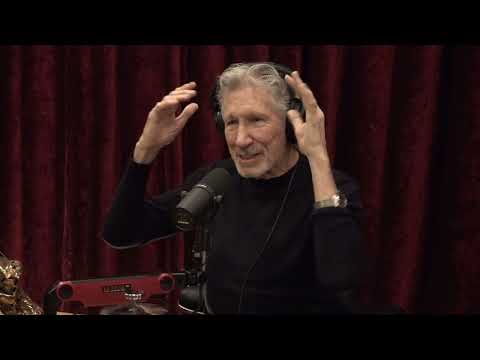
Joe Rogan Experience #1878 - Roger Waters
Roger Waters (guest), Narrator, Joe Rogan (host), Narrator
In this episode of The Joe Rogan Experience, featuring Roger Waters and Narrator, Joe Rogan Experience #1878 - Roger Waters explores roger Waters Confronts War, Power, Palestine, Media, and Human Rights Roger Waters joins Joe Rogan for a long-form discussion that intertwines his political activism, especially around Palestine and Ukraine, with personal history, creative process, and his current tour.
Roger Waters Confronts War, Power, Palestine, Media, and Human Rights
Roger Waters joins Joe Rogan for a long-form discussion that intertwines his political activism, especially around Palestine and Ukraine, with personal history, creative process, and his current tour.
He defends his support for BDS and criticism of Israeli government policies, rejecting accusations of antisemitism, and details why he views Israel/Palestine as an apartheid system rooted in unequal rights.
Waters argues that U.S. foreign policy, NATO expansion, and the military‑industrial complex drive conflicts like Iraq and Ukraine, enabled by a compliant media that suppresses dissenting narratives and cases like Julian Assange and Steven Donziger.
The conversation also explores his upbringing, his philosophy of ‘do the right thing,’ how that informs his art and shows, and his belief that equal human rights and genuine peace negotiations are the only viable path forward globally.
Key Takeaways
Criticizing Israeli state policy is not the same as antisemitism.
Waters distinguishes clearly between opposing Judaism or Jewish people and opposing Israel’s treatment of Palestinians, arguing that labeling all criticism as antisemitic is a deliberate tactic to shut down debate on human rights and apartheid conditions.
Get the full analysis with uListen AI
Understand conflicts by ‘reading both sides’ before forming opinions.
Echoing his mother’s advice, Waters insists people must study multiple perspectives and primary sources—on issues like Palestine, Syria, and Ukraine—rather than accepting a single official or media narrative.
Get the full analysis with uListen AI
Peace requires negotiation and ceasefires, not endless arms shipments.
Regarding Ukraine, he says the only humane path is an immediate ceasefire and serious talks that address both Ukrainian and Russian security concerns, warning that continual escalation and weapons transfers only increase suffering and nuclear risk.
Get the full analysis with uListen AI
Money in politics and corporate power structurally distort democracy.
Waters and Rogan argue that decisions on war, regulation, and prosecution—from Iraq to Donziger’s case—are driven by corporate and elite interests, which is why removing money from politics is framed as a prerequisite for meaningful change.
Get the full analysis with uListen AI
Mainstream media largely functions to protect the status quo.
They contend that legacy outlets and many journalists are constrained by owners, advertisers, and access, which is why stories like Assange, Donziger, and alternative views on Syria or Ukraine are marginalized or smeared as ‘conspiracy theory.’
Get the full analysis with uListen AI
Art can humanize politics by appealing to shared vulnerability.
Waters describes reshaping his live shows to be more emotionally open and explicitly political, using songs, visuals, and storytelling (e. ...
Get the full analysis with uListen AI
Equal rights for all in contested regions is the only stable solution.
For Israel–Palestine and more broadly, Waters argues any durable peace must rest on full, equal political, religious, and social rights for everyone in the territory, rather than ethno‑religious supremacy or permanent occupation.
Get the full analysis with uListen AI
Notable Quotes
“You don't have to subscribe to people's beliefs. The important thing is that we're good people, that we have hearts and that we care about our brothers and sisters.”
— Roger Waters (quoting and extending his mother’s advice)
“Most of us who get labeled as antisemites are not. We’re just criticizing the apartheid policies of the state of Israel.”
— Roger Waters
“All I’m interested in is a ceasefire and for talks to begin.”
— Roger Waters, on Ukraine
“The media only has one message, which is: support the status quo.”
— Roger Waters
“All through your life you’re gonna be faced with difficult questions... Read, read, read, read, read. Learn everything you can... and then you do the right thing.”
— Roger Waters (recounting his mother’s guidance)
Questions Answered in This Episode
How do you personally distinguish between legitimate criticism of a state and prejudice against a people, and where do you think that line gets blurred most dangerously today?
Roger Waters joins Joe Rogan for a long-form discussion that intertwines his political activism, especially around Palestine and Ukraine, with personal history, creative process, and his current tour.
Get the full analysis with uListen AI
If you were designing a realistic peace framework for Ukraine, what concrete steps would you prioritize for both Russia and NATO countries over the next 12 months?
He defends his support for BDS and criticism of Israeli government policies, rejecting accusations of antisemitism, and details why he views Israel/Palestine as an apartheid system rooted in unequal rights.
Get the full analysis with uListen AI
What mechanisms, if any, could actually remove the influence of big money from politics in the U.S. without triggering massive institutional backlash?
Waters argues that U. ...
Get the full analysis with uListen AI
In an era of information overload and propaganda, how can an ordinary person practically ‘read both sides’ on conflicts like Syria or Palestine without getting lost or misled?
The conversation also explores his upbringing, his philosophy of ‘do the right thing,’ how that informs his art and shows, and his belief that equal human rights and genuine peace negotiations are the only viable path forward globally.
Get the full analysis with uListen AI
To what extent do you think art and music can still shift public opinion on war and human rights compared to the immense power of governments and corporations?
Get the full analysis with uListen AI
Transcript Preview
(drum music) Joe Rogan podcast, check it out.
The Joe Rogan Experience. (drum music)
Train by day, Joe Rogan podcast by night, all day. (rock music) So thank you very much for doing this. I- I really appreciate it. I'm a gigantic fan, so it's- it's a real honor. And it's- it's very nice to know that you could actually play pool.
Well, we've only played two racks.
Yeah, but I could see.
(laughs)
I could see how you move the ball around.
(laughs)
You gotta get a little warmed up, you know.
Yeah, well-
We just started.
... yeah, well, it- it is true that if you start playing pool against somebody you don't know and you discover that they do understand that control of the cue ball is everything-
Yeah.
... then that's something. You think, "Oh, well, maybe we could have a game."
Well, as soon as you looked at the table and said, "These are very unforgiving pockets," I was like, "Oh, you know."
A little bit, yeah.
Yeah. Well, uh, first of all, uh, it's an honor to have you in here. I'm very excited. But, uh, second of all, uh, you're in the middle of a lot of things. You've- you've got your tour, you've got a lot of controversy going on. It's, uh ... I really enjoyed that conversation that you had with CNN because that kind of conversation is- is rare to see on air and see someone as informed as you are to have, uh, these opinions and express them so honestly and, uh, bravely.
Yeah.
And, uh, it was a very interesting conversation.
Well, I've- I'd known Michael a bit for, uh, a year or two. And he- he actually ... my last kind of engagement with him, with Michaels McConnish, I'm talking about, uh, we ... right, the interviewer, uh, was when I was playing in Miami a few years ago and the local Jewish community decided that I shouldn't be allowed to use local school children to sing Another Brick in the Wall, part two, because all during the war tours that I did, I always used local children, um, preferably from, you know, undernourished communities, um, to come and sing with me. M- I mean, between eight and 12 of them, uh, every night. And they would come in, having- having listened to the song a bit, and I would rehearse them at five o'clock in the afternoon, and then boom, at half past eight, they're on stage singing. And they get very excited and- and obviously, but it- it's a wonderful thing-
Yeah.
... for them, but also for me and also for the band, to have these children come and perform with us on stage. And the mayor of North Miami Beach, or wherever it was, came under some pressure from the local community and they did ... and they weren't allowed to play. So I got some other kids, but-
Install uListen to search the full transcript and get AI-powered insights
Get Full TranscriptGet more from every podcast
AI summaries, searchable transcripts, and fact-checking. Free forever.
Add to Chrome