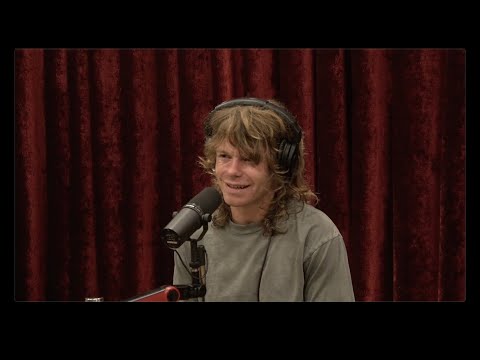
Joe Rogan Experience #2367 - Jesse Welles
Joe Rogan (host), Jesse Welles (guest), Narrator, Narrator, Narrator, Narrator, Narrator, Narrator
In this episode of The Joe Rogan Experience, featuring Joe Rogan and Jesse Welles, Joe Rogan Experience #2367 - Jesse Welles explores jesse Welles Turns Outrage Into Folk Anthems On Joe Rogan Joe Rogan interviews songwriter Jesse Welles about his viral, politically charged songs that “sing the news” on topics like UnitedHealthcare, philanthrocapitalism, and corporate predation. They dissect the U.S. healthcare system, how profit incentives warp medicine, and why people bizarrely celebrated the killing of a health insurance executive. The conversation widens into war as a business, false-flag operations, intelligence manipulation of media, and how power, money, and propaganda shape public perception. Welles explains his creative process, the freedom of being independent, and why authenticity and discomfort are essential for meaningful art in an age where AI and corporations are eager to replace or control culture.
Jesse Welles Turns Outrage Into Folk Anthems On Joe Rogan
Joe Rogan interviews songwriter Jesse Welles about his viral, politically charged songs that “sing the news” on topics like UnitedHealthcare, philanthrocapitalism, and corporate predation. They dissect the U.S. healthcare system, how profit incentives warp medicine, and why people bizarrely celebrated the killing of a health insurance executive. The conversation widens into war as a business, false-flag operations, intelligence manipulation of media, and how power, money, and propaganda shape public perception. Welles explains his creative process, the freedom of being independent, and why authenticity and discomfort are essential for meaningful art in an age where AI and corporations are eager to replace or control culture.
Key Takeaways
Profit-centric healthcare inevitably creates perverse incentives against patient well-being.
Rogan and Welles argue that corporations like UnitedHealthcare are structurally driven to deny care to increase shareholder value, using tools like AI to further reduce approvals, which feels like a legal con game to patients.
Get the full analysis with uListen AI
Art that distills complex news into emotional ‘punchlines’ can cut through propaganda.
Welles describes his process as writing thousands of words of research, then boiling them down into a few hundred rhyming, memorable lines—similar to stand-up comedy—which helps people emotionally grasp systemic problems faster than traditional reporting.
Get the full analysis with uListen AI
Historical medical abuses mirror modern pharmaceutical and psychiatric practices.
They connect lobotomies and horrific cases like Rosemary Kennedy’s to today’s benzo overprescription and grueling withdrawals, arguing that future generations may view some current “treatments” as we now view lobotomies.
Get the full analysis with uListen AI
War repeatedly serves economic and corporate interests more than public safety.
Using Smedley Butler’s ‘War Is a Racket,’ the Gulf of Tonkin, scalp bounties, and Afghanistan’s opium fields, they highlight how conflicts are often driven by banking, resource control, and military‑industrial profit rather than noble causes.
Get the full analysis with uListen AI
Narratives are heavily engineered by intelligence, media, and bots to shape consent.
They discuss social media bot armies, historical CIA influence on movies and news, and questionable official stories (e. ...
Get the full analysis with uListen AI
AI will replace anything formulaic; only the truly human and idiosyncratic will endure.
An AI-generated indie track impresses Rogan and Welles, reinforcing the idea that generic pop and background music are highly automatable, while deeply personal, rough-edged work rooted in lived experience is much harder to simulate.
Get the full analysis with uListen AI
Independence in art is both a financial and moral shield against capture.
Welles emphasizes refusing exploitative label deals, avoiding “too many cooks,” and keeping creative control so he can name names (e. ...
Get the full analysis with uListen AI
Notable Quotes
“There ain't no 'you' in UnitedHealth… there's hardly humans in humanity.”
— Jesse Welles (from his song played on the show)
“Everything that can be replaced will be replaced. But there are things that are irreplaceable.”
— Joe Rogan
“War is a racket… It’s conducted for the benefit of the very few at the expense of the very many.”
— Joe Rogan, quoting Smedley Butler
“I’m gonna be a billionaire with a big foundation… We used to rule in shadows, but I’d come right out and I’d rule the nation.”
— Jesse Welles (from his song “Philanthropist”)
“As long as they keep mushrooms illegal, they can keep selling you pills that ruin your life.”
— Joe Rogan
Questions Answered in This Episode
How much can art like Welles’ actually shift public behavior or policy versus just preaching to the already disillusioned?
Joe Rogan interviews songwriter Jesse Welles about his viral, politically charged songs that “sing the news” on topics like UnitedHealthcare, philanthrocapitalism, and corporate predation. ...
Get the full analysis with uListen AI
At what point should profit in healthcare or pharmaceuticals be legally limited to protect basic human rights?
Get the full analysis with uListen AI
Which current medical or psychiatric practices are most likely to be seen as ‘the new lobotomy’ in 30–50 years?
Get the full analysis with uListen AI
How can ordinary people distinguish between authentic grassroots sentiment and bot‑driven or state‑manufactured narratives online?
Get the full analysis with uListen AI
What practical steps can independent artists take to stay financially afloat without compromising their message or signing predatory deals?
Get the full analysis with uListen AI
Transcript Preview
(drumming music) Joe Rogan podcast. Check it out.
The Joe Rogan Experience.
Train by day, Joe Rogan podcast by night. All day. (rock music) Cheers, buddy.
Cheers to you.
Nice to meet you, man.
Good to meet you.
I've enjoyed your songs. (laughs)
(laughs)
How did you, uh ... Well, first of all, how long you been doing music?
Um, I think most of my life, you know. Um ...
Did you grow up in a musical family or is it just something you picked up on your own?
No, I ... Everyone worked and made art when they weren't working.
Oh, okay.
But, uh, no music really, but that, I, I like to, I like music.
Like what kind of art did your family do?
Like my mom would always paint. She put like murals on the, on the walls of the house and stuff. And my old man's a mechanic, um, and he would be tinkering around, m- making all sorts of fun stuff, usually with his welder and whatnot. So I, there, I felt like they were artistic folks.
Yeah.
You know. Um, but they didn't, they didn't necessarily, uh, do music. You know, they're smarter than that.
And so-
(laughs)
... um, I only know of you from the videos that you put up on Instagram.
Yeah.
And specifically, I think it was the United Healthcare guy was the first one.
Yeah.
Right? Which was really good, dude. It's s- the lyrics, you, and the timing of it all, you captured the moment. And that song, to me, was like, "Yeah, that's what the fuck is going on."
Right.
That's what's really going on.
Yeah.
They don't give a shit about you and they're just trying to make money.
Mm-hmm.
And that's why when this guy got shot, there was this reaction from people.
Yeah.
Which is very rare when someone gets assassinated, when people celebrate.
Right.
When someone's not, like a mass murderer or something.
It was, it was bizarre.
It was bizarre.
It's s- it's, it's ... I mean, it must mean something is up if people are celebrating-
Yes.
... somebody's death.
Yes.
Something is wrong.
And all kind ... Across both sides of the aisle. It's not a political thing. It is a, a human thing.
Yeah.
That like these people, they take your fucking money, you pay them, and then when something comes up, you don't get covered.
Mm-hmm.
And there doesn't seem to be any repercussions, and to fight it, you have to go to court, and you usually don't have the money to go to court.
No.
And they have a lot of fucking money.
Right.
And they, you know, have been doing this for a long time. And now they're using AI to make sure that they pay less. So they're using AI to approve cases. And the, the numbers are even lower than they were before. So UnitedHealthcare always had a lower number than industry standard, right?
Install uListen to search the full transcript and get AI-powered insights
Get Full TranscriptGet more from every podcast
AI summaries, searchable transcripts, and fact-checking. Free forever.
Add to Chrome