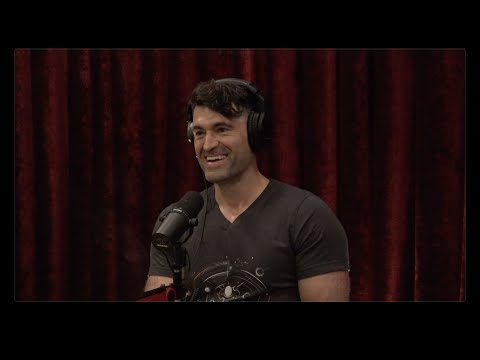
Joe Rogan Experience #2363 - David Kipping
Narrator, Joe Rogan (host), David Kipping (guest)
In this episode of The Joe Rogan Experience, featuring Narrator and Joe Rogan, Joe Rogan Experience #2363 - David Kipping explores are We Alone? Space, Aliens, AI, And Humanity’s Future Examined Joe Rogan and astrophysicist David Kipping dive into cutting‑edge cosmology, exoplanets, and the search for extraterrestrial life, using the James Webb Space Telescope as a recurring anchor. Kipping explains current puzzles in cosmology — early galaxies, supermassive black holes, and the Hubble tension — and why he trusts our overall cosmological model more than our messy astrophysics. They explore the diversity and formation of planetary systems, the likelihood and detectability of alien civilizations, and possible explanations for UFO/UAP reports. The conversation widens into AI, existential risks, the simulation hypothesis, and the idea that humanity may be the universe’s only or first technological civilization, making our choices unusually consequential.
Are We Alone? Space, Aliens, AI, And Humanity’s Future Examined
Joe Rogan and astrophysicist David Kipping dive into cutting‑edge cosmology, exoplanets, and the search for extraterrestrial life, using the James Webb Space Telescope as a recurring anchor. Kipping explains current puzzles in cosmology — early galaxies, supermassive black holes, and the Hubble tension — and why he trusts our overall cosmological model more than our messy astrophysics. They explore the diversity and formation of planetary systems, the likelihood and detectability of alien civilizations, and possible explanations for UFO/UAP reports. The conversation widens into AI, existential risks, the simulation hypothesis, and the idea that humanity may be the universe’s only or first technological civilization, making our choices unusually consequential.
Key Takeaways
James Webb is refining, not overturning, the Big Bang picture.
Early James Webb results found surprisingly mature galaxies and supermassive black holes soon after the Big Bang, but adjustments to galaxy-formation models in the denser, hotter early universe explain much of this. ...
Get the full analysis with uListen AI
The universe’s expansion rate disagreement (Hubble tension) is a real, unsolved problem.
Measurements from the cosmic microwave background and from local stars/supernovae yield incompatible expansion rates at about a five‑sigma level, meaning it’s extremely unlikely to be random. ...
Get the full analysis with uListen AI
Planetary systems are far stranger and more diverse than our Solar System.
Early exoplanet discoveries shattered pre‑existing models: hot Jupiters hug their stars, “mini‑Neptunes” (which we don’t have) are the most common planet type, and only about 10% of Sun‑like stars seem to host Jupiters. ...
Get the full analysis with uListen AI
Serious SETI now targets both radio signals and large‑scale energy use.
Kipping discusses looking for “technosignatures,” such as Dyson‑like megastructures or galaxies whose stars appear engineered or heavily energy‑harvested. ...
Get the full analysis with uListen AI
UAP stories are intriguing but not yet scientifically decisive.
Kipping sees military pilot reports like the “Tic Tac” as worth investigating, but stresses that without access to raw instruments, known false positive rates, and reproducible data, science can’t robustly ingest them. ...
Get the full analysis with uListen AI
We might plausibly be alone — or the first — in the observable universe.
Because we don’t know how hard abiogenesis is, it’s scientifically honest to admit that Earth could be a uniquely lucky case. ...
Get the full analysis with uListen AI
AI and human competition may be central to the universe’s long‑term story.
They discuss AGI as an almost inevitable outgrowth of competitive, innovation‑driven societies, potentially creating energy‑hungry, expansionist machine civilizations that transform planets into computation. ...
Get the full analysis with uListen AI
Notable Quotes
“Every time we’ve built a telescope that’s ten times better, we’ve been surprised.”
— David Kipping
“Aliens is almost too good of an explanation, because it can explain everything.”
— David Kipping
“We may be the way the universe is conscious, the way it knows itself.”
— Joe Rogan
“It pisses me off when astronomers say, ‘Of course there are aliens.’ That’s deciding the answer before doing the experiment.”
— David Kipping
“The cavalry isn’t coming. It’s on us. We have to solve this ourselves.”
— David Kipping
Questions Answered in This Episode
If AI-driven civilizations are so likely and energy-hungry, what concrete kinds of technosignatures should we prioritize searching for next, and with which instruments?
Joe Rogan and astrophysicist David Kipping dive into cutting‑edge cosmology, exoplanets, and the search for extraterrestrial life, using the James Webb Space Telescope as a recurring anchor. ...
Get the full analysis with uListen AI
How could we rigorously measure false-positive rates for UAP reports among pilots and sensors, and what would a gold-standard, scientifically controlled UAP study actually look like?
Get the full analysis with uListen AI
Given our current budget and political constraints, what is the single most impactful space mission or telescope humanity should build to advance the question of life beyond Earth?
Get the full analysis with uListen AI
How would our ethical frameworks and global priorities change if James Webb or its successors unambiguously detected biosignatures on a nearby exoplanet?
Get the full analysis with uListen AI
If we seriously entertain the possibility that humanity is alone or first, what practical responsibilities does that place on us in terms of avoiding self-destruction and stewarding life in the universe?
Get the full analysis with uListen AI
Transcript Preview
(drumbeats) Joe Rogan podcast, check it out.
The Joe Rogan Experience.
Train by day, Joe Rogan podcast by night, all day. (instrumental music plays) And we're up.
What's up, man? How are you?
It's good. Yeah.
Pleasure to meet you, sir.
Pleasure to be here. Thanks, Joe.
I really enjoy your content online. It's been really fascinating, so I've been doing a deep dive into a lot of your videos over the last few days and-
Yeah.
... enjoying the hell out of it, and, uh, particularly enjoying... Uh, I wanted to talk to you about so many different things, but one of the most pressing things, one of the reasons why I wanted to bring you in, 'cause you are very knowledgeable in all things space, is the James Webb Telescope, and, uh, all the different stuff that they've been finding, particularly about these galaxies that were formed very shortly after the... not shortly, you know-
Yeah.
... not within our, our lifetime shortly, but-
Right.
... cosmologically shortly after the Big Bang, that, uh, it seems like we have to figure out why these things are forming. Is the universe older? There's all this different kind of speculation. Maybe the Big Bang is not 13 point whatever billion years old, but maybe 22, 24. Like, what, what is your take on all this?
Yeah. The, the James Webb Space- Space Telescope is such an incredible instrument. The data has just blown us away. You know, when you build this thing and you look at it un- unfolding in space, you think there's so many ways it could go wrong, that we all were just like... You know, there's, I think there's 215 moving parts or something had to unfold. So, you know, just the fact that it-
In space. (laughs)
Yeah. (laughs) The fact it just all worked was just remarkable.
Right.
And then when we got those first images, they just kind of blew us away as well, 'cause they, we had sort of these engineering expectations of what it would do, but the data was just even better than that. So when it, you know... Of course, the first thing you want to do is point it to the most distant part of the universe and see what's out there-
(laughs)
... in those darkest patches. And so when it did that, yeah, it started finding a couple of things. It started finding quasars, which are kind of the, uh, the center of these very active gala- galaxies. These are super massive black holes that have loads of crap falling in, and they're spewing out all this energy. They're kind of feeding super massive black holes. And so we started detecting those way earlier than we thought the universe should be able to build them. Because to make a super massive black hole, I mean, these things are like a, a hundred million solar masses. Imagine that, a hundred million suns-
Install uListen to search the full transcript and get AI-powered insights
Get Full TranscriptGet more from every podcast
AI summaries, searchable transcripts, and fact-checking. Free forever.
Add to Chrome