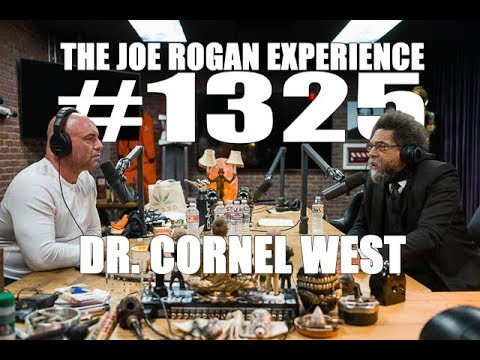
Joe Rogan Experience #1325 - Dr. Cornel West
Joe Rogan (host), Dr. Cornel West (guest), Narrator, Narrator
In this episode of The Joe Rogan Experience, featuring Joe Rogan and Dr. Cornel West, Joe Rogan Experience #1325 - Dr. Cornel West explores cornel West and Joe Rogan Explore Comedy, Race, Faith, and Freedom Joe Rogan and Dr. Cornel West have a wide-ranging conversation that starts with stand-up comedy and Richard Pryor, then moves into deep explorations of freedom, courage, democracy, race, and the role of art in human life.
Cornel West and Joe Rogan Explore Comedy, Race, Faith, and Freedom
Joe Rogan and Dr. Cornel West have a wide-ranging conversation that starts with stand-up comedy and Richard Pryor, then moves into deep explorations of freedom, courage, democracy, race, and the role of art in human life.
West frames comedians and musicians as spiritual vanguards who turn suffering into laughter and song, enabling people to confront grief, oppression, and hypocrisy while glimpsing moments of real freedom.
They discuss white supremacy, slavery, indigenous genocide, democratic socialism, U.S. empire, Trump, cancel culture, and global conflicts, always tying politics back to moral courage, spiritual integrity, and concrete human suffering.
Throughout, West emphasizes joy, love, and service—using examples from Coltrane, Ali, Malcolm X, Beyoncé, and countless others—to argue that greatness is using one’s gifts for something larger than ego, money, or spectacle.
Key Takeaways
Comedy can be a radical practice of freedom and truth-telling.
West sees figures like Pryor, Carlin, and Rogan as inheritors of a democratic comic tradition that exposes hypocrisy, centers ordinary people, and momentarily liberates audiences from fear and conformity.
Get the full analysis with uListen AI
Real freedom requires uncommon courage, which most people avoid.
West argues that humans tend to prefer conformity and deference to authority because genuine freedom demands “unbelievable, unstoppable courage” and a willingness to endure social, economic, and even physical costs.
Get the full analysis with uListen AI
Race in America is inseparable from capitalism, slavery, and indigenous dispossession.
He insists that modern ideas of whiteness and blackness were constructed to justify predatory economic systems—slavery, Jim Crow, and settler colonialism—and that focusing only on race can obscure underlying structures of exploitation.
Get the full analysis with uListen AI
Democratic socialism is part of a broader democratic tradition, not a foreign menace.
West traces American ties to democratic socialism—from the Pledge of Allegiance’s author to MLK and Helen Keller—and distinguishes it from authoritarian communism, framing it as ethical regulation to protect poor and working people from predatory capitalism.
Get the full analysis with uListen AI
U.S. militarism and drone warfare operate with little democratic accountability.
They highlight how most citizens are insulated from the human costs of war—dead soldiers, traumatized operators, and high civilian casualties abroad—making it easier to sustain massive military budgets and interventions without serious public debate.
Get the full analysis with uListen AI
Greatness is using success in service of others, not self-glorification.
Contrasting peacocking celebrity culture with figures like Ali, King, Malcolm X, and soulful musicians, West defines greatness as self-emptying love—“kenosis”—where artists and leaders give everything to uplift others rather than chase status.
Get the full analysis with uListen AI
Joy, not just pleasure, is essential for resilience and solidarity.
West distinguishes deep joy—rooted in love, relationships, struggle, and art—from fleeting pleasure, arguing that joy in music, comedy, and community sustains people facing ecological, economic, and political catastrophe.
Get the full analysis with uListen AI
Notable Quotes
“I’ve always viewed Richard Pryor as the freest Black man in the 20th century, along with Muhammad Ali.”
— Cornel West
“Most people would rather conform, they’re complacent, they’re complicitous, they’re cowardly. They’re well-adjusted to injustice.”
— Cornel West
“The American Dream makes you successful, but it doesn’t make you great. Greatness is using your success for something bigger than you.”
— Cornel West
“We all got gangster elements inside of us. Any critique of anybody ought to begin with yourself.”
— Cornel West
“If the kingdom of God is within you, then everywhere you go, you ought to leave a little heaven behind.”
— Cornel West (quoting his grandmother)
Questions Answered in This Episode
How does seeing comedians as democratic truth-tellers change the way we evaluate what’s “offensive” versus what’s necessary in comedy?
Joe Rogan and Dr. ...
Get the full analysis with uListen AI
In practical terms, what would a more democratic, accountable form of capitalism or democratic socialism look like in everyday American life?
West frames comedians and musicians as spiritual vanguards who turn suffering into laughter and song, enabling people to confront grief, oppression, and hypocrisy while glimpsing moments of real freedom.
Get the full analysis with uListen AI
How can individuals resist being “well-adjusted to injustice” when so many institutions reward conformity and image over integrity?
They discuss white supremacy, slavery, indigenous genocide, democratic socialism, U. ...
Get the full analysis with uListen AI
What role can music and art realistically play in confronting militarism, white supremacy, and ecological crisis, beyond offering temporary relief?
Throughout, West emphasizes joy, love, and service—using examples from Coltrane, Ali, Malcolm X, Beyoncé, and countless others—to argue that greatness is using one’s gifts for something larger than ego, money, or spectacle.
Get the full analysis with uListen AI
How might acknowledging Indigenous genocide alongside slavery alter current debates about patriotism, borders, and what it means to “love America”?
Get the full analysis with uListen AI
Transcript Preview
Boom, and we're live. How are you, sir?
Oh, brother, I'm so blessed to be here, man. I want to salute you, the work that you do, and the fact that you are one hell of an artist, man. I'm telling you.
Well, thank you very much, coming from-
I saw your stand up comedy night.
(laughs)
(laughs) Whoo, it's strange times. Whoo-wee, the swing from the political, the personal, from the (laughs) animals onto the, uh, the visionary. It's just a beautiful thing to behold, my brother.
Thank you. From you, that is an honor. I've been a huge fan of you for a long time.
Well, you're very kind-
So for you to say that-
...very kind.
...to me means, it means the world.
Oh, it's a deep thing, and I can see your love for Richard Pryor, man. I walk into your space and I'm just transformed by the geist, the spirit, the esprit of this place, man.
Yeah.
Hendricks here, Pryor here. Then when you tell me you worked with the great Richard Pryor.
I did.
I said, "Oh my God."
For five weeks, I followed him-
Wow.
...when I was a young comedian at The Comedy Store. I went on right after him every night he performed.
What was that like, though, brother?
It was strange just to be in the room with him because, uh, when I was a 14-year-old boy, my parents took me to see him live at the Sunset Strip, and I could not believe-
Wow.
...that anybody could be so funny just talking. That was my first experience with stand-up comedy. Other than that-
Wow.
...I'd seen, like, I'd seen people perform on The Tonight Show and things along those lines.
With Bob Hope and-
Yeah.
...so many others, they highly talented.
But it's just, it was like, "Ha, ha, ha." It was okay. You know what I mean?
Yeah, ha, ha.
But when you see Richard in concert in a movie theater, I couldn't believe-
Yeah.
...how funny it was. It didn't make sense. I had seen funny movies before, like, you know, uh, comedy movies that were, made you laugh, but nothing, nothing like that. I'm like, "This guy's-
(laughs)
...just talking."
It had to be before.
It changed my life.
That's, that's, that's something. But you can see the power of art-
Yeah.
...and it's connected to freedom 'cause I've always viewed Richard Pryor as the freest man in the 20th century, certainly the freest Black man, along with Muhammad Ali. He's the freest Black man in the 20th century. He is so self-determining. He had the choices that he makes, has to do with w- his own sense of self. He doesn't care what other people think. He doesn't have other k- looking for other people's approval or recognition. He's gonna be who he is, and he pays a major cost for that, of course, I mean-
Install uListen to search the full transcript and get AI-powered insights
Get Full TranscriptGet more from every podcast
AI summaries, searchable transcripts, and fact-checking. Free forever.
Add to Chrome