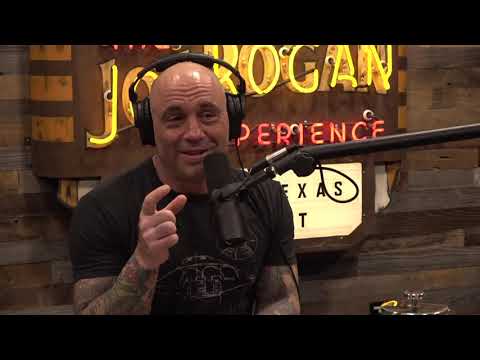
Joe Rogan Experience #1669 - Kyle Kulinski
Joe Rogan (host), Kyle Kulinski (guest), Kyle Kulinski (guest), Kyle Kulinski (guest), Joe Rogan (host), Narrator, Narrator, Kyle Kulinski (guest)
In this episode of The Joe Rogan Experience, featuring Joe Rogan and Kyle Kulinski, Joe Rogan Experience #1669 - Kyle Kulinski explores joe Rogan and Kyle Kulinski Deconstruct Comedy, Power, Media, and Reality Joe Rogan and Kyle Kulinski start with standup comedy craft—delivery, timing, and improvisation—then move into podcasting styles, introversion, and the mechanics of good conversation. They spend substantial time on media bias, U.S. foreign policy, Biden vs. Trump, and the structural corruption in politics and news, including YouTube algorithm manipulation and corporate media control. The conversation branches into science and belief (God, the Big Bang, psychedelics), human nature (competition, evolution, sex, cults), and social policy ideas like Medicare for All, UBI, and rebuilding American infrastructure. Throughout, they repeatedly question official narratives—from COVID origins to the JFK assassination—and contrast old top‑down institutions with the newer, freer podcast / independent media ecosystem.
Joe Rogan and Kyle Kulinski Deconstruct Comedy, Power, Media, and Reality
Joe Rogan and Kyle Kulinski start with standup comedy craft—delivery, timing, and improvisation—then move into podcasting styles, introversion, and the mechanics of good conversation. They spend substantial time on media bias, U.S. foreign policy, Biden vs. Trump, and the structural corruption in politics and news, including YouTube algorithm manipulation and corporate media control. The conversation branches into science and belief (God, the Big Bang, psychedelics), human nature (competition, evolution, sex, cults), and social policy ideas like Medicare for All, UBI, and rebuilding American infrastructure. Throughout, they repeatedly question official narratives—from COVID origins to the JFK assassination—and contrast old top‑down institutions with the newer, freer podcast / independent media ecosystem.
Key Takeaways
Delivery can make or break otherwise good material in communication.
Rogan and Kulinski note that many comics and commentators have solid written material but lose audiences through rushed, timid, or poorly timed delivery—confidence, pacing, and emotional tone are often more decisive than the words themselves.
Get the full analysis with uListen AI
Headphones and structure drastically improve multi‑person podcast conversations.
Rogan explains that wearing headphones lets hosts hear overlaps exactly as the audience does, training them not to talk over each other; recognizing and respecting conversational rhythm is a learnable “dance” that keeps group discussions coherent.
Get the full analysis with uListen AI
Media framing often prioritizes narrative and character over policy substance.
Kulinski cites data showing Trump coverage focused overwhelmingly on character and “leadership” while Biden coverage centered more on policy, arguing this selective framing fuels tribalism, distorts reality, and protects favored politicians.
Get the full analysis with uListen AI
U.S. foreign policy toward Russia under Trump vs. Biden defies simple media narratives.
They argue Trump was painted as a Putin puppet despite hawkish actions (arming Ukraine, bombing Syria, opposing Nord Stream) while Biden, framed as “tough,” actually greenlit Nord Stream 2—a move beneficial to Russia—illustrating how simplistic storylines obscure complex realities.
Get the full analysis with uListen AI
COVID debates became polluted by partisanship, delaying honest examination of evidence.
Both note that lab‑leak discussion was initially dismissed largely because Trump mentioned it, and mask guidance visibly flipped; they argue that tying empirical questions to partisan identity made it harder to update views as new evidence emerged.
Get the full analysis with uListen AI
Psychedelics can be powerful tools but demand respect for set, setting, and ego.
Rogan recommends microdosing first and emphasizes that attempts to control high‑dose psychedelic experiences often cause bad trips; entering with clear intention, safe surroundings, and willingness to relinquish control increases the likelihood of insight instead of panic.
Get the full analysis with uListen AI
Economic security (healthcare, education, basic income) can coexist with competition.
Kulinski argues that a social‑democratic model—guaranteed healthcare, free or affordable college/trade schools, and possibly UBI—removes desperation while leaving room for ambition and market competition, channeling human drive without condemning people to destitution.
Get the full analysis with uListen AI
Independent media can thrive once freed from corporate gatekeepers—despite algorithmic throttling.
They recount how shows like Rising and later Breaking Points and Crystal Kyle & Friends grew rapidly once outside corporate constraints, but also how YouTube algorithm changes slashed independent channel growth, showing both the promise and vulnerability of creator‑driven media.
Get the full analysis with uListen AI
Notable Quotes
“It’s almost like a mass hypnosis. You’re getting those people to think the way you think, bringing them into your head.”
— Joe Rogan (on standup comedy)
“I want to get to the point where if somebody doesn’t make it, I can blame them—but only after the basics are guaranteed.”
— Kyle Kulinski (on social democracy and safety nets)
“Joe Biden can barely complete a sentence... Nobody is fucking afraid of him. Stop feeding liberal viewers this warped pablum.”
— Kyle Kulinski, quoting and endorsing Glenn Greenwald’s critique of media spin
“Whether or not you’re actually encountering wise entities from another dimension, or you’re just out of your fucking mind on mushrooms, the same experience occurs.”
— Joe Rogan (on psychedelics and ‘reality’)
“We know we overthrow governments all over the world. What makes anybody think we’d just draw the line here at home?”
— Kyle Kulinski (on the plausibility of CIA involvement in JFK’s assassination)
Questions Answered in This Episode
How much responsibility do major media outlets bear for deepening political tribalism through their framing choices rather than their factual reporting?
Joe Rogan and Kyle Kulinski start with standup comedy craft—delivery, timing, and improvisation—then move into podcasting styles, introversion, and the mechanics of good conversation. ...
Get the full analysis with uListen AI
If the lab‑leak theory about COVID‑19 became politically toxic largely because Trump mentioned it, what does that reveal about our collective ability to process scientific uncertainty?
Get the full analysis with uListen AI
Can a capitalist society realistically implement robust social‑democratic policies like Medicare for All and UBI without triggering severe political or economic backlash?
Get the full analysis with uListen AI
As AI and automation advance, what mechanisms—if any—could prevent a new Gilded Age where a tiny elite owns the robots and everyone else is economically obsolete?
Get the full analysis with uListen AI
How should we evaluate intense subjective experiences (like high‑dose psychedelics) when they feel more ‘real’ than everyday life but may be entirely brain‑generated?
Get the full analysis with uListen AI
Transcript Preview
(drumming) Joe Rogan podcast, check it out.
The Joe Rogan Experience.
Train by day, Joe Rogan podcast by night. All day. (rock music) Oh, hello, Kyle.
Hello, Joe Rogan. Pleasure to be here.
Always good to see you, my friend.
Oh, I'm really happy to be here. I had a great time last night watching your standup.
Oh, that was fun.
Yeah.
That place is fun, right? Vulcan?
Yeah. Place is a lot of fun. Um, I've seen your standup three times now, and I really think that that was the best set I've seen of yours yet.
Oh, thank you. Thanks, man.
Yeah. We were talking about it afterwards, and we were like, uh, uh, trying to put our finger on why I think it was the best, and I'm interested to hear what your, your thoughts on this are. But I think... You said at the beginning of the show, "I am fucking high as balls right now."
That was definitely true.
And it made me think that weed probably put you in the moment a lot more.
Yeah.
And then makes it so that... Like you said, you were exercising some things and going down some paths you wouldn't normally go down.
Yeah.
And I think that was one of the things that made it great because I know that whenever I'm less coached myself when I'm about to do a segment and talking about politics, it always comes off better than when I'm very rigidly going through the motions.
Yeah.
You know what I mean? So there's something about the off-the-cuff thing, which it felt like you were very off-the-cuff, that really, the room was locked into you and, and you were doing a great job.
Thanks. Thanks. Yeah, I think... Uh, I'm working out stuff so like I ha- uh, I have bits that are already formulated, but some of them I'm not really happy with, so I was trying to figure out different ways to do them, and that's what I was doing last night, was just fucking around and trying to figure out new ways to talk about things.
Yeah. It was, you know... Comedy is an interesting art. It really is, because the laughter is so involuntary. It's like how it's, it's... You gotta be a magician to, like, coax it out of people at the right time.
Yeah.
It seems like it's nearly impossible.
It's kind of a, a s- sort of like a mass hypnosis.
Yeah.
That's what it's kinda like. It's like you're getting those people to think the way you think, like bringing them into your head.
Yeah. The delivery... One of the things I noticed yesterday is that... I'm curious, what percentage of comedy do you think is just delivery? Because there were a couple people who had good material, like if you write the jokes down, the jokes are good, but then with the delivery, there was something off about it-
Install uListen to search the full transcript and get AI-powered insights
Get Full TranscriptGet more from every podcast
AI summaries, searchable transcripts, and fact-checking. Free forever.
Add to Chrome