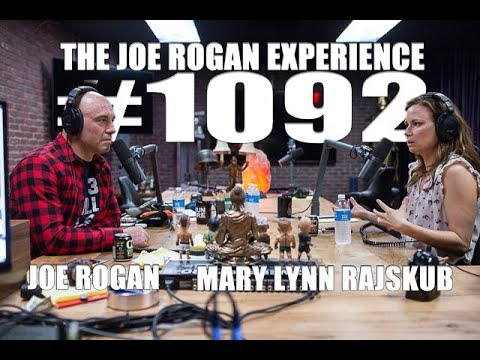
Joe Rogan Experience #1092 - Mary Lynn Rajskub
Joe Rogan (host), Mary Lynn Rajskub (guest), Narrator, Narrator
In this episode of The Joe Rogan Experience, featuring Joe Rogan and Mary Lynn Rajskub, Joe Rogan Experience #1092 - Mary Lynn Rajskub explores mary Lynn Rajskub on comedy, insecurity, and grinding toward growth Joe Rogan and Mary Lynn Rajskub trace her unconventional path from art-school performance pieces and slam poetry to being a working stand-up comic and TV actor. They dig into how stage time, bombing, and the Comedy Store community helped her move from extreme social awkwardness and “alt” irony toward structure, honesty, and real confidence onstage.
Mary Lynn Rajskub on comedy, insecurity, and grinding toward growth
Joe Rogan and Mary Lynn Rajskub trace her unconventional path from art-school performance pieces and slam poetry to being a working stand-up comic and TV actor. They dig into how stage time, bombing, and the Comedy Store community helped her move from extreme social awkwardness and “alt” irony toward structure, honesty, and real confidence onstage.
Rogan contrasts club politics past and present, describing his Carlos Mencia conflict, leaving the Comedy Store for seven years, and why he now sees stand-up and physical discipline as the core of his personal growth. Rajskub shares road stories—from strange fans to grim hotels—and how doing the “real” road changed her self-image into that of a legitimate comic.
They repeatedly circle back to broader issues: mental health, discipline, comfort versus adversity, and why you’re never a “finished product” as a person or performer. The conversation also touches on gender dynamics in comedy, fan safety, activism guilt, and the practical realities of making and selling a stand-up special.
Key Takeaways
You can back into a career without a grand plan—and still professionalize.
Rajskub never came to LA with headshots or a clear ‘comedian’ identity; she followed an urge to do weird live shows and only later learned joke structure, road work, and how to own the label of stand-up comic.
Get the full analysis with uListen AI
Stage communities shape you; a supportive scene accelerates growth.
Both describe the 1990s Comedy Store as toxic and conflict-heavy, in contrast to today’s collaborative, honest, ‘we all bomb’ culture—which makes it easier to take risks, fail, and improve.
Get the full analysis with uListen AI
Alt-irony eventually hits a ceiling; sincerity and structure deepen the act.
Rajskub’s early work leaned on absurd commitment and awkwardness, but real progress came when she embraced clearer premises, personal truths, and let go of always hiding behind distance or sarcasm.
Get the full analysis with uListen AI
Road work is where you truly learn to be “the show.”
Six shows a weekend, mixed crowds, and fans who know you from TV force you to adjust—acknowledging why they came (e. ...
Get the full analysis with uListen AI
Discipline is built incrementally; small, consistent wins compound.
Rogan likens personal growth to going from running three-quarters of a mile to 100-mile ultramarathons: you decide to do hard things daily (writing, sets, yoga, workouts) and let those reps rewrite your identity.
Get the full analysis with uListen AI
You are never “done” as a person or as a comic.
Both emphasize that confidence, kindness, and material are all moving targets; time off, life changes, health, and mindset can radically alter how you feel onstage and who you are offstage.
Get the full analysis with uListen AI
Comfort is seductive but often undermines the life you say you want.
Rajskub recognizes her instinct to retreat to bed, skip marches, or avoid late spots, while Rogan argues that leaning into uncomfortable things—late shows, new material, physical strain—is what keeps you balanced and evolving.
Get the full analysis with uListen AI
Notable Quotes
“I came in the back alley for everything—comedy, acting. If I’d shown up with a stack of headshots, it never would’ve happened.”
— Mary Lynn Rajskub
“Comedy’s taught me one really important thing: as a person, you’re not done. There’s no finished product.”
— Joe Rogan
“I had to figure out why people were laughing. I knew I liked it, but I honestly had no idea where it was gonna come from.”
— Mary Lynn Rajskub
“I really enjoy struggling. My brain has to be constantly overrun with things to think about and do, or I’d go crazy.”
— Joe Rogan
“It’s like waking up from a bad dream. All day I was telling myself, ‘You can’t do this,’ and then I got onstage and it was a delight.”
— Mary Lynn Rajskub
Questions Answered in This Episode
How much of a comic’s voice should be carefully written versus discovered in real time onstage?
Joe Rogan and Mary Lynn Rajskub trace her unconventional path from art-school performance pieces and slam poetry to being a working stand-up comic and TV actor. ...
Get the full analysis with uListen AI
In what ways does a supportive club culture change the kind of risks comedians are willing to take with their material?
Rogan contrasts club politics past and present, describing his Carlos Mencia conflict, leaving the Comedy Store for seven years, and why he now sees stand-up and physical discipline as the core of his personal growth. ...
Get the full analysis with uListen AI
How can performers balance the need for comfort and stability with the growth that only comes from discomfort and risk?
They repeatedly circle back to broader issues: mental health, discipline, comfort versus adversity, and why you’re never a “finished product” as a person or performer. ...
Get the full analysis with uListen AI
What responsibility do clubs and venues have for protecting female comics from obsessive or inappropriate fans?
Get the full analysis with uListen AI
If someone feels stuck in self-sabotaging thoughts like Mary Lynn described, what practical first steps could they take to build the kind of discipline Rogan talks about?
Get the full analysis with uListen AI
Transcript Preview
... thing, anything.
Oh, shit. (laughs)
Life. Four, three, two, one. (snaps fingers) Live. And we're here with the Arnold Schwarzenegger of comics-
(laughs)
... Mary Lynn Rajskub. When... How many people have ever, on one shot, spelled your name right or pronounced it right?
Uh, y- n- never.
Never. Never, right? Like, if you're at the DMV-
It's kind of exciting, now that you mention it, 'cause they're going to introduce me and it's just, err... It just gives, like, an instant obstacle.
Like, when you were coming up as a comic, that had to be a big issue. Like, uh, for, for the MC to bring you up, or the, the, the DJ when they bring you up, if you were the MC.
The DJ (laughs) or the MC. I don't know. I never really looked at it that way.
Well, somebody had to introduce you, right?
Yeah.
Like, uh, opening acts.
Someone was introducing me. I think I was in such a, a, a, a bubble, uh, I didn't really... And I wasn't on the road hardcore, and I wasn't... I don't know. I wasn't identifying with, uh, me as a performer so much.
What does that mean?
That means I was doing performance art and people were laughing. I didn't know why they were laughing.
(laughs)
Right? I moved to LA and I was like, "Yeah, let's do shows." Like, I didn't know... I didn't think about it as, like, you're introducing me. I'm a per- I'm a performer. I would say only in the past couple years have I done the road proper. But I came in the back alley for everything, for comedy, for, for acting. Like, if I had come to LA with a stack of headshots, like, "Hey, I'm ready for acting," it would have never happened. I just came with a group of people, like, "I wanna do some live shows," and like, no business being in LA.
(laughs)
No business. Just doing weird shows, 'cause that, uh, that's what I was compelled to do.
Right.
Like, I could not have done it had I said, "All right. You're gonna do acting and performing," especially not comedy. Like, I didn't identify with that at all. (laughs) I had to figure out why people were laughing.
That's fascinating. So, when you first got into show business, what was the goal? It's a weird word, show business.
Isn't she?
Show business.
Isn't she a special lady? I'm, I'm audition-ready today, by the way.
(laughs)
If you notice, I have a good brow and a good, uh, sh- eye shadow line.
(laughs)
(laughs) I'm, I'm such a woman. I'm really more of a woman now than I've ever been. Uh-
What's that about?
What's that about?
Yeah.
Just growing up, letting it go.
Install uListen to search the full transcript and get AI-powered insights
Get Full TranscriptGet more from every podcast
AI summaries, searchable transcripts, and fact-checking. Free forever.
Add to Chrome