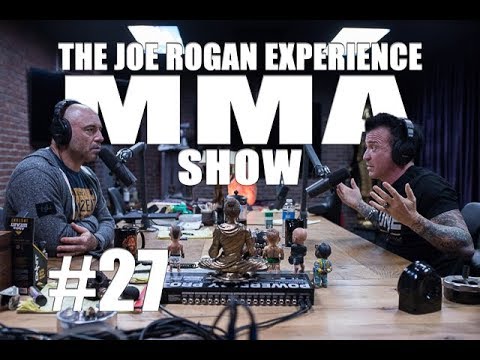
JRE MMA Show #27 with Robin Black
Joe Rogan (host), Robin Black (guest), Narrator
In this episode of The Joe Rogan Experience, featuring Joe Rogan and Robin Black, JRE MMA Show #27 with Robin Black explores martial Arts As Life: Art, Strategy, Ego, and Evolution in MMA Joe Rogan and analyst Robin Black dive deeply into how different cultures and promotions frame martial arts—as violent spectacle versus values-based art and self‑development—using ONE Championship, Russian promotions, and the UFC as contrasts.
Martial Arts As Life: Art, Strategy, Ego, and Evolution in MMA
Joe Rogan and analyst Robin Black dive deeply into how different cultures and promotions frame martial arts—as violent spectacle versus values-based art and self‑development—using ONE Championship, Russian promotions, and the UFC as contrasts.
They explore the psychology and genetics of elite fighters, the role of effort versus talent, and how style, mindset, and coaching produce outliers like GSP, Ngannou, Wonderboy, TJ Dillashaw, and Nick Diaz.
A large portion of the conversation breaks down specific fights and fighters—CM Punk, Colby Covington, Diego Sanchez, Daley vs. Fitch, Diaz vs. Daley, Wonderboy vs. Till, Khabib vs. Al, and more—using them as case studies in strategy, problem‑solving, and career management.
They also critique the business and media side of MMA: titles and interim belts as marketing tools, WWE-style trash talk, shallow sports commentary, and how money pressures distort matchmaking and promotion.
Key Takeaways
Reframe fighting as high-level problem‑solving, not just violence.
Rogan and Black argue that elite fights are “high‑level problem solving with dire physical consequences,” which makes them closer to art and advanced chess than to random brawling; this framing helps both fans and fighters value skill, strategy, and character over bloodlust.
Get the full analysis with uListen AI
Cultural context radically shapes how martial arts are practiced and sold.
Asia’s ONE Championship presents martial arts as values‑based inspiration, Russia emphasizes strength and masculinity, while North America leans into ‘fight’ and spectacle—understanding these lenses explains why promotions and audiences behave so differently.
Get the full analysis with uListen AI
Talent matters, but effort ‘counts twice’ in reaching your ceiling.
They emphasize that genetics and early neural development (e. ...
Get the full analysis with uListen AI
Technical mastery depends on relaxation, timing, and neurology—not just tension.
Using examples like Sugar Ray Robinson, Matt Brown’s elbow, and Rogan’s own kicks, Black describes “double‑pulse neurology”: brief pulses of tension, then relaxation, then impact—creating whip‑like power that is more effective than the rigid, muscled‑up striking many amateurs try.
Get the full analysis with uListen AI
Chasing unrealistic goals without context is dangerous self‑delusion.
They use CM Punk vs. ...
Get the full analysis with uListen AI
MMA’s business incentives distort meritocracy through belts, rankings, and hype.
Interim titles, stripped belts, and controversial title shots (e. ...
Get the full analysis with uListen AI
Life and career mastery require flexibility, not clinging to old dreams.
Black talks about pivoting from chasing a UFC job to building his own analysis brand and one‑man show, and Rogan contrasts that with people trapped in jobs or debt; both frame changing your path in response to who you are now—not who you planned to be—as a healthier, braver move.
Get the full analysis with uListen AI
Notable Quotes
“My perception of what fighting is, is high‑level problem solving with dire physical consequences.”
— Joe Rogan
“Martial arts is an art form... it’s this inspiring thing. A fight is a beautiful thing.”
— Robin Black
“Talent multiplied by effort equals skill. Then skill multiplied by effort equals accomplishment. Effort counts twice.”
— Joe Rogan
“If you don’t know what you don’t know, it’s a really fucking weird place to be.”
— Robin Black
“If you think anything is ‘the thing,’ you’re totally wrong.”
— Robin Black
Questions Answered in This Episode
How would MMA culture change if major promotions worldwide adopted ONE Championship’s values‑based, ‘martial artist first’ framing instead of emphasizing trash talk and spectacle?
Joe Rogan and analyst Robin Black dive deeply into how different cultures and promotions frame martial arts—as violent spectacle versus values-based art and self‑development—using ONE Championship, Russian promotions, and the UFC as contrasts.
Get the full analysis with uListen AI
In your own field, what would ‘double‑pulse neurology’—alternating focused effort and deliberate relaxation—look like, and how might it improve your performance?
They explore the psychology and genetics of elite fighters, the role of effort versus talent, and how style, mindset, and coaching produce outliers like GSP, Ngannou, Wonderboy, TJ Dillashaw, and Nick Diaz.
Get the full analysis with uListen AI
Where in life are you acting like CM Punk versus Mickey Gall—overestimating positive thinking while underestimating the depth of real expertise and preparation needed?
A large portion of the conversation breaks down specific fights and fighters—CM Punk, Colby Covington, Diego Sanchez, Daley vs. ...
Get the full analysis with uListen AI
Given how much belts and rankings are influenced by business needs, what would a truly merit‑based MMA championship system look like, and is it even compatible with modern pay‑per‑view economics?
They also critique the business and media side of MMA: titles and interim belts as marketing tools, WWE-style trash talk, shallow sports commentary, and how money pressures distort matchmaking and promotion.
Get the full analysis with uListen AI
How do you personally balance respect for innate talent and genetics with a commitment to effort and long‑term self‑improvement so you don’t either delude yourself or prematurely quit?
Get the full analysis with uListen AI
Transcript Preview
Four, three, two, one. (table slams) Robben Black, ladies and gentlemen.
(laughs)
What's up, buddy?
Hey, man. It's great to see you.
Are you fresh back from Singapore?
I am. Yeah, I was in Singapore like 48 hours ago.
Did they make that special shiny silver one for you?
(laughs)
Because that looks like that was designed for you.
No. It's ... I mean, yeah-
(laughs)
... it does kinda look like it's designed for me, which is why I wanted it, you know?
Yeah.
Yeah.
It's a Rock & Roll ONE Championship-
Yeah. (laughs)
... ONE FC Championship. So what's it like over there, man?
Man.
So what ... Let me explain to everybody. ONE FC is like the Asian version of the UFC. It's a gigantic-
Yeah.
... organization that has been going on for how long now?
Uh, 2011.
So solid seven years.
Yeah, yeah.
And really high-level fights over there.
Amazing, amazing fights. Singapore itself is wild. So I went over there to chat with them. So Chatri, uh, Sityodtong runs it. And he and I had been chatting, and, and I love kinda w- how they see martial arts. So they don't call it even FC anymore. It's just ONE Championship.
Oh.
They don't even use the word fighting really. It's martial arts. And the way I see it and the way I study martial arts and share it is an art form-
Mm-hmm.
... like painting or yoga or, you know, things, things of that nature. Less spectacle. That's always how I've seen it and always how I love it, and that's how they see it, and that's how they present it. And that's ... It's presented from this sort of inspirational, own your history kinda way in Asia.
Mm-hmm.
And that was what attracted me to them right away. I mean, it's, it's c- definitely an art form. It's values-based, like they're kinda seeking to inspire people through these athletes and artists. It's pretty fucking cool.
Really?
Yeah.
So what, what's motivating them to take this, uh, sort of radical approach?
So the ... It's wild that you say that because to me this is the approach.
Mm-hmm.
So I think what we do or the way that we present it in North America is radical. I think martial arts is an art form. Martial arts is this inspiring thing. I mean, you take, say, for example, Aung Lwang San. He is their 185 pound and 205 pound champion. He's from Myanmar. They have never had a world champion in any sport ever in their history. I don't think they've had a gold medalist fr- in the Olympics. They've never had that. This guy's a two division champion. That ... Well, and I, when I talked to Chatri about it, and he was talking sort of about why he sees it this way and why he's proud to, to present it this way, he's like, he knows without question that there are kids ... And he won his 205 pound title in Myanmar, in a stadium in Myanmar. And he said he knows without question there's a kid in there gonna become a lawyer one day because of that. And they can feel it, and it's real. It's not like, it's not like a marketing strategy.
Install uListen to search the full transcript and get AI-powered insights
Get Full TranscriptGet more from every podcast
AI summaries, searchable transcripts, and fact-checking. Free forever.
Add to Chrome