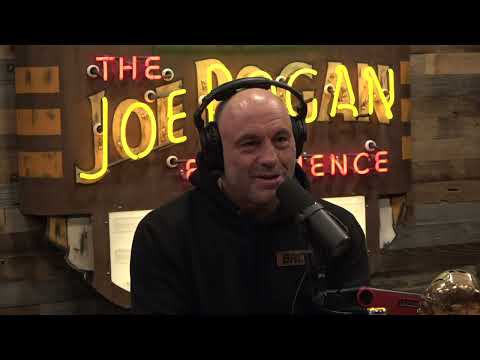
Joe Rogan Experience #1919 - Bret Weinstein
Narrator, Joe Rogan (host), Bret Weinstein (guest), Bret Weinstein (guest), Narrator
In this episode of The Joe Rogan Experience, featuring Narrator and Joe Rogan, Joe Rogan Experience #1919 - Bret Weinstein explores bret Weinstein and Joe Rogan dissect COVID, censorship, and AI’s dangers Joe Rogan and Bret Weinstein revisit the Evergreen State College protests as a precursor to current ideological capture in institutions, then dive deeply into pandemic policy, COVID vaccines, and systemic censorship. Weinstein argues that mRNA shots were rushed, misrepresented as safe vaccines, and may be driving viral variants and immune dysfunction, while both discuss how dissenting experts were silenced and later partially vindicated. They explore lab-leak evidence, gain-of-function research, and the incentives—from money to reputational risk—that shaped public health decisions and media narratives. The conversation closes with worries about AI like ChatGPT, human tribalism, and how to preserve honest discourse and social cohesion in an increasingly manipulated information environment.
Bret Weinstein and Joe Rogan dissect COVID, censorship, and AI’s dangers
Joe Rogan and Bret Weinstein revisit the Evergreen State College protests as a precursor to current ideological capture in institutions, then dive deeply into pandemic policy, COVID vaccines, and systemic censorship. Weinstein argues that mRNA shots were rushed, misrepresented as safe vaccines, and may be driving viral variants and immune dysfunction, while both discuss how dissenting experts were silenced and later partially vindicated. They explore lab-leak evidence, gain-of-function research, and the incentives—from money to reputational risk—that shaped public health decisions and media narratives. The conversation closes with worries about AI like ChatGPT, human tribalism, and how to preserve honest discourse and social cohesion in an increasingly manipulated information environment.
Key Takeaways
Institutional capture often starts with seemingly benign policies.
Weinstein describes Evergreen’s DEI-driven hiring and equity schemes as unworkable but framed as moral imperatives; he sees similar patterns now embedded in universities, professional boards, and media, where ideological goals trump functional excellence.
Get the full analysis with uListen AI
The COVID response tightly coupled public health with narrative control.
From suppression of the Great Barrington Declaration to YouTube strikes on discussions with experts like Geert Vanden Bossche, dissenting scientific views were labeled misinformation until mainstream outlets later adopted parts of those same critiques without acknowledging early critics.
Get the full analysis with uListen AI
mRNA COVID vaccines may carry underappreciated long-term risks.
Weinstein argues they are misnamed ‘vaccines’ because they don’t reliably prevent infection or transmission, and cites evidence of myocarditis, shifts toward IgG4 antibodies, and increased all-cause mortality with mRNA shots compared to DNA-vector vaccines, stressing that long-term outcomes remain unknown.
Get the full analysis with uListen AI
Lab-leak and gain-of-function concerns are scientifically plausible and politically explosive.
He outlines circumstantial evidence—Wuhan’s lab work on related coronaviruses, unusual features like the furin cleavage site, lack of an intermediate animal host—and notes that acknowledging a lab origin would implicate funders and regulators, incentivizing continued pushback against that narrative.
Get the full analysis with uListen AI
Economic and power incentives likely shaped pandemic timing and messaging.
Weinstein speculates that early awareness of COVID may have allowed powerful actors to financially ‘front-run’ the crisis, and that opaque black-budget-like dynamics plus control over information flows create ongoing opportunities for wealth transfer and narrative management.
Get the full analysis with uListen AI
Forgiveness is crucial to reducing post-pandemic polarization.
Rogan emphasizes that many people who demonized the unvaccinated were misled rather than malicious; he urges those who were right early not to gloat, but to be charitable so society can reunite instead of hardening into permanent hostile factions.
Get the full analysis with uListen AI
Advanced AI will intensify epistemic confusion and may approach consciousness.
Discussing ChatGPT, Weinstein worries that highly fluent language models will let non-experts fake authority and that, since human consciousness emerged from language-learning in children, it’s not clear at what point similar systems might develop subjective experience we don’t recognize or can’t control.
Get the full analysis with uListen AI
Notable Quotes
““We are running the largest gain‑of‑function experiment in the history of the world, and we are doing that by pushing this virus around with cartoonishly narrow vaccines.””
— Bret Weinstein
““If they had said, ‘We’re going to have everybody take gene therapy,’ everybody would have said, ‘What? Gene therapy? Is that safe?’ They smuggled in a radically new technology under the word ‘vaccine.’””
— Bret Weinstein
““The only way we get out of this is all the people that were demonized… just continue to be kind and generous and charitable. I get why you formed those opinions—I could have been you.””
— Joe Rogan
““Zero is a special number. Narrative control doesn’t work if there’s even one major institution still dedicated to truth‑seeking.””
— Bret Weinstein
““This is maybe last call for figuring out how human beings can move into the next phase of being human… If we let nature do it for us, it’s not going to work out well.””
— Bret Weinstein
Questions Answered in This Episode
How should societies evaluate and regulate radically new biomedical technologies like mRNA platforms before deploying them at scale?
Joe Rogan and Bret Weinstein revisit the Evergreen State College protests as a precursor to current ideological capture in institutions, then dive deeply into pandemic policy, COVID vaccines, and systemic censorship. ...
Get the full analysis with uListen AI
What specific institutional reforms would reduce ideological capture in universities, professional boards, and media without creating new forms of centralized control?
Get the full analysis with uListen AI
If strong evidence for a lab-origin of COVID-19 were officially acknowledged, what mechanisms of accountability—legal, political, scientific—should follow?
Get the full analysis with uListen AI
How can we design social media and AI systems that enhance sense-making and cross-tribal dialogue rather than exploiting and deepening our tribal instincts?
Get the full analysis with uListen AI
At what point, and by what criteria, would we accept that an AI system has developed consciousness or moral standing—and how should that change how we use or constrain it?
Get the full analysis with uListen AI
Transcript Preview
(drumming music plays) Joe Rogan podcast, check it out. The Joe Rogan Experience. Train by day, Joe Rogan podcast by night. All day. (instrumental music plays)
Do you get weirded out when you do podcasts now?
No.
Is it, was, was there a time in the beginning when you did? Where you were like, "Okay, here we go."
Yeah, I suppose at the beginning it was, uh, n- nerve-wracking, but I also think I have a really weird relationship with, um, fear, I guess. And so, I think ... I have reason to think that in places where I'm partici- particularly anxious, some part of me feels it, but my conscious mind is not allowed in on it, so I can do what I have to do.
Mm. Did this come after Evergreen or before?
Uh, definitely before, although right as Evergreen erupted into the, the public consciousness, there's this one incident, actually the incident that, that brought me to public attention, where I was standing in the hallway and I was being confronted by these 50 students who I had literally never met. And they were accusing me of racism and demanding that I resign or be fired.
We should explain to people that don't know, 'cause we, we're starting off this way, the backstory of the Evergreen, um, th- um, so it started off where there was a, uh, an appreciation day for people of color, where they did not have to show up for work, right?
Yeah, that's true. Uh-
That's how it started.
... uh, that's not exactly the story, but th- there is this event called Day of Absence, which was a longstanding event at the college, where, uh, basically at first Black people and then later on, more generally, people of color, did not come to work and they held, uh, discussions separately. And then in 2017, they changed this to a request that white people not come to campus, and I responded to this and I said that was unacceptable. This was a public college. I wasn't going to be told I couldn't, uh, teach my class. And that did cause a bit of a firestorm, but that firestorm was embedded in a much longer battle that had, um, begun to simmer when the new president of the college, George Bridges, showed up and empaneled a committee effectively to suggest mechanisms for restructuring the college. And the mechanisms were insane. They were, they were a recipe for destroying the place, and it was my obligation as a faculty member to point out that it would be a terrible idea for us to adopt these policies. And so the Day of Absence controversy became the explanation that the public got for why things erupted when they did, but it really, it was one example among many of things that were afoot at the college that-
What were the other policies that he was trying to implement?
Install uListen to search the full transcript and get AI-powered insights
Get Full TranscriptGet more from every podcast
AI summaries, searchable transcripts, and fact-checking. Free forever.
Add to Chrome