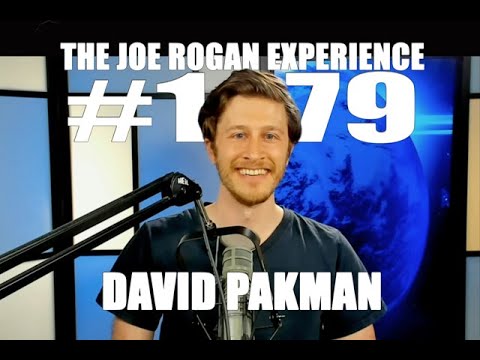
Joe Rogan Experience #1479 - David Pakman
Joe Rogan (host), David Pakman (guest), Narrator, Narrator
In this episode of The Joe Rogan Experience, featuring Joe Rogan and David Pakman, Joe Rogan Experience #1479 - David Pakman explores joe Rogan and David Pakman Dissect Politics, Platforms, and the Pandemic Joe Rogan and David Pakman spend three hours unpacking modern U.S. politics, media, and the COVID-19 crisis, repeatedly contrasting Donald Trump, Joe Biden, and Bernie Sanders. They examine how audiences react to imperfect public figures, the cult-of-personality problem in politics, and structural flaws in the U.S. system such as presidential power and lifetime Supreme Court appointments.
Joe Rogan and David Pakman Dissect Politics, Platforms, and the Pandemic
Joe Rogan and David Pakman spend three hours unpacking modern U.S. politics, media, and the COVID-19 crisis, repeatedly contrasting Donald Trump, Joe Biden, and Bernie Sanders. They examine how audiences react to imperfect public figures, the cult-of-personality problem in politics, and structural flaws in the U.S. system such as presidential power and lifetime Supreme Court appointments.
A major thread is the role and responsibility of social media platforms like Twitter, YouTube, and Facebook, including censorship, de-platforming, and whether these services have become public utilities that should be regulated or even socialized. They also explore COVID mismanagement, from federal failures and testing delays to how public health messaging, media incentives, and personal health behaviors intersect.
The conversation ranges from abortion, climate policy, and healthcare to Elon Musk, electric cars, conspiracy culture, and Bill Gates, returning often to how profit incentives and information ecosystems distort public understanding and policy choices.
Throughout, Rogan emphasizes personal health, skepticism of institutions, and systemic reform, while Pakman stresses concrete political outcomes (especially courts and regulation), the dangers of normalization of Trump, and the need for coherent, enforceable rules for powerful tech platforms.
Key Takeaways
Public figures must accept that audiences evolve—and so do their own views.
Rogan and Pakman note that old content can age poorly as events unfold, and that demanding perfect ideological purity from hosts or politicians is unrealistic; creators need room to change their minds without being ‘canceled’ over single words or clips.
Get the full analysis with uListen AI
Deifying politicians is dangerous; they are people, not saviors.
They argue that movements built around personalities—whether Trump, Bernie, or others—make rational debate impossible, since followers treat leaders as infallible symbols instead of fallible decision-makers with tradeoffs and compromises.
Get the full analysis with uListen AI
Structural reforms matter more than just swapping leaders.
The pair question whether one person should wield so much power in a country of 330 million, criticize lifetime Supreme Court appointments, and suggest alternatives like councils or term limits, highlighting that leadership design is as important as who holds office.
Get the full analysis with uListen AI
Policy outcomes—especially courts—should drive voting decisions.
Pakman repeatedly returns to the Supreme Court: Trump’s next nominee would likely be anti-Roe and anti-climate regulation, while Biden’s would not, arguing that for pro-choice or climate-concerned voters this single issue can justify voting Biden even if they dislike him.
Get the full analysis with uListen AI
COVID-19 exposed both state failures and personal vulnerabilities.
They criticize the U. ...
Get the full analysis with uListen AI
Social media platforms now function like critical infrastructure.
Rogan contends Twitter and YouTube are so central to expression that de-platforming is effectively a new form of censorship, while Pakman asks how you’d legally define and regulate such platforms without creating partisan control or unworkable rules.
Get the full analysis with uListen AI
Profit incentives distort healthcare, environment, and even vaccines.
From fracking cleanups to U. ...
Get the full analysis with uListen AI
Notable Quotes
“We shouldn’t deify any of these people. These are just people.”
— David Pakman
“One person is gonna be responsible for all these insanely important decisions? That seems crazy.”
— Joe Rogan
“If I was pro-choice like you are, how do I justify voting for the guy who's gonna replace Ruth Bader Ginsburg with someone who would want Roe v. Wade overturned?”
— David Pakman
“There’s no better way to do [cultural evolution] than open communication. There’s no better open communication than Twitter and YouTube.”
— Joe Rogan
“Prevention is so much cheaper than emergencies… It would cost pennies on the dollar to what is being spent right now.”
— David Pakman
Questions Answered in This Episode
How should societies redesign presidential and judicial power to match the scale and complexity of modern life?
Joe Rogan and David Pakman spend three hours unpacking modern U. ...
Get the full analysis with uListen AI
Where should the legal line be drawn between a private platform’s right to curate content and the public’s right to participate in essential communication infrastructure?
A major thread is the role and responsibility of social media platforms like Twitter, YouTube, and Facebook, including censorship, de-platforming, and whether these services have become public utilities that should be regulated or even socialized. ...
Get the full analysis with uListen AI
If Supreme Court appointments shape society for decades, should they be lifetime positions, and if not, what’s a better model?
The conversation ranges from abortion, climate policy, and healthcare to Elon Musk, electric cars, conspiracy culture, and Bill Gates, returning often to how profit incentives and information ecosystems distort public understanding and policy choices.
Get the full analysis with uListen AI
How can we reconcile the clear public-health benefits of vaccines with legitimate concerns about profit-driven healthcare systems and mistrust of institutions?
Throughout, Rogan emphasizes personal health, skepticism of institutions, and systemic reform, while Pakman stresses concrete political outcomes (especially courts and regulation), the dangers of normalization of Trump, and the need for coherent, enforceable rules for powerful tech platforms.
Get the full analysis with uListen AI
What concrete policies could balance capitalist innovation with the ‘community support’ Rogan and Pakman both say is needed to address healthcare, student debt, and inner-city poverty?
Get the full analysis with uListen AI
Transcript Preview
Coming to us live via technology from the other side of the continent, David Pakman, ladies and gentlemen.
So good to be back with you.
Good to be with you too, and I love your facial hair, as I was saying before. I- I-
Thank you.
... say stick with it all the way, maybe get some kind of a cult leader guru thing happening.
I'm actually five days from a man bun and I- I- I-
(laughs)
... wanted to see what you thought about that.
The man bun's the starter kit for a cult leader, right?
Right.
The man bun is like, "I'm trying to get people to listen to me more and take me more seriously, I'm spiritual."
I need a, I need, like, a gimmick of some kind.
Mm. I think your gimmick is just being a nice guy-
(laughs)
... and smart. How about that? That's rare.
To a fault. Nice to a fault is the new thing.
Oh, you're- you're nice to a fault?
I don't know. I- I get emails from people who are, like, "You don't have to kowtow to the dumb part of your audience." Like, you don't have-
Mm-hmm.
... to say stuff like, "Listen, I wanna apologize in advance for using a slightly off-color phrase, but," th- um, people are like, "You just don't, you just shouldn't do that. It's better for the show for you just to say the thing."
I love that you listen to those people. I think you should be yourself and if you-
(laughs)
... feel like you need to say that, I feel like you should just say that. It's nothing wrong with it. Doesn't hurt my feelings when you say things like that. You know-
That's fine.
... even if I understand what you're doing, it's not... it's no big deal. I feel like there's too many opinions in this and it sucks for the people with opinions in this. And I think it's one of the problems with what we do and one of the reasons why people get so angry at us. So, if you and I are having a conversation and we- we, maybe per- perhaps we agree on something, but someone listening is like, "Fuck that! This is what's wrong with that idea." And they wanna say it, but they can't. There's... and so, the comments are almost inherently angry 'cause it's really, uh, so much of it is just people who wanna say something, but there's no forum for them. They- they- they-
Yeah.
... only can say it in the comments. They can't... they feel like they're in on this conversation, but they wanna jump in on and interject.
Well, I got an email today from someone who said, "I love everything you've been doing for the last six years, but yesterday, you used the word anti-vaxxer and I- I just... that's it, that was it."
Install uListen to search the full transcript and get AI-powered insights
Get Full TranscriptGet more from every podcast
AI summaries, searchable transcripts, and fact-checking. Free forever.
Add to Chrome